
Written by Alex, Production Engineer at EAST AI
A forklift lift cylinder can cycle hundreds of times in a single warehouse shift. Compare that to a construction cylinder that might see a few dozen full-stroke cycles a day, and it’s clear why material handling cylinders need to be specified around cycle count first, and pressure rating second.
We’ve built hydraulic cylinders for enough material handling OEMs — forklifts, telehandlers, stackers, and warehouse lift equipment — to know that the questions worth asking upfront are about duty cycle and cycle speed, not just tonnage and lift height.
Why Seal Selection Is a Cycle-Count Decision
Seal wear in hydraulic cylinders accumulates primarily through cycle count and stroke speed, not just through pressure or load. A material handling cylinder cycling hundreds of times a day accumulates wear at a rate a construction cylinder at similar pressure never approaches, so a seal package that’s perfectly adequate for construction duty can underperform badly in a high-cycle warehouse application.
We typically recommend seal materials and profiles rated specifically for high-cycle duty on forklift and stacker cylinders, even when the pressure and bore diameter would suggest a lighter-duty seal package on paper. The extra seal cost is small compared to the cost of downtime replacing seals on equipment that’s supposed to run continuously through a shift.
Stroke Speed and Bore Finish
Fast-cycling cylinders move oil film across the bore surface more times per hour than slow-cycling ones, which changes how the honed bore finish needs to be specified. A honing pattern optimized for a slow-stroke application doesn’t necessarily retain oil film well enough for a cylinder cycling as fast as a warehouse lift mast does.
For high-cycle material handling cylinders, we match the bore’s cross-hatch angle and roughness to the expected stroke rate specifically, rather than defaulting to a general industrial finish based on bore diameter alone.
Telescopic and Multistage Designs for Compact Lift Height
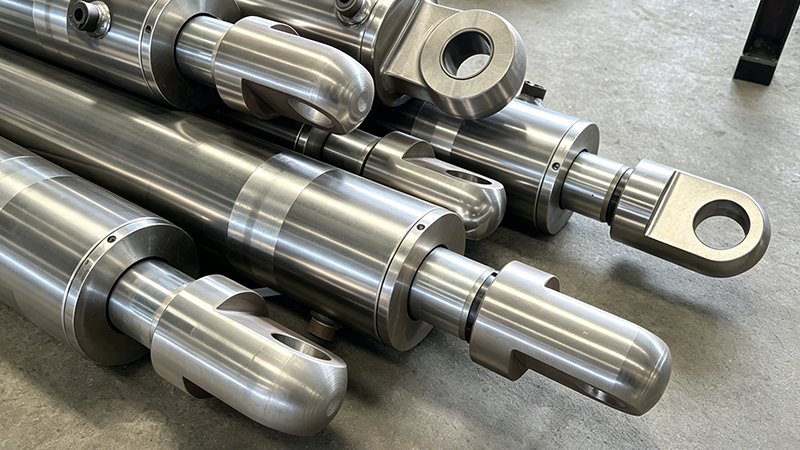
Material handling equipment often needs a lot of lift height out of a compact stowed length — a telehandler boom or a warehouse stacker mast is a good example. Telescopic and multistage cylinder designs deliver that, but they add complexity around stage seal sequencing and synchronization that a single-stage piston cylinder doesn’t have to deal with.
We design the stage transition and seal sequencing specifically for the load profile of the application — a telehandler boom that carries variable, often off-center loads needs a different internal seal and guide band arrangement than a warehouse stacker lifting straight-line loads only.
Guide Rings and Side Load Tolerance
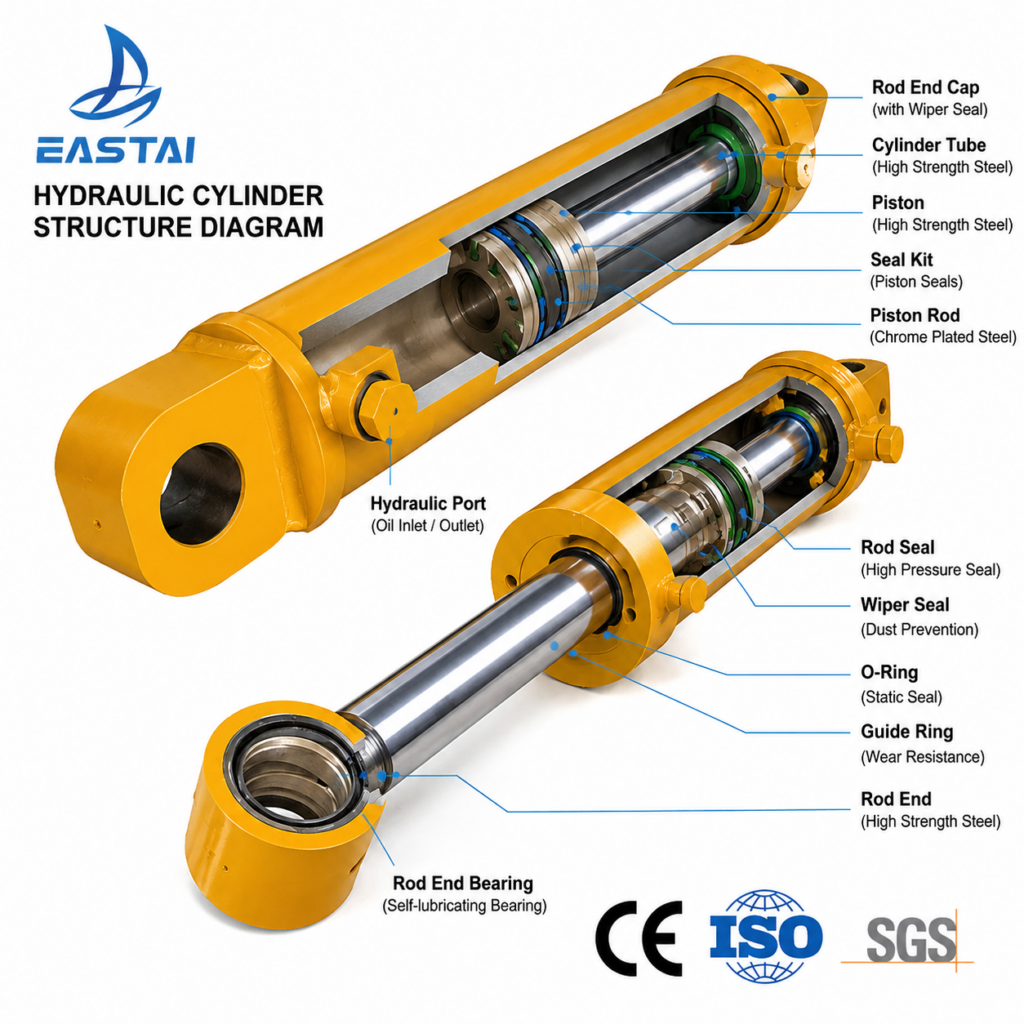
Forklift mast cylinders and telehandler boom cylinders frequently see side loading that a straight vertical lift cylinder never experiences, because the load itself isn’t always centered and the mast structure can introduce lateral forces during lift and lower cycles. Guide ring selection and placement need to account for this side loading directly, rather than assuming a purely axial load path.
Underestimating side load tolerance here shows up as premature guide ring wear and, eventually, rod scoring — a problem that looks like a rod quality issue but actually traces back to guide ring spec.
A Field Issue Worth Knowing About
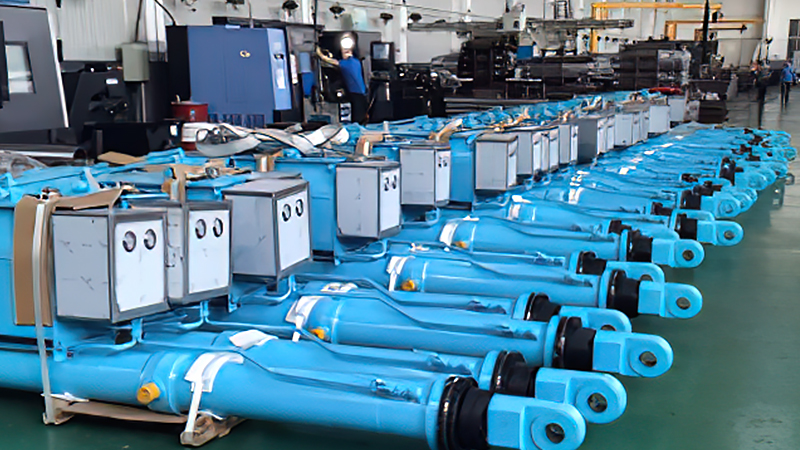
One pattern worth mentioning: a material handling OEM reported recurring rod seal leaks on a stacker cylinder line within months of a seal vendor change, even though the replacement seal carried the same part number specification on paper. The new seal’s actual compound formulation had a lower cycle-life rating than the original, which wasn’t obvious from the spec sheet alone — it only showed up in accelerated wear under the application’s actual high-cycle duty.
Matching a seal spec sheet number isn’t the same as matching real-world cycle-life performance for high-cycle equipment. We now recommend customers request cycle-life test data specifically, not just a compound and dimension match, when qualifying a seal for high-cycle material handling duty.
How We Support Material Handling OEM Volumes
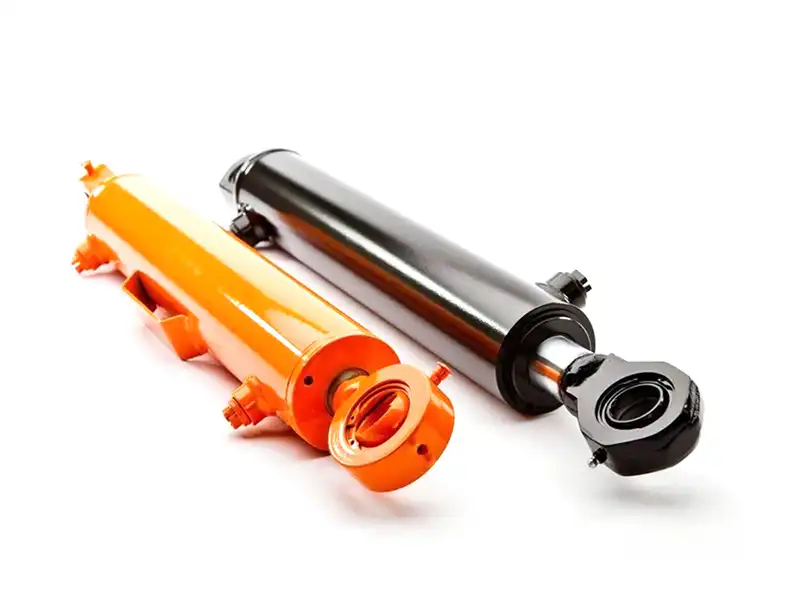
Material handling programs often run on tighter, more continuous production schedules than construction or mining equipment, with less tolerance for lead time variation. We plan cylinder component stock — tube, rod, and seal kits — around confirmed forecast volumes for regular material handling customers so a scheduled production run doesn’t get delayed by unrelated order queues.
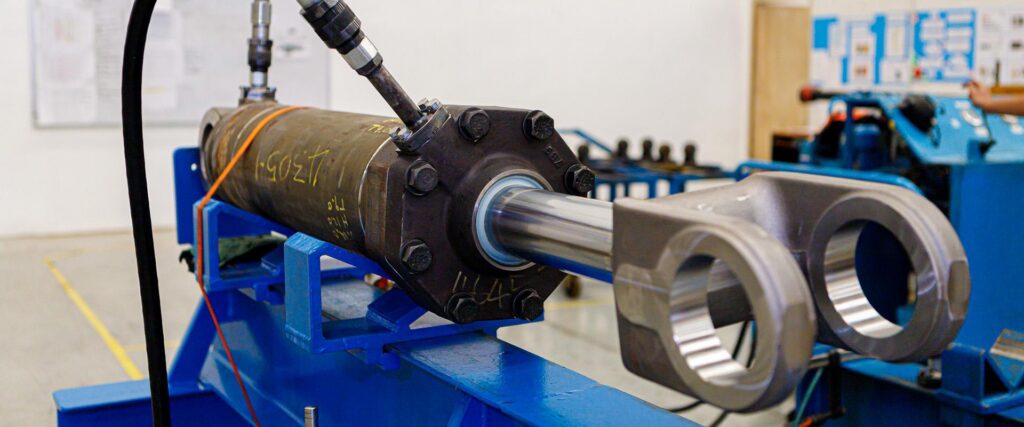
Every cylinder still goes through full dimensional and functional testing regardless of production volume, because a warehouse fleet running continuous shifts can’t absorb inconsistent component quality across a large order.
What to Send With Your RFQ
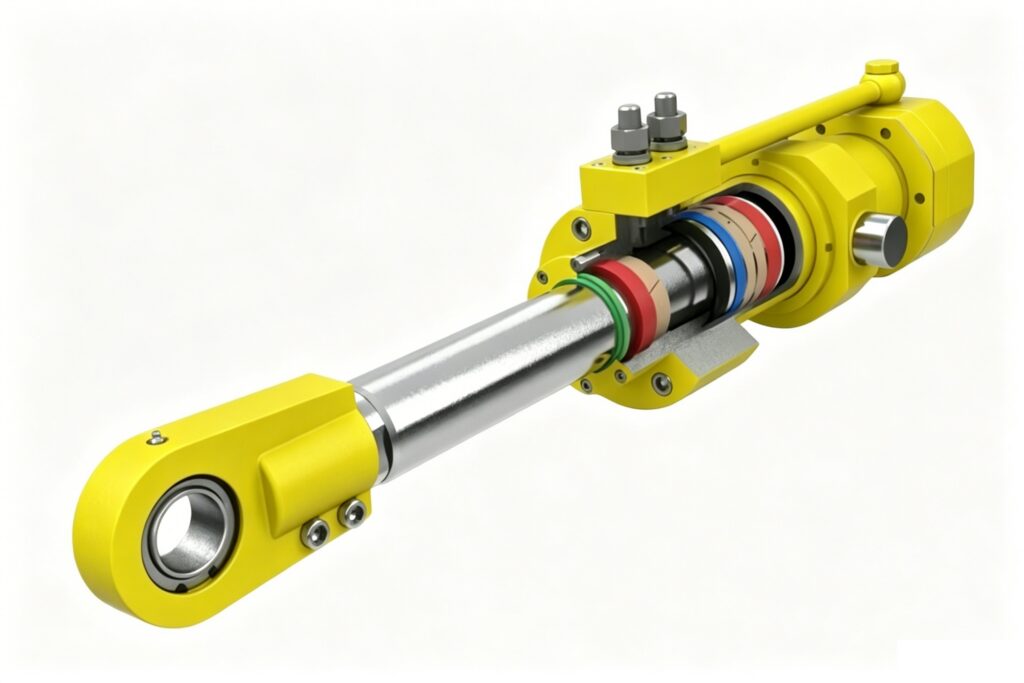
Send us lift height, load rating, expected cycles per shift, and whether the application involves side loading or off-center loads. If you already have a preferred seal brand or compound, tell us that directly so we can confirm cycle-life compatibility before quoting.
Frequently Asked Questions
Why does cycle count matter more than pressure for material handling cylinder specs? Seal wear accumulates primarily through cycle count and stroke speed. A forklift or stacker cylinder cycling hundreds of times a day wears seals faster than a low-cycle construction cylinder at similar pressure, so seal selection needs to prioritize cycle-life rating.
Do telescopic cylinders need different seal design than single-stage cylinders? Yes. Multistage designs require seal sequencing between stages as the cylinder extends and retracts, which single-stage piston cylinders don’t need to manage, and this needs to be matched to the specific load profile of the application.
Can side loading affect a straight vertical lift cylinder? Yes, particularly on forklift masts and telehandler booms, where off-center loads and structural geometry can introduce lateral forces even on a nominally straight lift path. Guide ring selection needs to account for this directly.
Does matching a seal part number guarantee the same cycle life? Not always. Seal compound formulation can vary between suppliers even at the same nominal specification, so we recommend requesting cycle-life test data specifically for high-cycle applications rather than relying on a part number match alone.
References & Further Reading
Internal resources:
- Hydraulic Cylinder Product Range
- Hydraulic Cylinders for Material Handling Equipment
- Honed Tube Product Range
External references:
- ISO 9001:2015, Quality Management Systems — Requirements, referenced for our batch-inspection process: iso.org
- National Fluid Power Association (NFPA), the leading standards body for the hydraulic and pneumatic industry, referenced for general fluid power industry context: nfpa.com
Tell Us Your Cycle Count, Not Just Your Lift Height
If you’re sourcing hydraulic cylinders for forklifts, telehandlers, or warehouse lift equipment, tell us the expected cycles per shift and load profile along with your dimensions. It’s the detail that changes our seal and bore finish recommendation, and it’s usually the difference between a cylinder that matches your shift schedule and one that needs early seal replacement.
Get a Hydraulic Cylinder Quote for Material Handling Equipment →