
A telehandler operator kept bending and wearing out the same long-stroke cylinder on the same machine, every few months, while identical machines on shorter-boom duty ran for years. The seals were the same, the rod was the same chrome plated rod, the tube was the same honed tube. The difference was fully extended reach: at maximum stroke, the rod was cantilevered far out of the cylinder, and the side load it imposed on the bushing and piston was tearing the cylinder apart from the inside. The fix was not a bigger rod or better seals. It was a stop tube, a simple, often-omitted feature that dramatically extends the life of long-stroke cylinders.
This article is for hydraulic cylinder designers, builders, and rebuilders who work with long-stroke cylinders, and it explains what a stop tube does, the mechanics of why it works, and when to specify one.
The Problem: Side Load at Full Extension
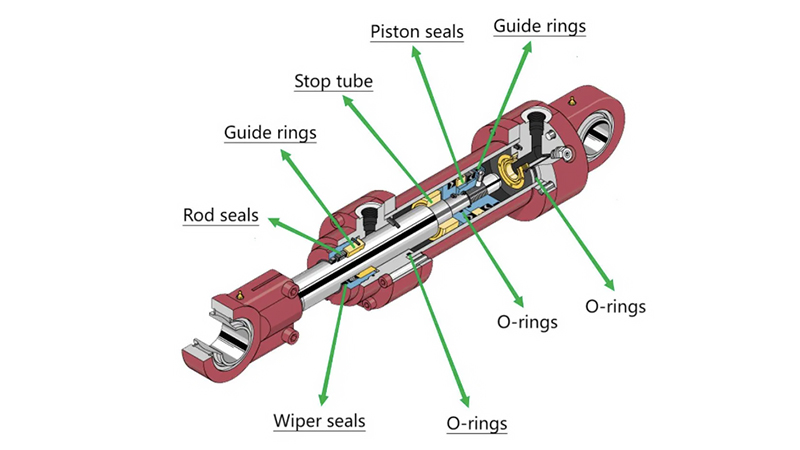
A hydraulic cylinder resists side loads through two internal bearing points: the piston sliding in the bore, and the rod guide bushing in the gland. The distance between these two bearings is what gives the cylinder its resistance to bending moments. When the rod is retracted, the piston and the bushing are far apart, and the cylinder handles side load well. When the rod is fully extended, the piston travels toward the rod end of the tube, and the distance between the piston and the bushing shrinks to a minimum.
This is the dangerous configuration. At full extension, a long rod acts as a long lever, and any side load, from the weight of an off-axis load, from misalignment, from a boom reaching out, generates a large bending moment. With the piston and bushing now close together, that moment is reacted by high, concentrated bearing pressures at those two points. The result is accelerated wear of the bushing and the piston bearing, scoring of the bore and rod, and in severe cases enough deflection to bend the rod or seize the cylinder. Long-stroke cylinders are especially prone because the lever is long and the extension is large.
The Solution: The Stop Tube
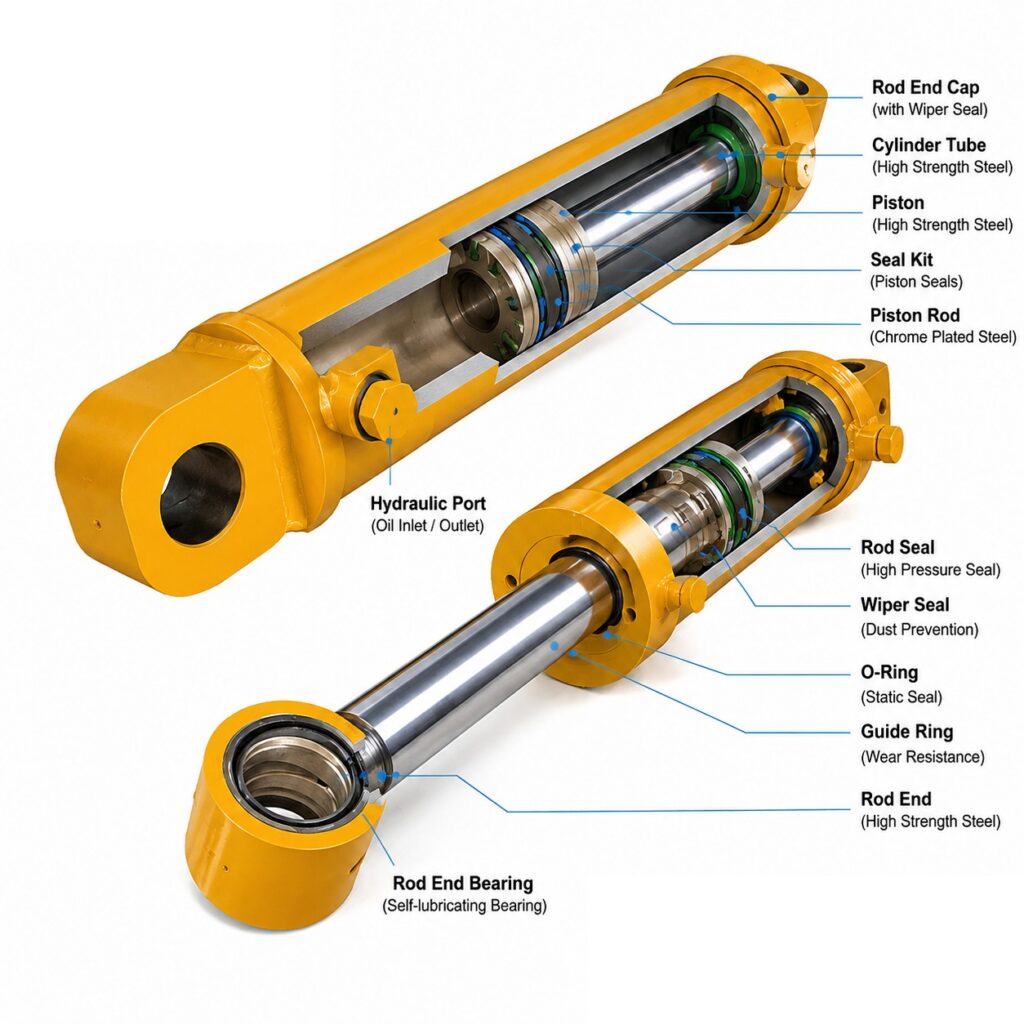
A stop tube is a spacer, effectively a rigid collar or sleeve, installed on the rod between the piston and the gland. It does one thing: it prevents the piston from traveling all the way to the rod end of the tube at full extension. By keeping the piston a set distance back, the stop tube maintains a larger separation between the piston and the rod bushing even at maximum stroke.
That preserved separation is the whole benefit. Because the two bearings stay farther apart, the same side load is reacted by lower bearing pressures, spread over a more favorable geometry. Lower bearing pressure means less wear on the bushing and piston, less scoring of the surfaces, and less deflection. The stop tube trades a small amount of usable stroke, the length it occupies, for a large gain in bearing life and load capacity at full extension.
The Mechanics: Why a Little Separation Goes a Long Way
The reason a stop tube is so effective is that bearing pressure is highly sensitive to the separation between the two bearing points. When the piston and bushing are close together, a modest side load produces very high reaction forces at each bearing, because the short lever arm between them must generate a large couple to resist the applied moment. Increasing the separation reduces those reaction forces sharply for the same external load. A stop tube that adds even a modest length between piston and bushing can cut the peak bearing pressure substantially, which is why it has such an outsized effect on wear life relative to its simplicity.
This is also why the effect is most valuable on long-stroke cylinders. A short cylinder never gets into the dangerous close-bearing geometry because even fully extended, the piston and bushing remain reasonably separated. A long cylinder, extended fully, collapses that separation to almost nothing unless a stop tube preserves it.
When to Specify a Stop Tube
The need for a stop tube scales with stroke length and side load. General guidance in cylinder design ties the recommended stop-tube length to the ratio of stroke to rod diameter and to the mounting and loading conditions: the longer the stroke relative to the rod, and the higher the side load, the more stop tube is warranted. Cylinders that are long, that reach out under load, that are subject to misalignment, or that carry loads off the cylinder axis are prime candidates.
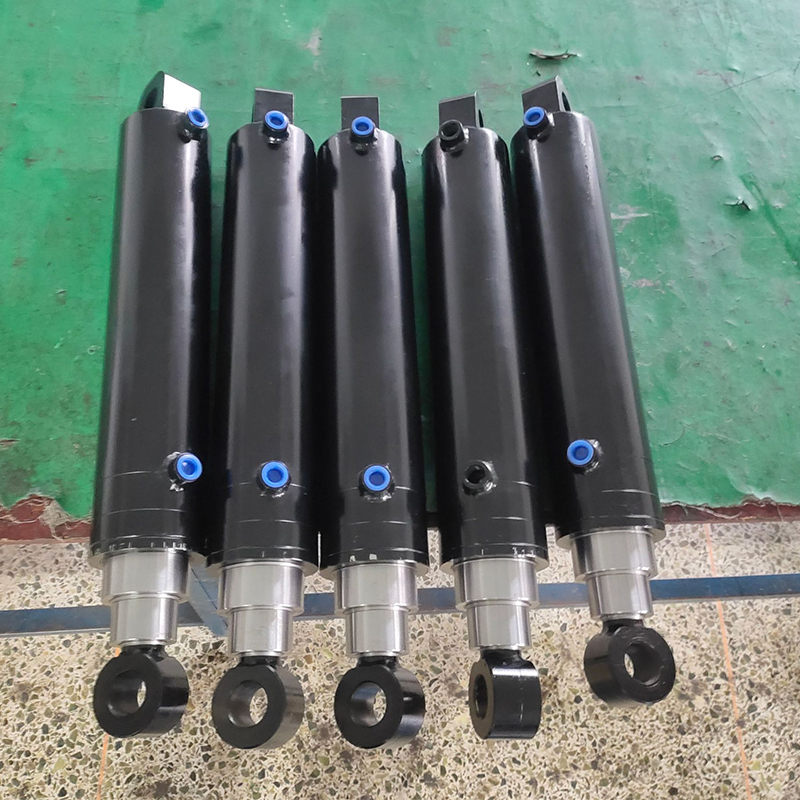
Applications that routinely benefit include crane and lifting booms, telehandler and reach-handler cylinders, long outriggers, and any mobile equipment where a long rod is extended far under a load that is not perfectly axial. In these duties, adding a stop tube at design time is far cheaper than the repeated bushing and rod replacement its absence causes.
The Trade-Off and How to Manage It
The cost of a stop tube is usable stroke: the tube occupies length inside the cylinder that the piston can no longer travel through, so for a given cylinder body, adding a stop tube reduces effective stroke. The way to manage this is to account for it at design time, sizing the cylinder body to deliver the required stroke plus the stop-tube length, rather than discovering the lost stroke after the fact. This is a design decision, not a field retrofit, which is exactly why it should be considered when the cylinder is specified.
There is no downside to a correctly sized stop tube beyond that length trade-off. It adds a small amount of material and a small amount of cylinder body length in exchange for a large gain in bearing life and load capacity at full extension. For long-stroke, side-loaded duty, that is one of the best value trades in cylinder design.
The Bearings and Surfaces Still Matter
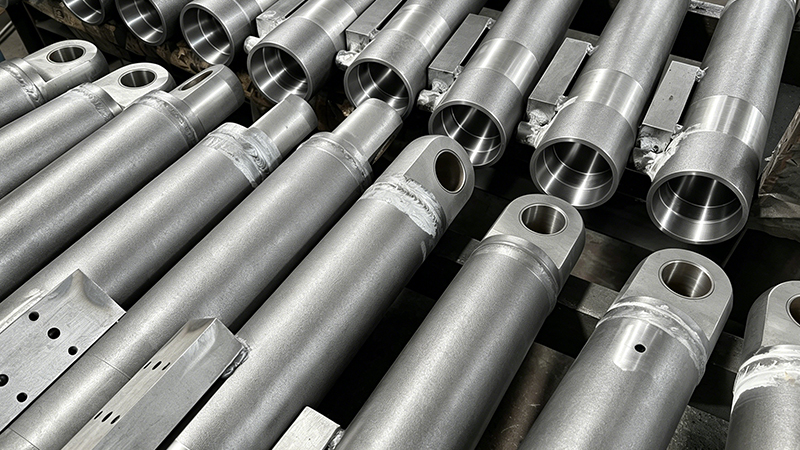
A stop tube reduces bearing pressure, but it does not excuse poor bearing surfaces. The rod bushing and its bearing length, the piston bearing, and the quality of the honed bore and chrome rod surfaces all still govern how well the cylinder handles the reduced loads. A stop tube and good bearing design work together: the stop tube keeps the pressures moderate, and quality surfaces and bushings handle those pressures with minimal wear. Specifying a stop tube on a cylinder built from quality tube and rod gives the best of both.
Related Reading
- Hydraulic Cylinders for Mining and Heavy Machinery
- Hydraulic Cylinders for Construction Machinery
- Chrome Plated Rod category
Design Long-Stroke Cylinders to Survive Full Extension
A stop tube is the cheapest insurance a long-stroke cylinder can carry. Specify it at design time, build it into quality tube and rod, and you eliminate the full-extension bearing wear that kills long cylinders early.
What We Offer
- Honed tube and chrome plated rod for long-stroke cylinders built to handle side load
- Consistent bore and rod surfaces that keep bearing wear low alongside a properly sized stop tube
- Material and dimensions suited to crane, telehandler, and reach-handler duty
- Full traceability and guidance on matching tube and rod to your stroke and load
Contact EAST AI (eaihydraulic.com) Email: market@east-ai.com Phone: +86 13771568763 Address: Wuxi, Jiangsu, China.
Written by Alex, Production Engineer at EAST AI