
Published: 2026-10-20 | Last Updated: 2026-10-20
A field failure report lands on an engineer’s desk describing a cylinder that scored or seized within weeks of installation, and the instinct on both sides of the supply relationship tends to run in predictable directions: the OEM suspects a bad tube, the supplier suspects a handling or assembly mistake downstream. Resolving this correctly requires a structured failure analysis that looks at the physical evidence first, rather than starting from whichever explanation is more convenient for the party doing the investigating.
Why the Default Assumption on Either Side Is Often Wrong
An OEM’s quality team investigating a field failure sometimes anchors on the supplier being at fault because the tube is the most recently changed variable in their supply chain, while a supplier investigating the same failure sometimes anchors on installation error because that explanation requires no action on their own process. Both of these are reasonable starting hypotheses, but neither should be the conclusion until the physical failure evidence actually supports it — a failure investigation driven by which explanation is more comfortable, rather than by what the damaged part actually shows, produces an unreliable root cause finding regardless of which direction the bias points.
What Physical Evidence Distinguishes a Material or Process Defect From an Installation Error
| Failure Pattern | Points Toward |
|---|---|
| Localized scoring at a consistent circumferential position | Possible foreign debris or contamination introduced during assembly |
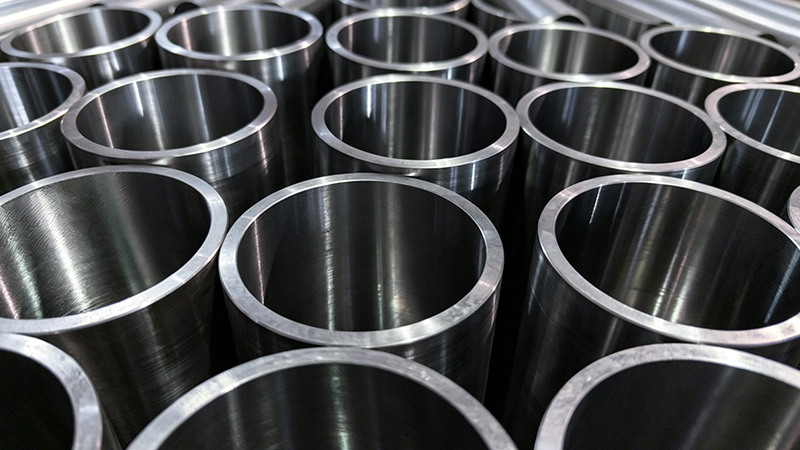
| Uniform scoring around the full bore circumference | More consistent with surface finish or hardness issue from manufacturing |
| Scoring concentrated at one end of the stroke | Possible misalignment during installation or seal damage at assembly |
| Gradual wear pattern consistent with normal seal contact, accelerated | Possible seal material or honing pattern issue from manufacturing |
| Visible galling or seizure shortly after startup | Possible inadequate break-in procedure or contamination at installation |
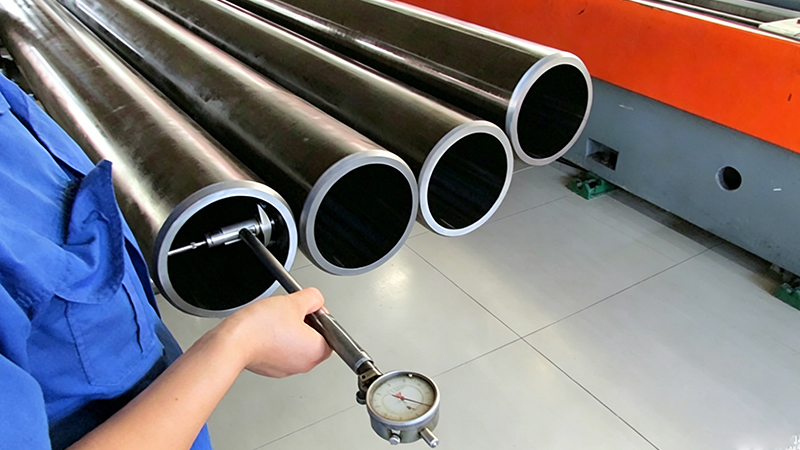
None of these patterns are fully conclusive on their own, which is why a rigorous failure investigation combines the visual failure pattern with dimensional measurement of the failed part and a review of the installation and commissioning records, rather than drawing a conclusion from visual inspection alone.
Why Reviewing the Installation Procedure Documentation Matters as Much as Examining the Tube
A field failure investigation that examines the failed honed tube in detail but never reviews what the actual installation procedure called for — cleanliness requirements, alignment checks, break-in protocol — is only looking at half the evidence needed to assign root cause fairly. Requesting the actual installation and commissioning records for the specific unit that failed, not a generic procedure document, lets an investigator compare what should have happened against what the physical evidence suggests actually happened, which is often where the real answer becomes visible.
How Contamination During Assembly Produces Failure Patterns That Mimic a Material Defect
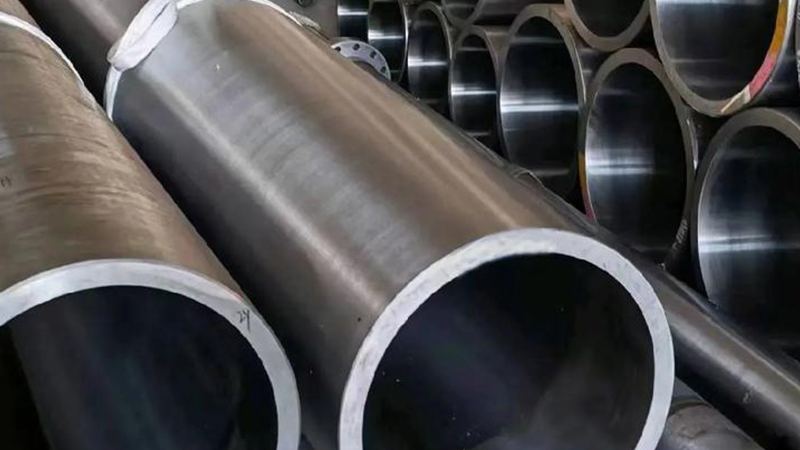
Foreign debris introduced during cylinder assembly — a stray metal particle, inadequately filtered hydraulic fluid, contamination from an unclean assembly environment — can score a honed bore surface in a way that superficially resembles a surface finish defect from the honing process itself, which is a major reason visual inspection alone is insufficient to assign root cause. Examining the actual scoring pattern under magnification, and where possible analyzing any embedded debris at the scoring site, can distinguish contamination-driven damage from a genuine manufacturing defect, since the two often look similar to the naked eye but tell different stories under closer examination.
Why a Single Failed Unit Rarely Proves a Systemic Manufacturing Problem
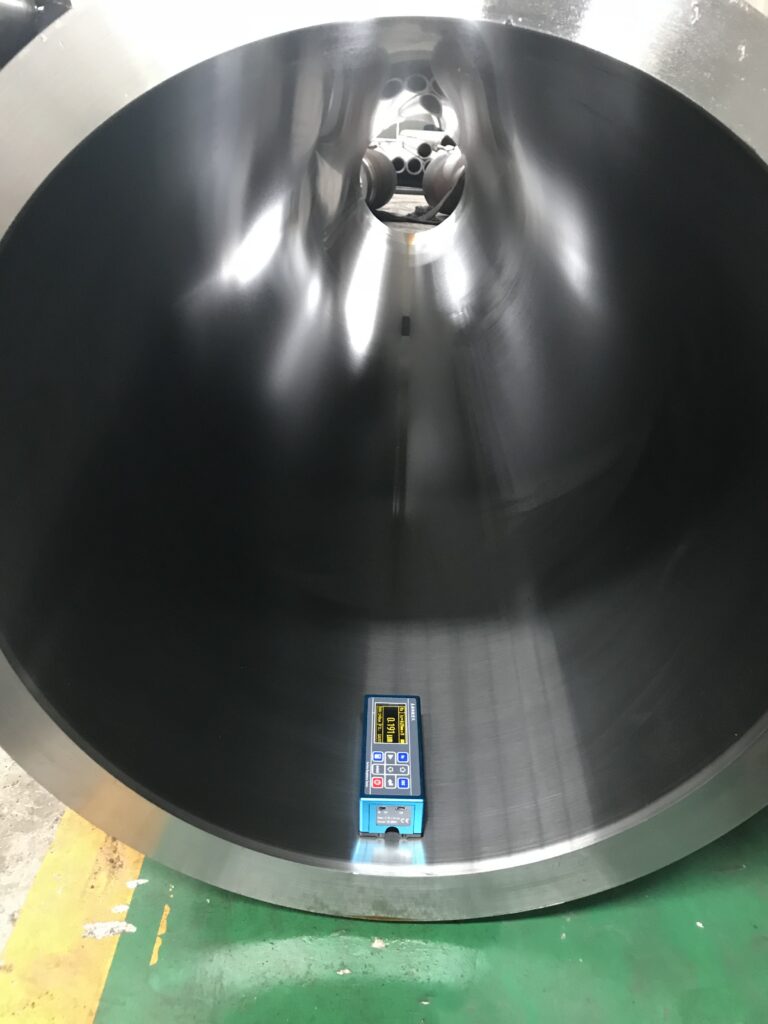
One field failure, even a clearly manufacturing-related one, doesn’t automatically indicate that an entire batch or production run is affected — isolated defects happen even in well-controlled processes, and treating a single failure as proof of a systemic batch problem risks an overreaction (a full batch recall or supplier disqualification) that isn’t actually justified by the evidence. The appropriate response to a single confirmed manufacturing-related failure is requesting the supplier’s batch records and conducting a targeted review of other units from the same production run, not an immediate assumption that the entire batch is compromised — the targeted review itself will show whether the issue is isolated or systemic.
What Information the Supplier Needs to Conduct a Fair Investigation
A supplier asked to investigate a field failure needs more than just the failed part itself — batch or heat traceability information, the installation and operating conditions the unit actually experienced, and ideally the chance to examine the failed part directly rather than relying solely on the OEM’s own description of the damage. An OEM that sends a failed part back for investigation along with complete traceability and application context gives the supplier a genuine chance to investigate thoroughly, while an OEM that withholds this information while simultaneously expecting a conclusive root cause finding is setting up an investigation to fail regardless of where the actual fault lies.
How to Structure the Conversation When Evidence Is Genuinely Ambiguous
Not every failure investigation produces a clean, unambiguous answer — sometimes the physical evidence is consistent with either a marginal material issue combined with a marginal installation practice, where neither factor alone would have caused a failure but the combination did. In genuinely ambiguous cases, a collaborative joint investigation — supplier and OEM reviewing the evidence together rather than each conducting a separate, defensive analysis — tends to produce a more useful outcome than two parties independently concluding the fault lies with the other side, because the practical goal is preventing a recurrence, not winning a liability argument.
Why Documenting the Investigation Protects Both Parties on Future Occurrences
A thorough, documented failure investigation — covering the evidence examined, the conclusion reached, and the corrective action agreed — becomes a reference point if a similar failure occurs again, letting both sides quickly determine whether a new failure matches a previously identified pattern or represents something genuinely new. Skipping this documentation step to resolve a single incident quickly saves time in the moment but leaves both parties working from memory alone the next time a similar question arises, which tends to produce slower, more contentious investigations over time rather than faster ones.
How Break-In Procedure Gaps Specifically Contribute to Early-Life Failures
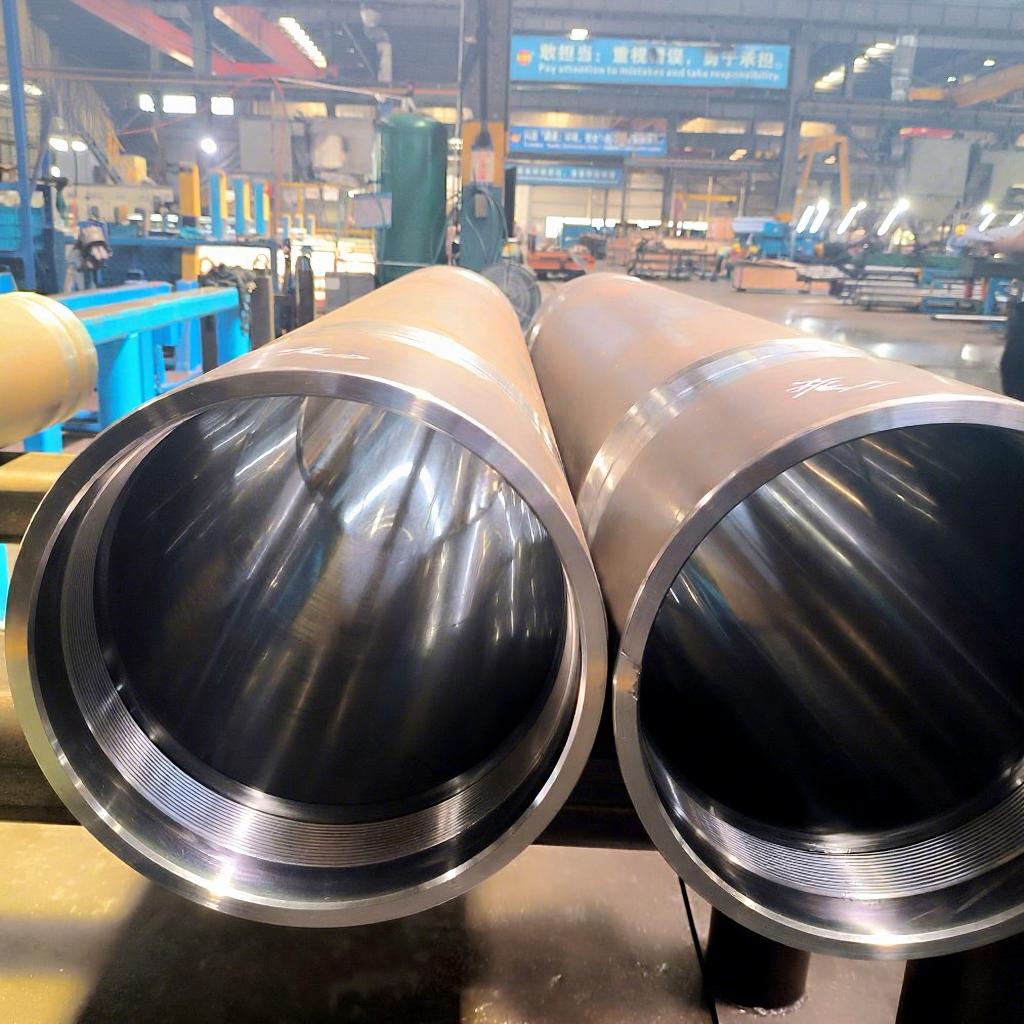
A cylinder put directly into full-duty operation without an adequate break-in period — allowing mating surfaces to properly seat and any minor surface irregularities to wear in gradually under controlled, lighter initial loading — is more prone to early-life scoring or accelerated wear than one that follows a proper break-in protocol, even when the honed tube itself meets every specification. Investigating whether an actual break-in procedure was followed, and whether that procedure was adequate for the specific application’s duty cycle, should be a standard part of any early-life failure investigation, since skipping this check means potentially missing the actual root cause while focused entirely on the component itself.
What a Repeated Pattern of “Inconclusive” Investigations Signals About the Relationship
An OEM and supplier who repeatedly conclude that failure investigations are ambiguous or inconclusive, without ever converging on a clear root cause or corrective action, likely have a deeper process gap in how failures get investigated — insufficient data collection at the point of failure, inadequate traceability, or simply not enough rigor applied to the investigation itself. Building a standard failure investigation protocol in advance — what evidence gets collected, how quickly, and by whom — before the next failure occurs produces more conclusive investigations than developing an ad hoc approach each time a new failure happens under time pressure.
Why the Operating Fluid Itself Deserves Examination During a Failure Investigation
A failure investigation that focuses entirely on the honed tube, the installation process, and the assembly environment can still miss the root cause if the hydraulic fluid itself was contaminated, degraded, or simply the wrong specification for the application — a fluid with inadequate filtration, moisture contamination, or incorrect viscosity can accelerate wear or contribute to scoring in a way that mimics a component defect. Pulling a fluid sample from the failed unit alongside the physical component evidence gives an investigation a more complete picture, since a contaminated or degraded fluid finding can redirect root cause analysis away from the component entirely and toward a maintenance or fluid management practice that neither the OEM’s assembly team nor the tube supplier would otherwise think to examine.
How to Avoid Destroying Evidence When Removing a Failed Unit From Service
A failed cylinder removed from service by whoever is closest to the equipment, without any instruction on preserving evidence, can lose critical diagnostic information if the disassembly process itself damages or contaminates the failure surface before anyone with investigation responsibility has a chance to examine it. Establishing a simple field procedure — photograph the failure in place before disassembly, bag and tag any removed components without additional cleaning or handling beyond what’s necessary, and route the unit to whoever will conduct the actual investigation before any informal disassembly happens — preserves the evidence quality that a thorough root cause investigation actually depends on. Field technicians under pressure to get equipment back into service quickly are a common, unintentional source of evidence loss that makes an otherwise straightforward investigation much harder than it needed to be.
Why Comparing the Failed Unit Against a Known-Good Unit From the Same Batch Adds Diagnostic Value
An investigation that examines only the failed unit, without any comparison against a unit from the same production batch that hasn’t failed, misses a useful diagnostic opportunity — if a known-good unit from the identical batch shows no sign of the issue under the same inspection methods, that comparison strengthens the case that the failure is installation or application-related rather than a batch-wide material issue. Requesting a comparison sample from the same batch, when one is available, gives an investigation a meaningful reference point that a single failed unit examined in isolation cannot provide on its own.
Why a Standing Failure Investigation Agreement Saves Time Compared to Negotiating Each Case Separately
OEMs and suppliers who negotiate the scope and process of a failure investigation from scratch every time a new field failure occurs waste time on procedural questions — who pays for the investigation, how quickly the failed part needs to be returned, what data each side is entitled to see — that a standing agreement, settled once during a calmer moment, would resolve automatically. Establishing this framework in advance as part of the broader supply agreement, rather than negotiating investigation logistics under the time pressure and tension a real failure creates, lets both sides focus their energy on the actual technical question of root cause rather than on process disputes that a prior agreement would have already settled.
Related Reading
- How Should an OEM Decide Whether to Dual-Source Honed Tube or Stay With One Supplier?
- How Much Does Switching Honed Tube Suppliers Actually Cost an Equipment Manufacturer, Beyond the Unit Price?
- Honed Tube Wall Thickness and Pressure Rating: A Selection Guide
Investigate a Field Failure With Full Traceability Support
Working through a field failure and need batch traceability or technical input on root cause? Talk with our team to support a thorough joint investigation.
What We Offer
- Full batch and heat traceability available to support field failure root cause investigation
- Collaborative joint investigation approach rather than a purely defensive supplier response
- Targeted batch review support when a single failure raises a question about broader scope
- Documentation of investigation findings to support future reference across the relationship
Contact EAST AI (eaihydraulic.com) Email: market@east-ai.com Phone: +86 13771568763 Address: Wuxi, Jiangsu, China.
Written by Alex, Production Engineer at EAST AI