
Published: 2026-10-16 | Last Updated: 2026-10-16
An equipment manufacturer who has run a single honed tube supplier successfully for years eventually faces the dual-sourcing question, usually prompted by a near-miss: a capacity crunch, a quality scare, or a geopolitical disruption that made leadership nervous about having all production tied to one source. The decision isn’t really about whether dual-sourcing is good practice in the abstract — it’s about whether the switching and qualification cost of adding a second source is smaller than the cost of a single-source failure for this specific business.
Single-sourcing has real advantages that get undervalued in a risk-focused conversation. A long relationship with one supplier typically means better pricing on volume, tighter informal communication when specs need adjusting, and a supplier who understands the application well enough to flag problems before they become failures. These benefits erode the moment a second qualified source enters the picture, because volume splits between two suppliers, and neither one gets the full-volume pricing or the deepest application familiarity.
The case for dual-sourcing strengthens sharply when a single point of failure would be genuinely catastrophic — when a production stoppage at the primary supplier would halt the OEM’s own output within weeks, not months, because there’s no buffer inventory or alternative material that could bridge the gap. It also strengthens when the primary supplier’s capacity is already tight relative to the OEM’s growth plans, because a supplier running near capacity has little room to absorb a demand spike without extending lead times.
What Dual-Sourcing Actually Costs Beyond the Obvious
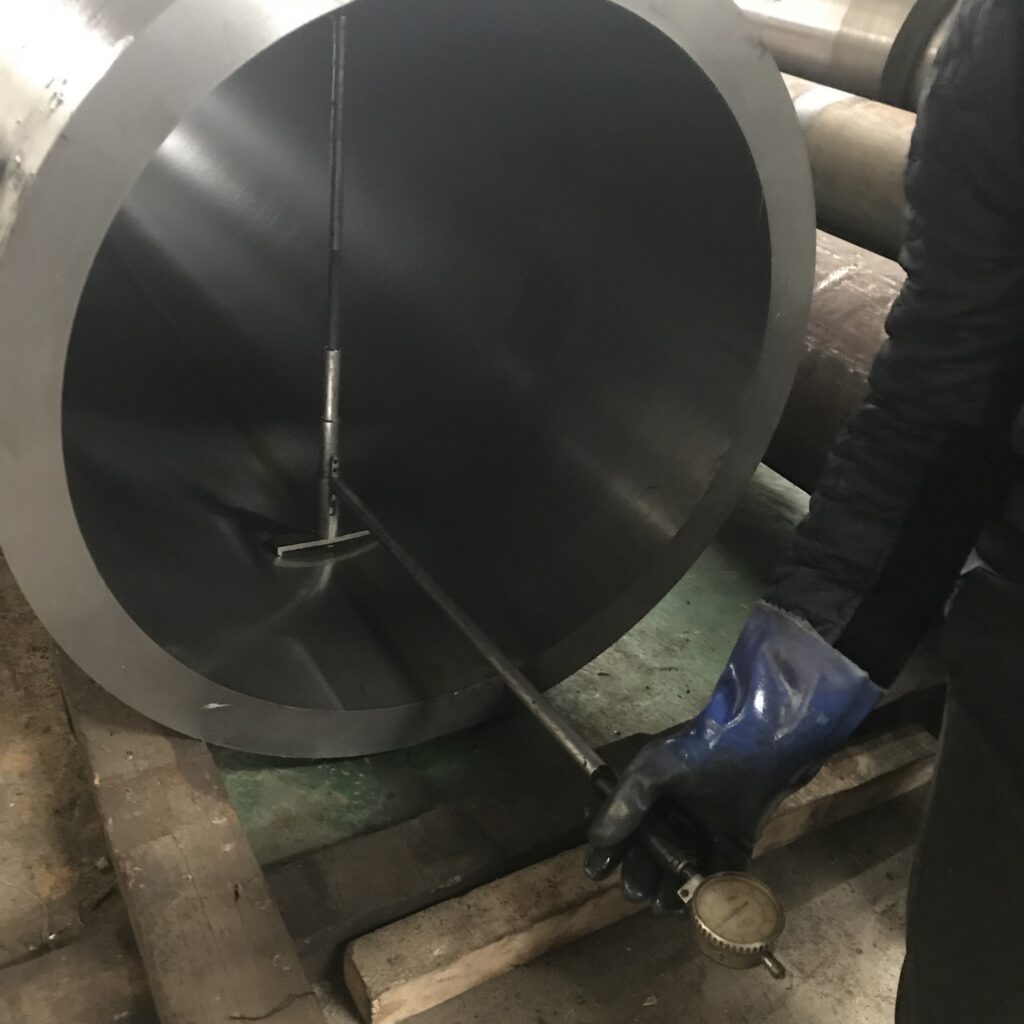
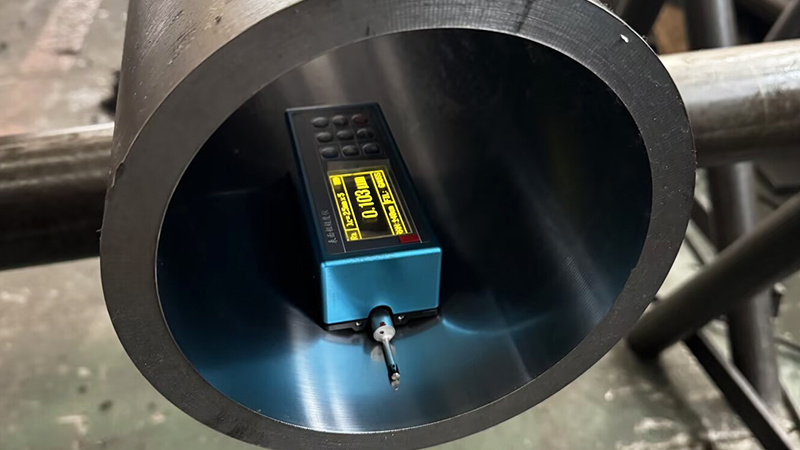
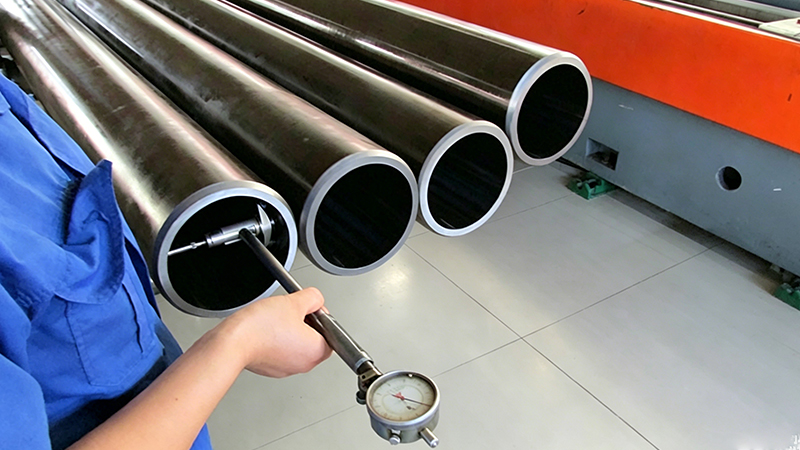
Qualifying a second honed tube source isn’t just a paperwork exercise. It typically means running a trial batch through actual cylinder assembly and testing, not just dimensional inspection, because bore finish characteristics that look identical on a specification sheet can behave slightly differently in seal wear testing. Budget real engineering time for this qualification, not just procurement time — a rushed qualification that skips functional testing defeats the purpose of having a second source, because it hasn’t actually verified the second source performs equivalently.
| Factor | Favors Single Source | Favors Dual Source |
|---|---|---|
| Supplier capacity relative to demand | Supplier has ample headroom | Supplier running near capacity |
| Impact of a supply disruption | Buffer stock covers 2+ months | Production halts within weeks |
| Application sensitivity to minor variation | Low — standard duty cylinder | High — safety-critical or high-cycle |
| Volume concentration | Full volume gets best pricing | Volume already split across product lines |
| Qualification resources available | Limited engineering bandwidth | Dedicated qualification capacity exists |
A practical middle path that many OEMs land on is qualifying a second source formally without splitting meaningful volume to them immediately — keeping the relationship warm with periodic small orders so the qualification stays current, while the bulk of volume stays with the primary supplier until an actual disruption makes activating the second source necessary. This avoids paying the full pricing and relationship cost of dual-sourcing while still closing the single-point-of-failure gap.
Where the Hidden Cost of Dual-Sourcing Actually Shows Up
The qualification exercise itself is only the first layer of cost. Running two approved sources means maintaining two sets of specifications in sync, auditing two supplier quality systems instead of one, and training receiving inspection staff to recognize two slightly different visual and dimensional signatures for what is nominally the same part. None of these are large costs individually, but they accumulate into a real administrative burden that gets underestimated when the dual-sourcing decision is framed purely as a procurement risk calculation. An OEM with a lean quality team may find that the administrative overhead of managing two sources exceeds the risk reduction benefit, especially if the primary supplier’s track record has been genuinely strong for years.
There’s also a subtler cost around design stability. Every time a specification gets revised — a tolerance tightened, a surface finish parameter adjusted — both suppliers need to be notified, requalified against the new spec, and verified to produce equivalent results. A single-source relationship makes this revision cycle simpler and faster, because there’s only one supplier’s process to walk through the change with. Dual-sourcing effectively doubles the friction of every future specification change, which matters more for OEMs that iterate on cylinder designs frequently than for those running a stable, mature product line.
How to Structure the Qualification Without Overcommitting
A staged approach reduces the risk of committing fully to a second source before knowing whether it will actually perform as expected in the field, not just on a test bench. The first stage is a paper qualification — reviewing the candidate supplier’s quality system, mill certifications, and process documentation against the OEM’s own standards, without yet placing a trial order. This stage filters out suppliers who can’t even produce adequate documentation, before any material or engineering time gets spent on physical testing.
The second stage is a trial batch, sized large enough to run through real assembly and at least an accelerated life test, but small enough that a disappointing result doesn’t represent a meaningful financial loss. This is where bore finish characteristics, seal compatibility, and dimensional consistency across a full batch — not just a single sample — get verified against the primary supplier’s known performance baseline. Skipping straight from paper qualification to full-volume production orders is the single most common way dual-sourcing qualification fails to actually reduce risk, because a second source that looks identical on a specification sheet can still behave differently in an actual assembly line until it has been proven through this intermediate step.
The third stage, reached only after a successful trial batch, is formal approval with a defined but limited ongoing order cadence — enough volume to keep the relationship and the supplier’s process familiarity current, without committing to a volume split that would be costly to unwind if a quality issue surfaces later. This staged structure lets an OEM build real qualification confidence incrementally, rather than making a single large bet on an unproven second source.
What Happens When Dual-Sourcing Decisions Get Made Reactively Instead of Proactively
The scenario that produces the worst outcomes isn’t an OEM that never considers dual-sourcing — it’s an OEM that only starts the qualification process after a disruption has already happened, when the primary supplier is already struggling to deliver and production pressure is mounting daily. Qualification done under this kind of time pressure skips the staged approach almost by necessity, because there isn’t time for a measured trial batch and accelerated life test before material is needed on the production line. This is exactly how OEMs end up accepting a second source’s output with far less verification than they would have applied under normal circumstances, trading one risk (single-source dependency) for another (an inadequately qualified second source) at the worst possible moment to be taking on new risk.
The practical lesson is that the time to start second-source qualification is during a period of supply stability, specifically because that’s when there’s enough slack in the schedule to run a proper staged qualification without production pressure forcing shortcuts. Waiting until a disruption is underway to start the qualification process defeats much of the purpose of having a second source at all, since the qualification itself becomes rushed and less reliable exactly when reliability matters most. OEMs that treat dual-source qualification as a standing practice — always having one candidate somewhere in the qualification pipeline even without an immediate trigger — are better positioned when an actual disruption does occur, because the qualification work is already substantially done rather than starting from zero under pressure.
How Geography Factors Into the Dual-Sourcing Calculation
A second source located in the same region, or sourcing raw material from the same mills, as the primary supplier provides less actual risk diversification than it might appear to on paper. A regional disruption — a trade policy change, a logistics bottleneck at a shared port, a raw material shortage affecting mills serving a whole region — can impact both suppliers simultaneously if they’re geographically concentrated, defeating much of the purpose of qualifying a second source in the first place. OEMs evaluating a second-source candidate purely on technical capability and price without considering geographic independence from the primary source are only partially solving the risk they set out to address.
This doesn’t mean every OEM needs a second source on a different continent — the logistics and cost implications of that kind of diversification are substantial and need to be weighed against the specific risks being managed. What it does mean is that the geographic and supply-chain independence of a candidate second source should be an explicit evaluation criterion, not an afterthought, particularly for OEMs whose primary motivation for dual-sourcing is resilience against regional disruptions rather than simply wanting a backup option in case the primary supplier has a quality or capacity problem unrelated to geography. Being clear about which specific risk the second source is meant to address shapes which candidates are actually worth qualifying.
Related Reading
- Honed Tube for Truck-Mounted Crane Outrigger Cylinders: Short-Stroke, High-Load Duty
- Honed Tube Wall Thickness and Pressure Rating: A Selection Guide
What We Offer
- Structured qualification support including trial batches sized for functional testing
- Flexible small-volume order options for maintaining a warm second-source relationship
- Capacity headroom documentation available during supplier evaluation
- Engineering contact available during qualification to review test results directly
Considering a second honed tube source for your production line? Reach our team at market@east-ai.com or +86 13771568763.
— Alex, EAST AI