
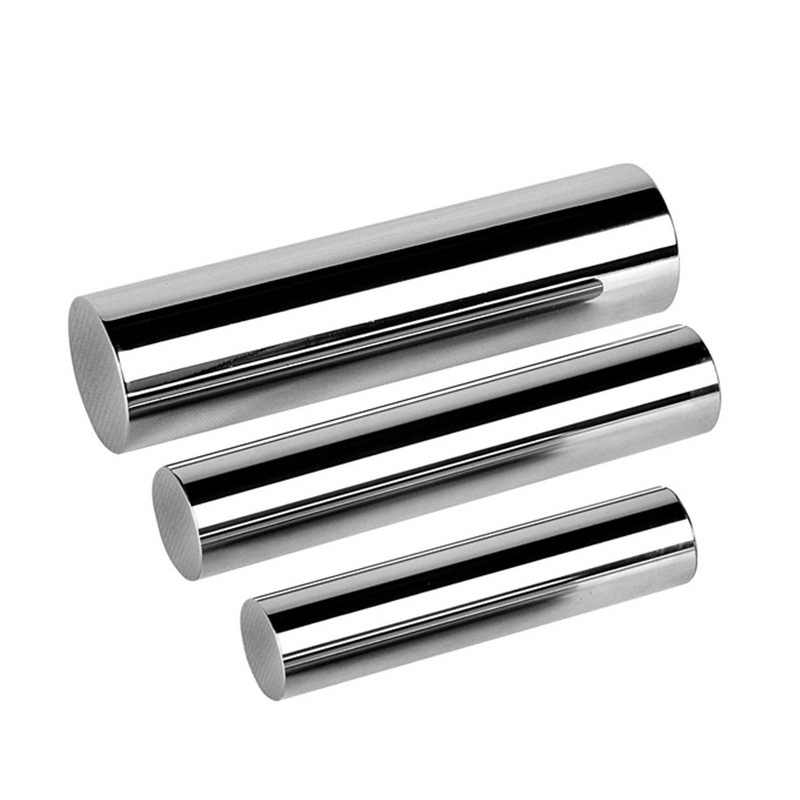
Service providers who stock chrome plated rod on behalf of equipment manufacturer customers have a systematic tendency to specify tighter dimensional tolerances than most applications actually require. The mechanism is straightforward: when a customer’s drawing specifies a tolerance range, the procurement team rounds up to the tighter commercial grade because “better safe than sorry” and the cost difference isn’t immediately visible on the line item. The cost difference is real, it compounds across the product portfolio, and it tends to be invisible precisely because nobody has ever done the calculation explicitly. A service provider stocking chrome plated rod in h6 tolerance where an f7 tolerance would perform identically is paying a consistent premium for a precision benefit that never reaches the end application.
This pattern is not unique to tolerance specification. It appears equally in chrome layer thickness, base steel grade, and surface finish specification. But tolerance class is where it’s most prevalent and most fixable, because commercial tolerance classes have clear performance implications that can be mapped to application requirements without extensive testing.
Published: 2026-10-30 | Last Updated: 2026-10-30
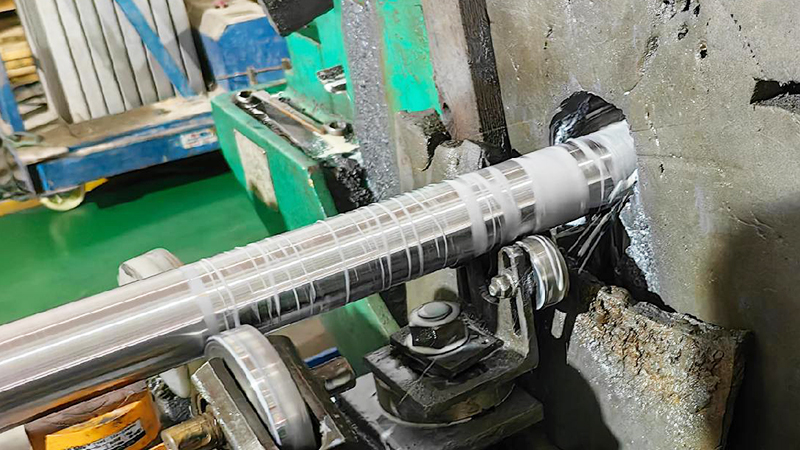
How Commercial Tolerance Classes Map to Hydraulic Cylinder Applications
Chrome plated rod for hydraulic cylinder applications is typically supplied to one of four commercial tolerance classes, each carrying different dimensional precision requirements and corresponding price implications. Understanding which class is appropriate for which application is the starting point for any over-specification review.
| Tolerance Class | Typical OD Deviation Range | Appropriate Application | Price Relative to f7 |
|---|---|---|---|
| h5 | 0 to -9 μm (for 40mm rod) | Precision servo actuators, aerospace-grade cylinders | +40-55% |
| h6 | 0 to -13 μm (for 40mm rod) | High-precision industrial cylinders, machine tool actuators | +20-30% |
| f7 | -25 to -50 μm (for 40mm rod) | Standard hydraulic cylinders, mobile equipment, general industrial | Baseline |
| f8 | -25 to -64 μm (for 40mm rod) | Low-pressure applications, non-critical actuators | -5 to -10% |
Review each stocked SKU against this table and confirm that the specified tolerance class corresponds to the seal system and bore clearance your customer’s application actually uses — not the tightest class that would theoretically fit.
Most standard hydraulic cylinders using polyurethane or nitrile seals operate comfortably with f7 rod. The seal system is designed to accommodate dimensional variation within the f7 range, and specifying h6 rod provides no performance benefit while adding twenty to thirty percent to the rod cost. The only scenario where h6 is genuinely needed is when the seal system has been designed for tighter rod-to-bore clearance — a specification that should be explicitly stated on the drawing, not assumed.
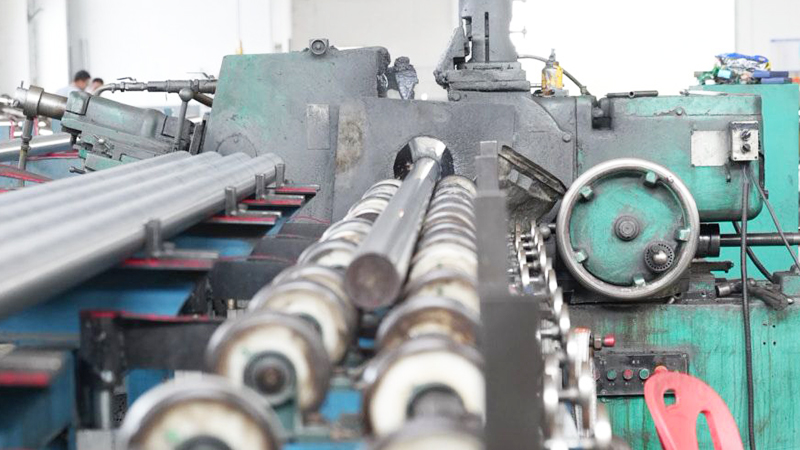
Where the Over-Specification Pattern Originates in Service Provider Procurement
The over-specification tendency in service provider procurement has identifiable structural roots, and addressing it sustainably requires understanding those roots rather than simply issuing a corrective memo.
The most common origin is drawing inheritance: a customer shares a drawing that was originally created for a more demanding application, the service provider stocks to that drawing without questioning whether the tolerance class is appropriate for the specific use, and the pattern persists across order cycles because nobody has flagged it. When a customer provides a drawing with a tolerance class specified, ask explicitly whether the tolerance was set for this specific application or inherited from a related drawing — the answer frequently reveals specifications that can be safely relaxed.
The second common origin is supplier catalog defaults. Some suppliers present h6 as their “standard” grade, making f7 appear to be a non-standard special order. This framing benefits the supplier’s margin but costs the buyer a twenty to thirty percent premium on every order. Requesting an explicit price comparison between h6 and f7 for the same bore and length forces the cost differential into visibility.
The Correct Diagnostic Process for Your Current Stock Specifications
An over-specification audit of a chrome plated rod stock portfolio doesn’t require engineering resources for every SKU. The diagnostic can be completed efficiently with a three-step process.
Step one: group your stocked SKUs by the application category they serve. Standard mobile equipment cylinders, precision machine tool actuators, and general industrial applications each have different tolerance requirements. Grouping by application rather than by customer or part number reveals which tolerance classes are actually justified by the application type.
Step two: for each application group, identify the seal system specification used. Seal manufacturers publish clearance requirements by seal type and rod diameter. Comparing the published clearance tolerance for your customer’s seal system against the rod tolerance class you’re currently stocking immediately reveals where the specification is tighter than the seal system needs.
Step three: request a competitive quote for the relaxed tolerance class on your highest-volume SKUs. The price difference on the first quote converts the abstract savings potential into a specific annual dollar figure that makes the business case concrete for any internal review.
| Audit Step | Typical Time Required | Expected Outcome |
|---|---|---|
| Group SKUs by application category | 2-4 hours | Reveals which tolerance classes are in use by application |
| Match seal system clearance to rod tolerance | 4-8 hours (with seal specs in hand) | Identifies over-specified SKUs |
| Request comparative quotes on relaxed specs | 1-3 days | Quantifies annual savings potential |
| Customer approval for spec change | 1-4 weeks | Required before changing stocked spec |
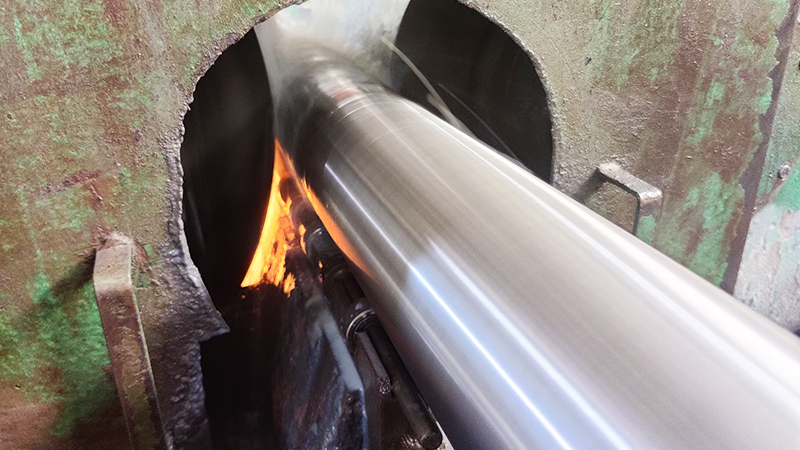
How to Get Customer Approval for a Tolerance Class Reduction
A service provider cannot unilaterally change the stocked specification for a customer-specific part without customer approval, and the approval conversation can feel risky if it’s framed as “we want to use a cheaper part.” The conversation lands very differently when framed accurately: this is an engineering review of whether the current specification is matched to the actual application requirement.
Frame the tolerance relaxation proposal as a specification optimization review, supported by the seal manufacturer’s clearance data and a side-by-side dimensional comparison, rather than as a cost-reduction request — customers approve engineering changes far more readily than they approve apparent quality reductions.
Most engineers, when presented with data showing that an f7 rod satisfies the seal system’s clearance requirement with margin to spare, will approve the change without extensive further review. The ones who resist are typically either unfamiliar with the seal clearance specifications or operating under a general policy against drawing changes — both of which can be addressed with documentation rather than persuasion.
Service providers who want to conduct this kind of specification review on their current chrome plated rod portfolio, or who want to understand the performance difference between tolerance classes for a specific application, are welcome to contact EAST AI’s technical team. We routinely assist procurement and engineering teams with specification matching across our full chrome plated rod range. Reach us at market@east-ai.com or +86 13771568763.
What the Price Differential Between Tolerance Classes Actually Funds
Understanding why tighter tolerance classes cost more clarifies whether the premium is justified for a given application. The cost difference between f7 and h6 rod is not primarily a materials cost — the steel is the same. The premium for tighter tolerance reflects the additional production process steps: more passes during OD grinding, tighter process control at the chrome plating step, higher rejection rates during final inspection, and more frequent tool replacement to maintain dimensional consistency.
For applications where the tighter tolerance provides a functional benefit — measurably better seal performance, longer service life, reduced rework rate — those production costs are justified. For applications where the seal system is designed to accommodate the full f7 range, the premium funds production steps that deliver no end-application benefit. Identifying which situation applies to each SKU in your portfolio is exactly what the three-step audit described above produces.
How Surface Finish Specification Interacts With Tolerance Class
Tolerance class and surface finish specification are often over-specified together, amplifying the cost premium beyond what either variable alone would create. A service provider specifying h6 tolerance with Ra 0.2 surface finish on a rod destined for a standard hydraulic cylinder application is likely paying a combined premium of thirty-five to fifty percent above what the application actually needs.
Review surface finish specification alongside tolerance class in your audit — the appropriate Ra value for a standard hydraulic cylinder application using polyurethane seals is Ra 0.2 to 0.4 μm, and specifying below Ra 0.2 adds significant polishing cost without measurable seal performance improvement for most seal types.
| Surface Finish (Ra) | Appropriate Application | Cost vs Ra 0.4 Baseline |
|---|---|---|
| Ra 0.1 | Precision servo actuators, very sensitive seals | +30-45% |
| Ra 0.2 | Standard hydraulic cylinders, polyurethane seals | +10-20% |
| Ra 0.4 | General industrial, lower pressure applications | Baseline |
| Ra 0.8 | Non-sealing guide applications | -5 to -10% |
The Ra value on a drawing is frequently inherited from a more demanding application specification, copied to a new drawing because it was already defined, and never questioned because the chrome plated rod performs adequately — which it would at Ra 0.4 as well. An audit that examines surface finish alongside tolerance class typically surfaces two or three SKUs where both variables can be relaxed simultaneously, producing a combined cost reduction considerably larger than either change alone.
Implementing the Specification Changes Without Disrupting Active Supply
Once the audit identifies SKUs where specification relaxation is technically justified and customer approval is secured, implementing the changes requires coordination across procurement, quality, and the supplier without disrupting active deliveries.
Sequence specification changes by SKU priority — highest annual spend and clearest application justification first — and implement each change on a new order rather than mid-lot, so that incoming inspection records remain clean and traceable. Changing a specification mid-lot creates a traceability gap in the inspection record that complicates any future quality investigation.
Notify your supplier of the specification change in writing with the effective order date, retain the original approval documentation and the new specification approval together, and update your incoming inspection criteria before the first delivery under the new specification arrives. The administrative steps take less time than the approval process and are worth completing thoroughly to avoid inspection confusion on receipt.
If your technical or procurement team wants to review the tolerance class and surface finish specifications on your current chrome plated rod portfolio against application requirements, EAST AI’s engineering team is available for that conversation. We can also provide production samples in both the current and proposed specification for side-by-side comparison before a formal change is approved. Contact us at market@east-ai.com or +86 13771568763.
Related Reading
- How Should an OEM Decide Whether to Hold Safety Stock on Chrome Plated Rod or Rely on Supplier Lead Time?
- What Should an OEM Check Before Accepting a Chrome Plated Rod Design Change From a Supplier?
- Chrome Plated Rod Products
Written by Jeff, Founder of EAST AI