
Published: 2026-10-16 | Last Updated: 2026-10-16
A supplier proposing a design change to an existing chrome plated rod specification — a different base steel grade, a revised chrome thickness, a new hardness treatment — usually frames the change as an improvement: lower cost, better availability, or enhanced performance. An OEM accepting that change without independently verifying its impact on the actual application is trusting the supplier’s incentive to be perfectly aligned with the OEM’s own, which it often isn’t.
The first question worth asking is what problem the change actually solves, and for whom. A supplier proposing a base steel substitution because their preferred mill offers better pricing is solving a supplier-side cost problem, which may or may not translate into a better rod for the OEM’s specific duty cycle. A supplier proposing a chrome thickness change because testing showed improved wear resistance in a lab setting is solving a different kind of problem, one that’s at least theoretically aligned with the OEM’s interest — but lab wear testing and real field duty cycles don’t always correlate as cleanly as a test report implies.
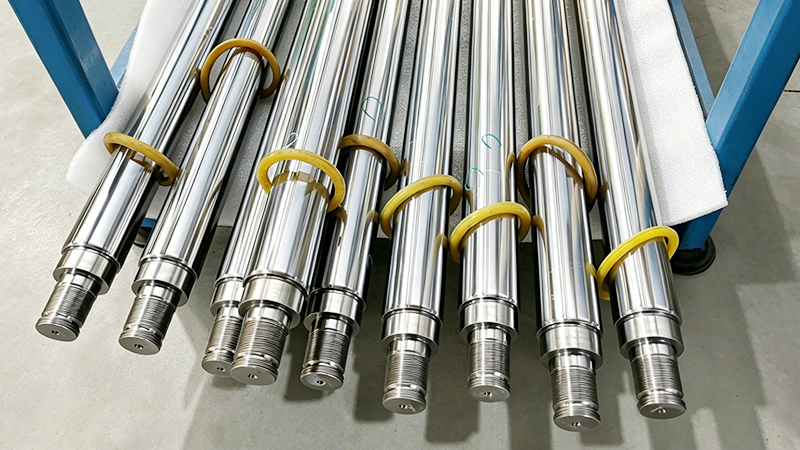
Any proposed change to base steel grade should trigger a full requalification, not a paper review. Hardness and chrome thickness can look identical on a finished rod built from two different base steel grades, because those are properties of the surface treatment, not the core material. What differs is fatigue resistance and how the base steel responds to the plating process itself — differences that a dimensional and hardness check won’t reveal, but that show up as rod failures under cyclic loading months or years later.
A Simple Framework for Evaluating Supplier-Proposed Changes
| Change Type | Verification Needed Before Accepting | Red Flag |
|---|---|---|
| Base steel grade substitution | Full requalification including fatigue-relevant testing | Supplier pushes for fast approval without trial run |
| Chrome thickness adjustment | Side-by-side wear testing at actual duty cycle | Change framed only in terms of lab test results |
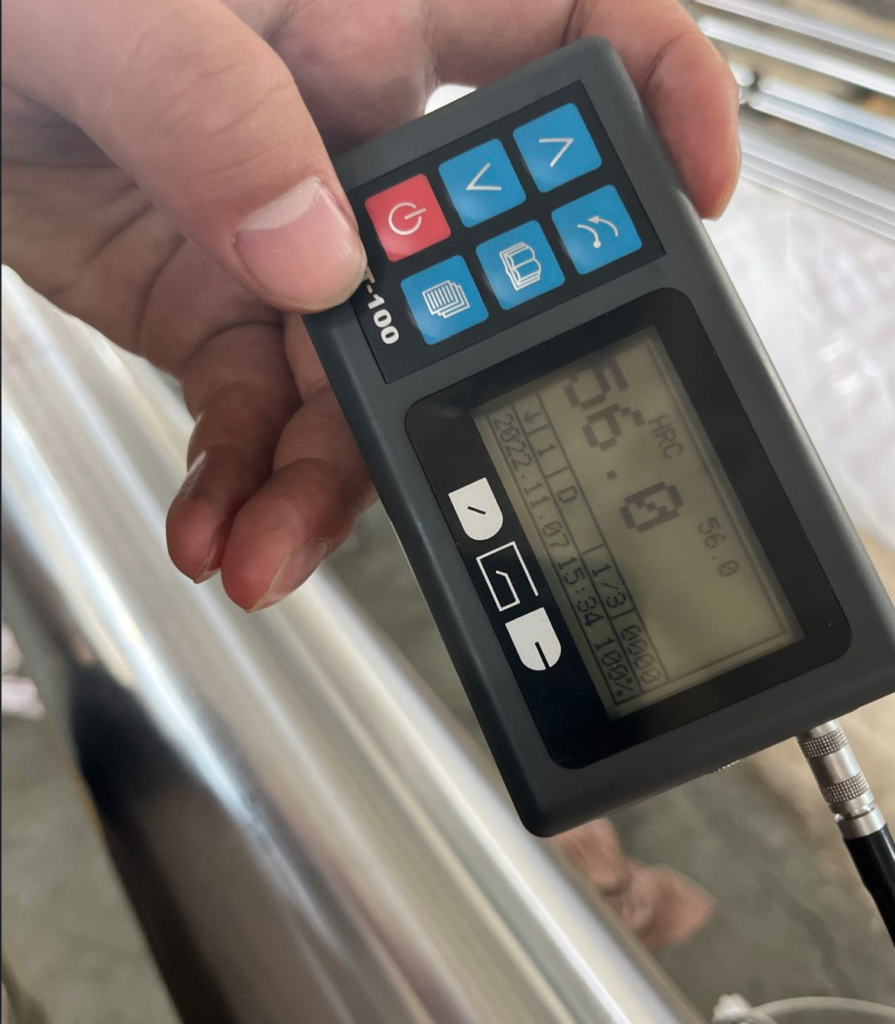
| Hardness treatment change | Testing at multiple points along rod, not single sample | Supplier can’t explain why change benefits this application |
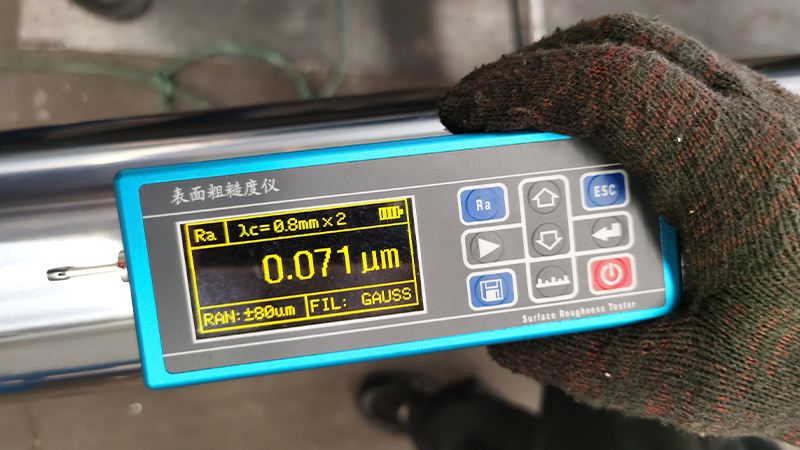
| Surface finish process change | Seal compatibility testing with actual seal supplier | No explanation of what changed procedurally at the plating stage |
A supplier confident that a proposed change genuinely benefits the OEM’s application should have no objection to a proper requalification cycle, including a trial batch run through the OEM’s actual assembly and test process rather than just a comparison of paper specifications. A supplier pushing for fast approval without that step is prioritizing their own timeline over the OEM’s risk exposure, and that alone is worth treating as a signal to slow down, regardless of how reasonable the proposed change sounds on its face.
The cost of a proper requalification is real — engineering time, test samples, a delay before the change takes effect — but it’s small compared to discovering a field failure months after accepting an unverified change, especially in applications where a rod failure means an unplanned equipment shutdown or a warranty claim that traces back to a decision the OEM made without independent verification.
Reading the Supplier’s Motivation Before Reading the Technical Justification
Every proposed change comes wrapped in a technical justification, but the justification is only half the picture. The other half is understanding what’s actually driving the supplier to propose the change now, which often has nothing to do with the technical rationale presented. A supplier facing rising costs from their current base steel mill, or losing access to a specific grade due to allocation constraints elsewhere in their supply chain, has a strong incentive to propose a substitution framed in terms of performance benefits, when the real driver is their own sourcing constraint. This isn’t necessarily dishonest — the substitute material may genuinely perform adequately — but the OEM evaluating the change should understand the real motivation to properly weigh how much scrutiny the change deserves.
A useful diagnostic question is simply asking the supplier directly what prompted the proposed change, and watching how the answer compares to the written technical justification. A supplier who volunteers the real driver — cost, availability, a mill relationship change — alongside the technical case is being transparent in a way that supports trust in the relationship going forward. A supplier who only ever frames changes in terms of performance improvements, even when market conditions make a cost or availability driver far more plausible, is worth engaging more skeptically on future proposals, not just this one.
Building a Change Control Process That Doesn’t Slow Down Legitimate Improvements
The risk of treating every proposed change with maximum scrutiny is that it discourages suppliers from bringing forward genuinely beneficial improvements, because the approval friction makes proposing changes not worth the effort. A well-structured change control process should scale scrutiny to the risk of the specific change, rather than applying uniform maximum friction to everything. A surface finish adjustment on a non-critical cosmetic parameter doesn’t need the same requalification rigor as a base steel substitution affecting fatigue performance in a safety-critical application.
Setting this tiering up in advance — agreeing with the supplier on which categories of change require full requalification versus a lighter documentation review — makes the relationship more productive for both sides. The supplier knows what evidence to prepare before bringing a proposal forward, and the OEM isn’t forced to improvise a risk assessment under time pressure every time a change request arrives. This kind of pre-agreed framework also makes it easier to say yes quickly to genuinely low-risk changes, which keeps the relationship collaborative rather than adversarial, while still protecting the OEM against the higher-risk category of changes that genuinely warrant full independent verification before acceptance.
Documenting the Decision, Not Just Making It
Whatever decision an OEM reaches on a proposed change — accept, reject, or accept with modified terms — the reasoning behind that decision deserves documentation separate from the supplier’s own change proposal paperwork. An internal record stating what was evaluated, what test data supported the decision, and who approved it becomes essential if a field issue later raises questions about whether the change was properly vetted, particularly in regulated industries or applications where product liability exposure makes this kind of traceability a genuine business requirement rather than a bureaucratic formality.
This documentation also serves a second purpose beyond liability protection: it builds institutional memory that survives staff turnover. An engineering team that evaluates a supplier change today and documents the reasoning clearly leaves a trail that a successor can reference years later, when the same supplier proposes a related change or when a field failure investigation needs to establish what was known and verified at the time the original change was accepted. Without this record, each new engineer effectively starts the trust-building and verification process from scratch with every supplier relationship, re-litigating decisions that were already carefully reasoned through in the past, simply because nobody wrote down why.
What to Do When Multiple Suppliers Propose Similar Changes Around the Same Time
An OEM sourcing from several suppliers sometimes notices multiple suppliers proposing similar changes within a short window — several base steel substitutions, or several suppliers adjusting the same process parameter — without any coordination between them. This pattern is worth investigating as an industry-wide signal rather than treating each proposal as an isolated supplier-specific decision, because it often indicates an upstream shift — a raw material shortage affecting an entire supply chain tier, a regulatory change affecting a specific plating chemical, or a broader cost pressure moving through the industry simultaneously.
Recognizing this pattern changes how the OEM should respond. A single supplier’s proposed change might warrant supplier-specific scrutiny of their individual motivation, but an industry-wide pattern calls for understanding the underlying driver at the market level, which might mean the change is genuinely unavoidable across the OEM’s entire supply base rather than a problem isolated to one supplier relationship. In this situation, the useful question shifts from “why is this supplier proposing this” to “what’s happening in the broader market that’s driving this across multiple suppliers,” and the answer to that broader question often informs how to evaluate every individual proposal more efficiently than treating each one as a completely separate case.
Related Reading
- Chrome Plated Rod Base Steel: Carbon Steel Core vs Alloy Steel Core
- Chrome Plated Rod for Excavator Attachments: Quick Coupler and Auxiliary Circuit Duty
- Stop Tube in Long-Stroke Hydraulic Cylinders: Why It Extends Life
What We Offer
- Full technical disclosure before proposing any specification change
- Trial batch support sized for genuine functional requalification
- Multi-point hardness and chrome thickness verification on every change proposal
- Direct engineering contact to walk through the rationale behind any proposed change
Evaluating a proposed change from your current rod supplier? Reach our team at market@east-ai.com or +86 13771568763.
— Alex, EAST AI