
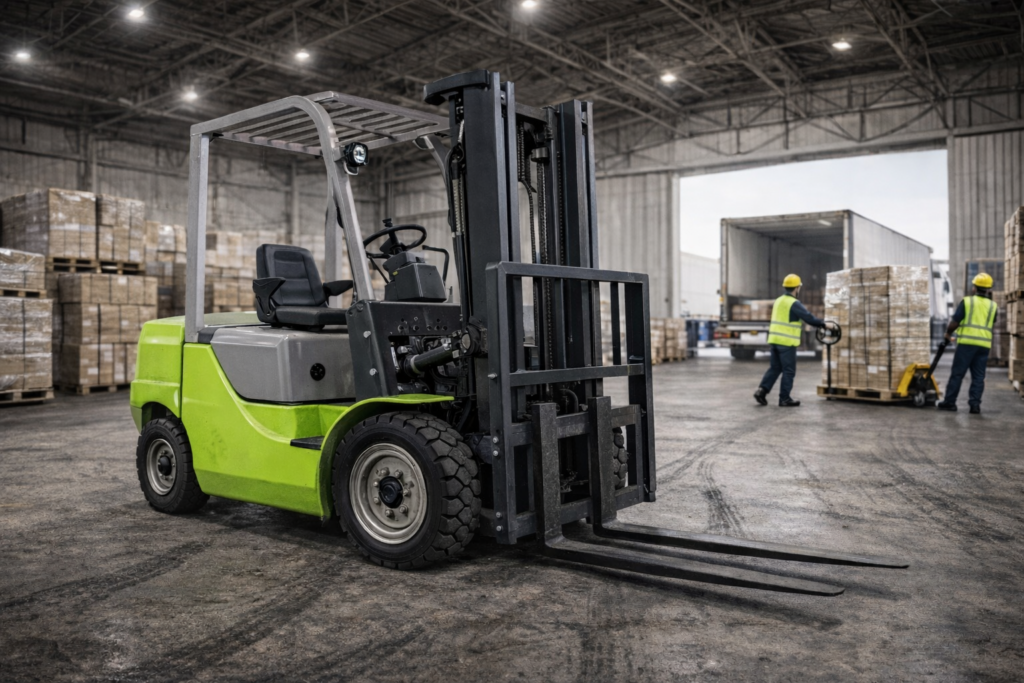
A parts manager for a fleet of warehouse forklifts once told me his rod problem was not dramatic failures but a slow drain of small ones: lift and tilt cylinders that developed leaks after a year or two of relentless daily cycling, each one a modest repair but adding up to real downtime and cost across a large fleet. His machines were not working in mud or salt; they were working indoors, all day, every day, cycling constantly. The rod for that duty is chosen differently from a rod for a mining machine, because the dominant challenge is not extreme load or corrosion but sheer accumulated cycles.
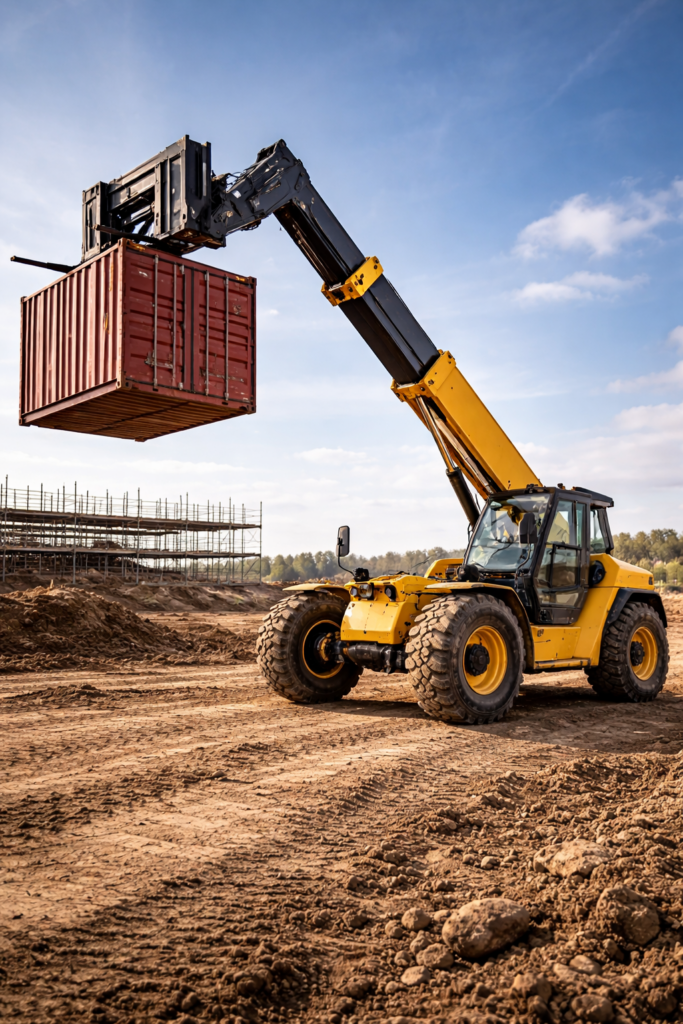
Material handling equipment, forklifts, reach trucks, stackers, and similar machines, works in a distinctive way: moderate loads, moderate pressures, but very high cycle counts, often indoors and with a strong focus on cost and reliability. For a stockist or service provider serving this market, choosing chrome plated rod means optimising for high-cycle wear life and value rather than for the extremes that dominate heavy-duty applications. This article looks at what material handling cylinders demand from chrome rod.
The high-cycle nature of material handling
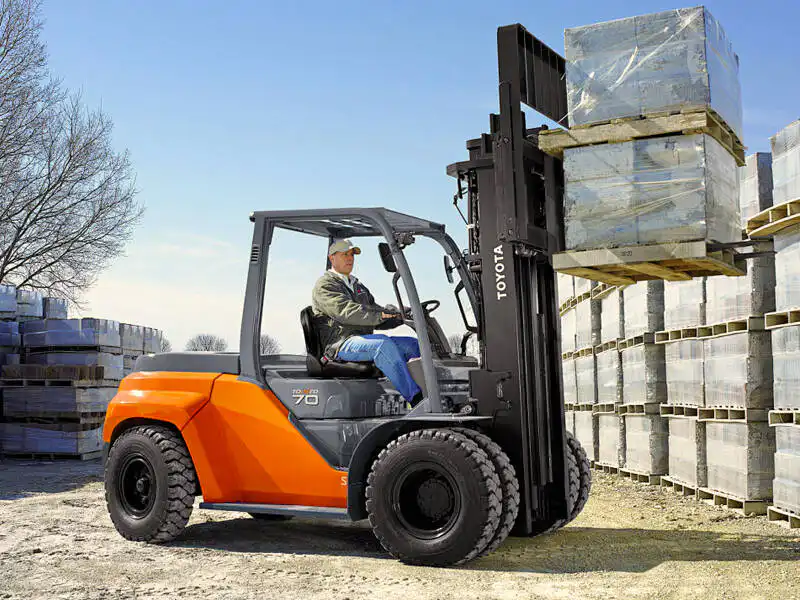
The defining characteristic of material handling duty is the sheer number of cycles. A forklift’s lift cylinder may extend and retract hundreds of times a day, and its tilt cylinders even more, day after day, so over its life the rod sees an enormous number of strokes. Unlike a construction cylinder that may work hard but intermittently, a material handling cylinder works constantly, and the cumulative wear from all those cycles is the dominant life-limiting factor.
This changes what matters in the rod. In high-cycle service, the wear resistance of the rod surface and the friction between rod and seal become critical, because they determine how the rod and seal degrade over huge cycle counts. A rod surface that wears slowly and runs with low friction lets the seal last through many cycles, while a rougher or softer surface accelerates seal wear and shortens the interval between the small, cumulative repairs that plagued the forklift fleet manager.
The loads and pressures, by contrast, are usually moderate. Material handling cylinders generally do not see the extreme pressures of heavy hydraulics or the shock loads of mining, so the rod does not need the extreme strength or thick chrome of the heaviest duty. This means the rod can be optimised for wear life and cost rather than for extreme load capacity, which is a different optimisation from the heavy-duty markets and points to different stock choices.
Choosing the surface for wear and friction
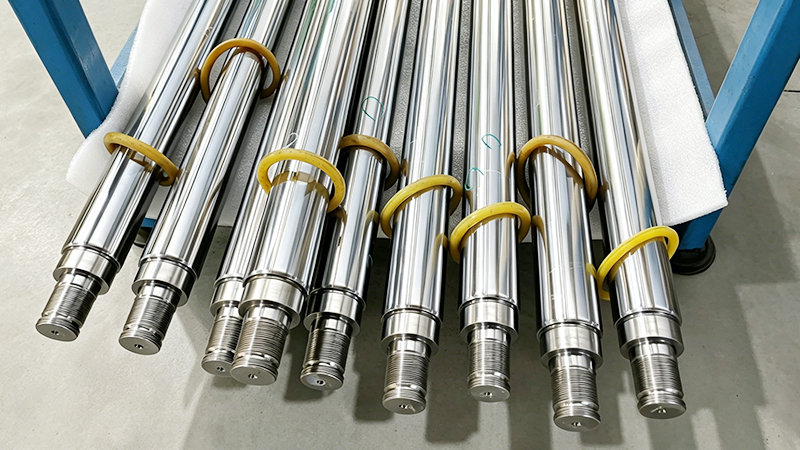
Because high-cycle wear is the main challenge, the chrome surface’s quality and hardness are central. Hard chrome plating provides the wear-resistant surface that material handling rods need, and its hardness, typically 800 to 1000 HV, resists the gradual abrasion of countless strokes. A good, hard, well-finished chrome surface is what gives the rod a long wear life in constant cycling, which is exactly what this market values.
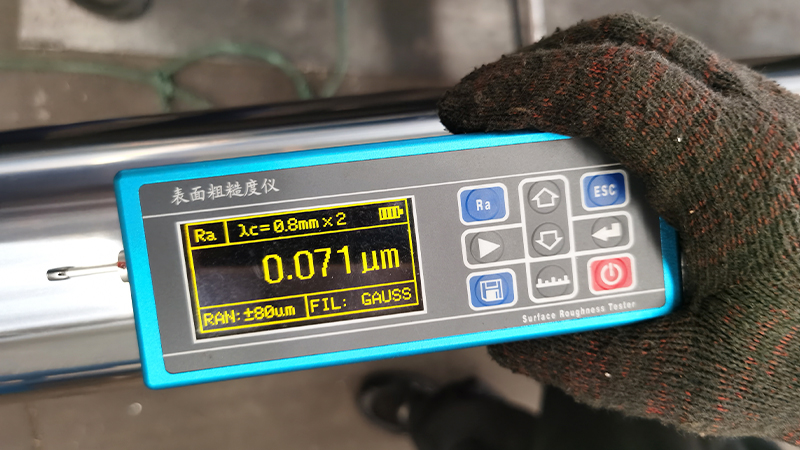
Surface finish is as important as hardness for high-cycle duty, because the finish determines the friction and wear at the rod-seal interface. A smooth, well-finished rod surface, with the right texture to retain a lubricating film, lets the seal ride with low friction and low wear over many cycles, while a rough surface abrades the seal and a too-smooth one may not retain lubricant. The finishing quality of the rod, from grinding and superfinishing, therefore directly affects how long the cylinder runs between repairs.
For the moderate corrosion exposure of typical indoor material handling, a standard chrome thickness is usually adequate, which helps keep cost down. Unlike mining or agricultural rods that need thick or duplex chrome for aggressive environments, an indoor forklift rod faces limited corrosion, so the chrome thickness can be chosen for wear life rather than heavy corrosion protection. Where machines work outdoors or in wet areas, more corrosion protection is warranted, but for the common indoor case, a good standard rod optimised for wear and finish is the sweet spot.
Balancing cost and life
Material handling is a cost-sensitive market, because operators run fleets of machines and buy parts in volume, so the value equation matters as much as the technical specification. The goal is not the most heavily specified rod but the rod that delivers the longest reliable life per unit cost for the duty. Over-specifying a mining-grade rod for an indoor forklift wastes money, while under-specifying a cheap, poorly finished rod leads to the drain of small repairs the fleet manager described.
The right balance is a well-made standard rod with a good, hard chrome surface and quality finish, in the moderate chrome thickness appropriate for the environment. This gives long wear life for constant cycling without paying for corrosion protection or load capacity the application does not need. For a stockist, stocking this kind of value-optimised rod in the popular material handling sizes serves the market’s real need better than either extreme.
Cycle life economics reward quality finishing in particular, because the cost of a rod is small compared to the cost of the repeated downtime and repair when a poorly finished rod wears seals quickly. A slightly better-finished rod that doubles the interval between seal repairs saves far more than its price premium across a fleet running constant cycles. Helping customers see this total-cost picture, rather than just the rod price, is how you sell the right rod into a cost-focused market.
Serving the material handling market
For a stockist or service provider, serving material handling well means stocking value-optimised rod in the common sizes and being ready to supply the constant, moderate demand for repairs. Because these machines cycle constantly, they generate a steady stream of seal and rod repairs, and availability of the right rod in the popular diameters lets you supply that demand promptly. Depth in the common material handling sizes matters more than breadth of exotic specifications.
Because much of the work is repair of high-cycle wear, the reseal-or-replace judgement discussed for cylinders generally applies often here, and having good rod ready supports quick rod replacement when a rod’s surface has finally worn. A material handling operator wants machines back in service fast, so a supplier who can provide the right rod immediately, with the wear life to run reliably, becomes a valued partner. Quick availability of quality, value-optimised rod is the offer this market rewards.
The overall lesson is that material handling rod is chosen for high-cycle wear life and value, not for the extremes of load or corrosion that dominate heavy-duty markets. A well-made standard rod with a good chrome surface and quality finish, in the popular sizes, at a sensible cost, is what keeps forklift and material handling fleets running with the fewest of those small, cumulative repairs. Optimising for the real duty, constant cycling at moderate load, is what serves this market best.
Related Reading
- Chrome Plated Rod product range: https://eaihydraulic.com/product-cate/chrome-plated-rod/
- Hydraulic Cylinders for Construction Machinery: https://eaihydraulic.com/application/hydraulic-cylinders-for-construction-machinery/
Rod That Goes the Distance, Cycle After Cycle
Material handling fleets are won on wear life and value, not extremes. EAST AI has plated hydraulic rod since 2006, and we help distributors stock rod optimised for high-cycle duty at a cost that suits fleet operators.
What we offer:
- Hard chrome plated rod with quality finish for long high-cycle wear life
- Standard chrome thickness optimised for indoor material handling duty
- Popular forklift and material handling sizes for quick repair availability
- Value-focused rod that lowers total cost across a fleet
Keep your customers’ fleets running. Talk to us about material handling rod. Email: market@east-ai.com | Phone: +86 13771568763 Address: Wuxi, Jiangsu, China.
Written by Alex, Production Engineer at EAST AI