
A rebuild shop replaced the rod seal on a mining cylinder with a high-performance PTFE set, expecting a long, trouble-free life. Six weeks later the cylinder came back weeping past the rod. Nothing was defective. The seal had simply been chosen for the wrong duty: a slow, heavily loaded, high-side-load application that a robust polyurethane lip seal would have handled better, sealed more tightly at low speed, and cost a fraction as much. The lesson is one every hydraulic professional eventually learns: seal material is not a ranking from worse to better. It is a matching problem.
This article is for hydraulic cylinder builders, rebuilders, and the service providers who specify seals, and it lays out how to match the two dominant sealing material families—polyurethane (PU) and PTFE-based seals—to the actual duty cycle of the cylinder.
Two Material Families, Two Personalities
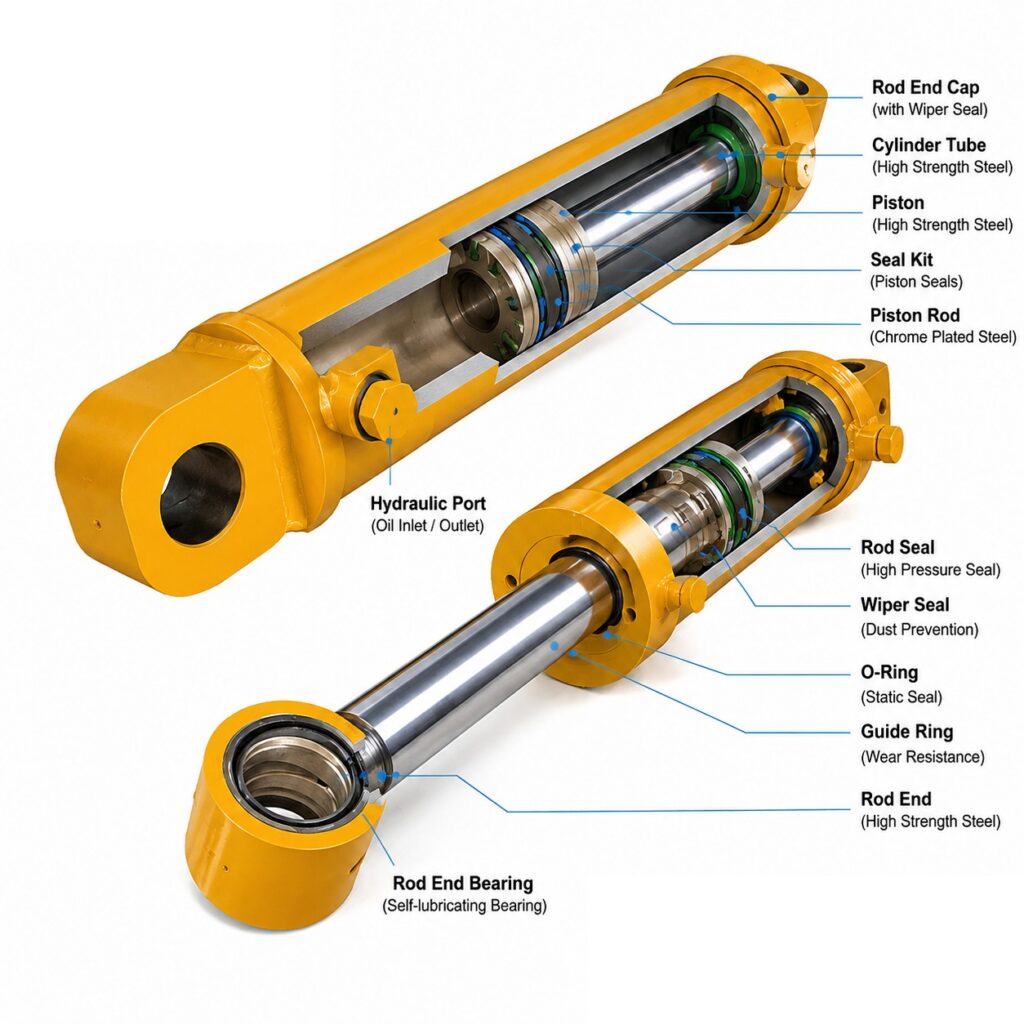
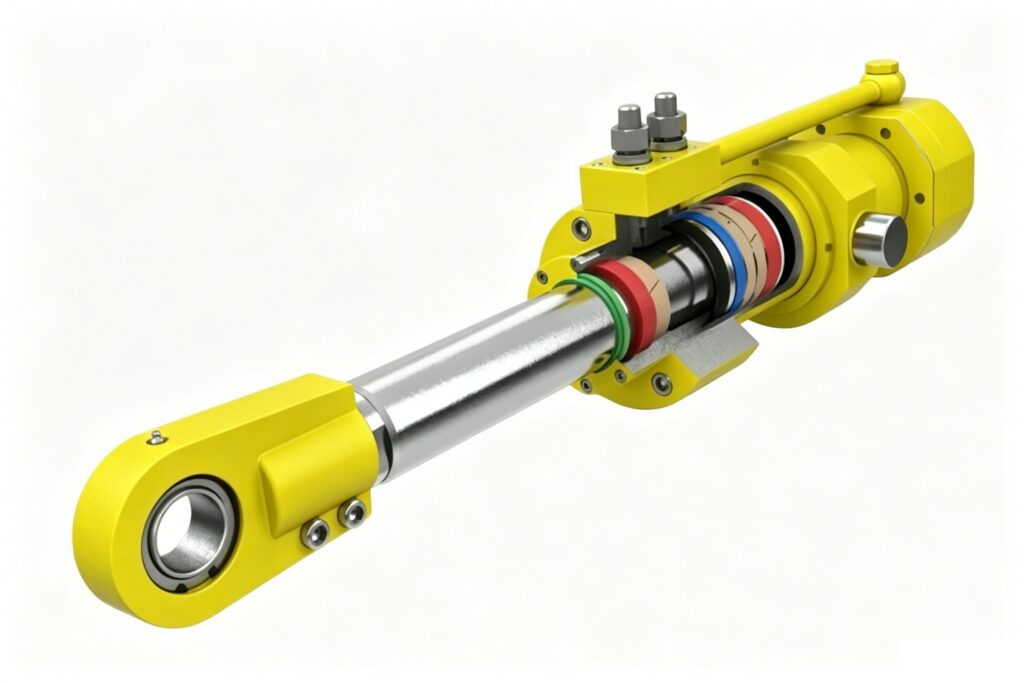
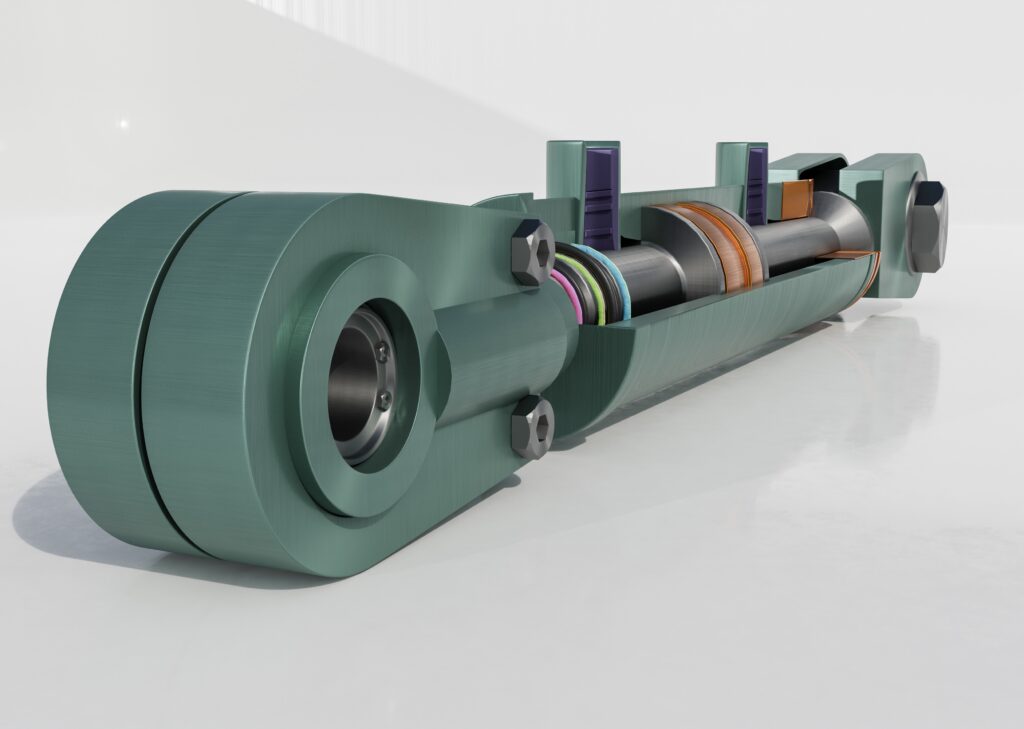
Polyurethane is an elastomeric material, meaning it is rubbery and resilient. A PU lip seal deforms under system pressure and presses actively against the sealing surface, which makes it excellent at low-pressure and static sealing and gives it strong resistance to extrusion at moderate to high pressures. It is tough, abrasion-resistant, and forgiving of the small imperfections and side loads found in real machinery. Its limits are temperature and speed: PU softens and degrades as temperatures climb toward and beyond roughly 80–100 °C depending on grade, and at high sliding speeds its friction generates heat that shortens its life.
PTFE seals behave completely differently. PTFE is not elastomeric; it is a low-friction plastic, almost always used as a sealing element energized by an elastomer or spring behind it. That construction gives PTFE-based seals their signature strengths: extremely low friction, no stick-slip, excellent high-speed capability, a very wide temperature range, and broad chemical compatibility. Because friction is low, they run cooler and are ideal where stick-slip would ruin smooth motion or where the cylinder cycles rapidly. Their weakness is that, lacking rubber-like resilience, they depend entirely on the energizer for contact force and are less tolerant of low-pressure sealing and certain surface conditions.
Reading the Duty Cycle
The single most useful thing you can do before choosing a seal is to characterize the duty cycle honestly. Four variables dominate: speed, temperature, pressure profile, and cycle frequency.
Speed is often the deciding factor. A slow-moving cylinder—an outrigger, a clamp, a heavy lift that extends over several seconds—generates little frictional heat, and a PU seal will seal it tightly and cheaply. A fast-cycling cylinder—an injection-molding actuator, a high-speed press, a machine doing hundreds of strokes an hour—generates significant heat at the seal and benefits enormously from the low friction of PTFE, which runs cooler and resists the heat-driven degradation that would cook a PU lip.
Temperature works alongside speed. High ambient temperature, hot hydraulic fluid, or heat soak from a nearby process pushes you toward PTFE, whose usable range extends well beyond where PU begins to soften. Cold is its own question: some PU grades stiffen and lose sealing ability in the cold, and low-temperature service may call for a specific grade or a PTFE solution.
Pressure profile matters both for magnitude and character. Steady high pressure favors robust, extrusion-resistant designs; rapid pressure spikes and shock loading reward the resilience of PU or a carefully engineered PTFE set with the right back-up rings. Cycle frequency ties it together: a high-frequency application accumulates heat and wear quickly, amplifying every other factor.
Matching Materials to Real Applications
For slow, heavily loaded, intermittent cylinders—construction outriggers, mining support rams, agricultural implements—PU is usually the right and economical choice. It seals tightly at low speed, resists the abrasion and contamination of dirty environments, and tolerates the side loads these machines impose.
For fast, continuous, or high-temperature cylinders—industrial automation, plastics machinery, test rigs, high-cycle presses—PTFE-based seals earn their premium. The low friction prevents heat build-up, eliminates stick-slip for smooth motion control, and the wide temperature and chemical range handles demanding fluids and hot environments.
Many real cylinders are best served by a hybrid seal package: a PTFE primary rod seal for low friction and speed, backed by a PU secondary or buffer seal to handle pressure spikes and catch what the primary passes. This is common in mobile and industrial cylinders that see both fast motion and shock loading, and it captures the strengths of both families.
The Surface the Seal Runs Against
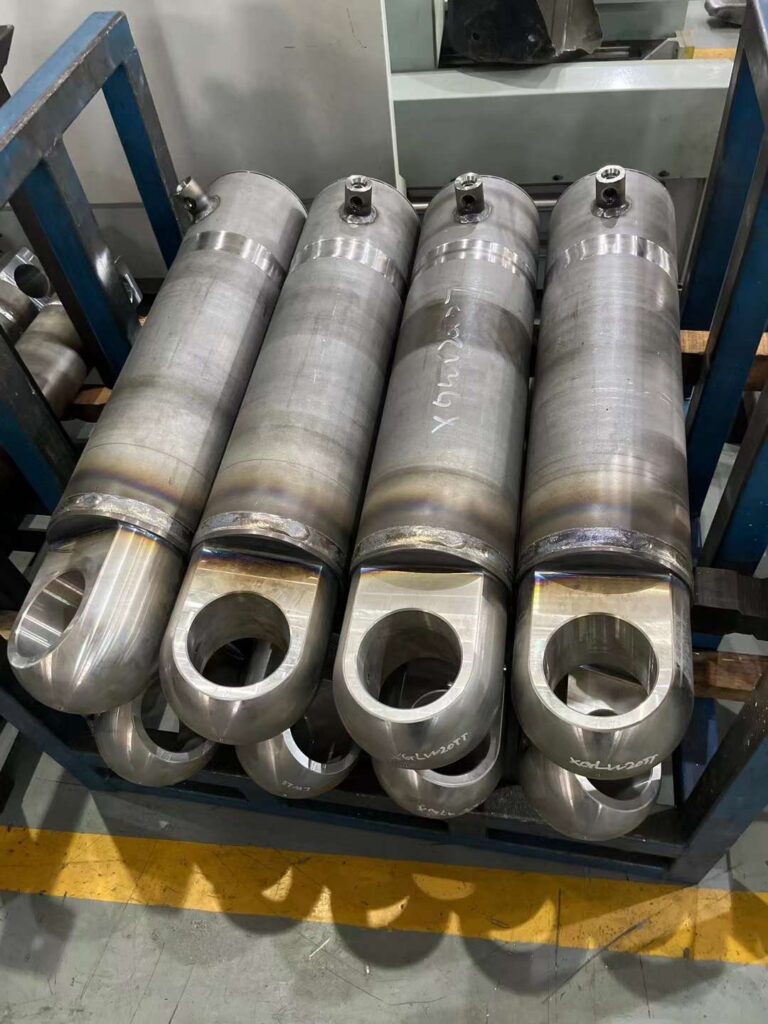
No seal choice succeeds on a poor counter-surface. A PTFE seal in particular depends on a correctly finished rod and bore surface; too rough and it abrades the seal, too smooth and it can starve the interface of the lubricating film the seal needs. The honed bore finish and the chrome rod surface quality are as much a part of seal life as the seal material itself. Specifying a premium seal onto a scored rod or an out-of-spec bore is throwing money away. This is why seal selection, rod, and tube specification should be considered together rather than in isolation.
A Practical Selection Checklist
Before committing to a seal material, answer these: What is the maximum sliding speed? What is the peak and continuous temperature at the seal, not just the ambient? What is the pressure profile—steady, or spiking? How many cycles per hour, and what is the expected total life? What is the fluid, and are there chemical compatibility concerns? What are the side loads and the condition of the guiding bushing? And critically, what is the surface finish of the rod and bore the seal will run against?
With those answers, the choice usually makes itself. Slow, dirty, shock-loaded, cost-sensitive points to PU. Fast, hot, smooth-motion-critical, chemically demanding points to PTFE. Mixed duty points to a hybrid. What you should never do is default to the most expensive seal on the assumption that premium equals appropriate—that assumption is exactly what put the mining cylinder back on the bench.
Related Reading
- Hydraulic Cylinders for Mining and Heavy Machinery
- Hydraulic Cylinders for Construction Machinery
- Chrome Plated Rod category
Build Cylinders That Seal for Their Real Duty
The right seal is the one matched to the cylinder’s actual speed, temperature, and load—running against a rod and bore finished to suit it. Getting the surface right is half the battle, and that is where we start.
What We Offer
- Honed tube and chrome plated rod finished to the surface specifications your seal package requires
- Guidance on matching bore roughness and rod finish to PU, PTFE, or hybrid seal designs
- Consistent tolerances and surface quality that let premium seals deliver their rated life
- Full material traceability for demanding mobile and industrial cylinder builds
Contact EAST AI (eaihydraulic.com) Email: market@east-ai.com Phone: +86 13771568763 Address: Wuxi, Jiangsu, China.
Written by Alex, Production Engineer at EAST AI