
Mining is where hydraulic components go to be punished. A rod on an excavator working a quarry face sees abrasive rock dust, side loads, impact, and long shifts with little downtime for maintenance. When a service provider who supplies that world asks me which chrome plated rod he should stock, the honest answer is that it depends on how hard the rod will be asked to work, because the general-purpose rod that suits a factory press will not survive a mining bench for long.
For a stockist or distributor serving mining and heavy-duty equipment rebuilders, choosing the right rod stock is a commercial decision as much as a technical one. Hold rod that is too light for the duty and your customers suffer premature failures that come back to you. Hold rod that is over-specified for every job and you tie up capital in expensive bar that most enquiries do not need. The skill is stocking the right rod for the real duty your market sees.
How mining service destroys an ordinary rod
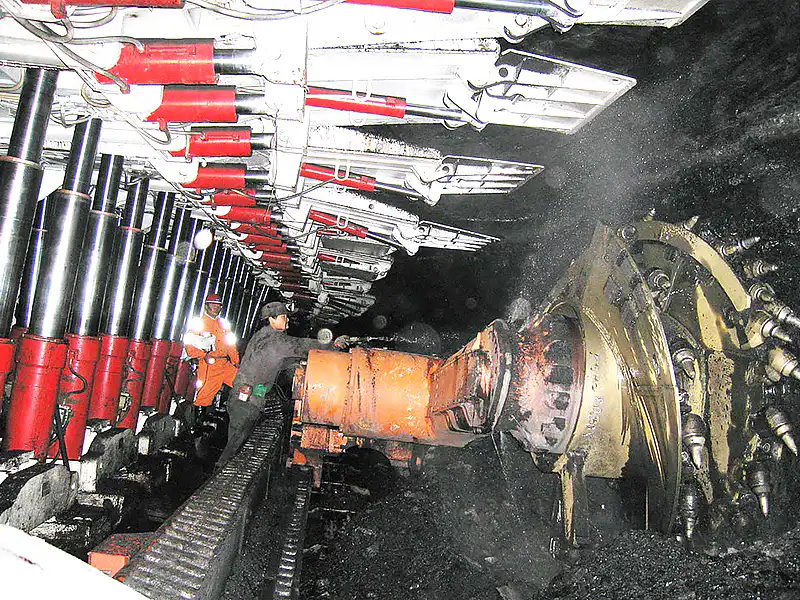
To stock the right rod, you first have to understand how the wrong one fails. In a mining cylinder, the dominant enemies are abrasion and corrosion working together. Rock dust and grit get past the wiper and act like sandpaper on the rod surface, scoring the chrome; once the chrome is breached, moisture and process water attack the base steel through the scratch, and a corrosion pit forms. That pit then chews the seal and the leak begins.
Impact and side loading add a mechanical failure path on top of the surface one. A rod that is bent by a shock load or a mis-aligned mounting develops localised stress and can crack the chrome layer, opening more corrosion paths. In the worst cases the rod takes a permanent bow, which then destroys the seal and the bushing on every subsequent stroke. Heavy-duty service therefore demands both a tough surface and a base that resists bending.
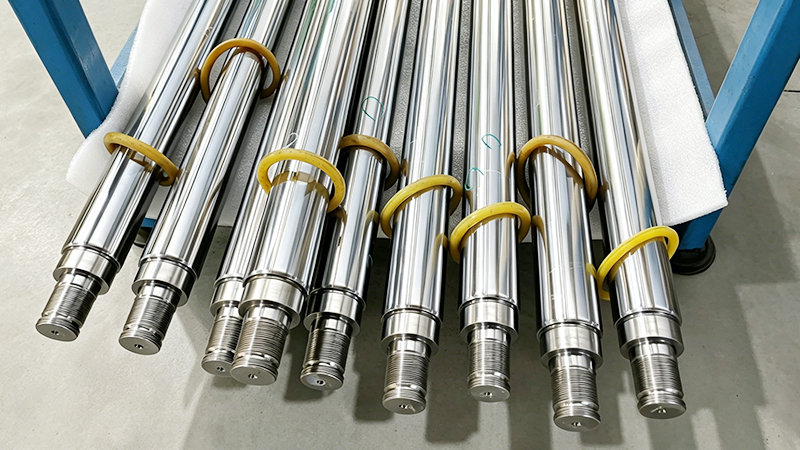
The takeaway for stocking is that mining rod has to be chosen for its whole system: a hard, adequately thick chrome layer over a base steel strong enough to resist bending, on a diameter generous enough for the loads. A rod that is excellent in one respect and marginal in another will still fail at its weakest point.
Chrome thickness: when to stock 20 versus 30 micrometers
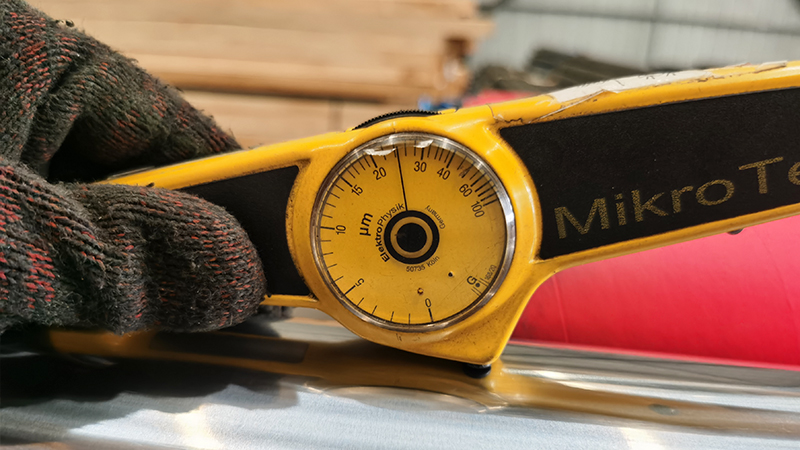
The hard chrome layer is the rod’s first line of defence, and its thickness is the single most-discussed variable in heavy-duty rod. Standard general-purpose rod often carries a chrome layer around 20 micrometers, which is ample for clean indoor service. For abrasive and corrosive mining duty, a heavier layer in the region of 30 micrometers gives more sacrificial material before the base steel is exposed, and it is usually the smarter stock for this market.
The reason a thicker layer helps is straightforward: abrasion removes chrome over time, and corrosion attacks through the micro-cracks that are inherent in all hard chrome. A thicker deposit simply buys more service life before either mechanism reaches the steel. That extra life is exactly what a mining customer is willing to pay for, because pulling a cylinder for a rebuild in a remote pit is enormously expensive.
For the most aggressive corrosive environments, a duplex nickel-chrome system pushes corrosion resistance further by adding a nickel underlayer beneath the chrome. It costs more and is not needed for every job, so it belongs in stock as a specialist option rather than a default. A well-run rod inventory for mining might hold 30-micrometer chrome as the standard heavy-duty line, with duplex rod available to order for the wettest, most corrosive applications.
Matching base hardness to the load
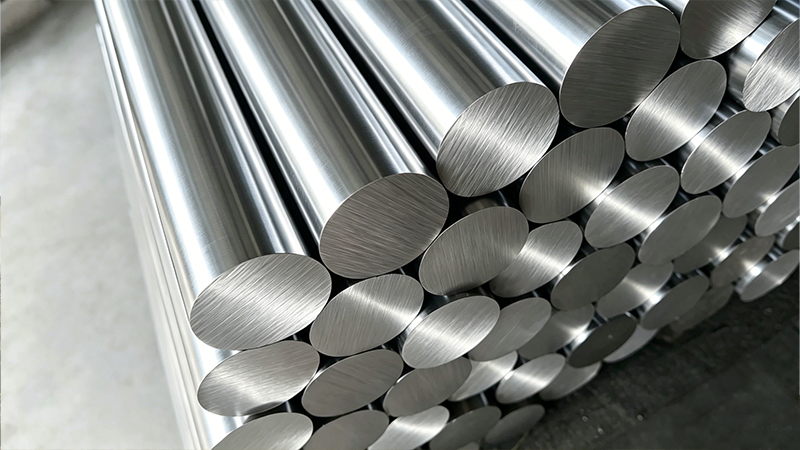
Chrome protects the surface, but the base steel carries the load, and for heavy duty the base matters as much as the plating. A medium-carbon steel such as CK45 is the standard base for general and moderately heavy rod, offering a good balance of strength and cost. For higher loads, longer strokes, and more bending resistance, an alloy base such as 42CrMo provides greater strength and better response to heat treatment.
The interaction between base hardness and surface performance is worth understanding when you advise a customer. A harder, stronger base resists bending and supports the thin chrome layer so it does not crack under load; a soft base lets the surface flex and the chrome fatigue. This is why simply adding more chrome to a weak base does not make a good mining rod. The two have to be matched to the duty.
For stocking, this means carrying at least two tiers: a CK45-based rod for standard heavy work and an alloy-based rod for the highest loads and longest strokes. Being able to steer a customer to the right tier, rather than selling them the same rod for every job, is what marks you out as a knowledgeable supplier and keeps their failure rate, and your returns, low.
Stocking, lead time, and serving the rebuild market
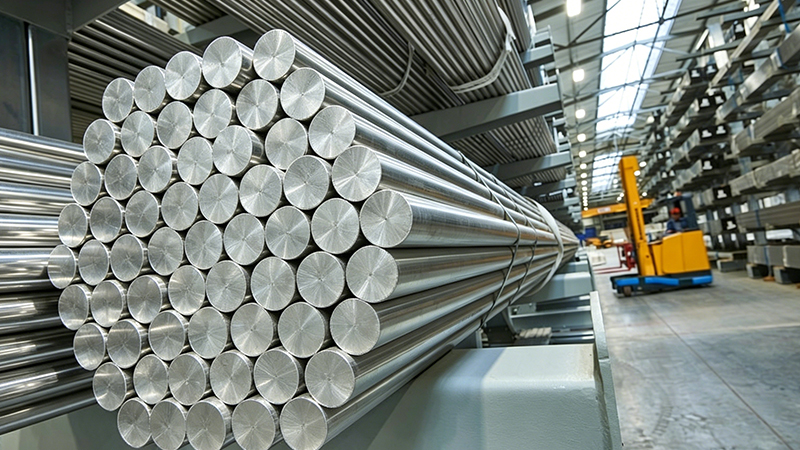
Mining rebuilders often work against machine downtime, which means lead time can matter more than a small price difference. Holding the popular heavy-duty diameters in the right chrome thickness lets you supply from stock while competitors wait for a mill order, and that availability is worth a premium to a customer with an idle machine burning money. Stock depth in a few key sizes beats a broad but shallow range.
Batch and material documentation carry particular weight in mining, where equipment owners increasingly demand traceability for safety-critical components. Keeping plating specifications and mill certificates on file, and supplying them with the rod, supports your customers’ own quality systems and warranty positions. It also protects you if a failure is ever investigated, because the paperwork shows the rod met its specification.
The complete offer for this market, then, is heavy-duty rod in the right thicknesses and base grades, held in the sizes your rebuilders actually consume, backed by documentation and quick availability. Serve mining that way and you become the first call when a cylinder comes off a machine, which in this trade is the most valuable position a stockist can hold.
Related Reading
- Hydraulic Cylinders for Mining and Heavy Machinery: https://eaihydraulic.com/application/hydraulic-cylinders-for-mining-and-heavy-machinery/
- Chrome Plated Rod product range: https://eaihydraulic.com/product-cate/chrome-plated-rod/
Stock Rod That Survives the Pit
If your customers rebuild mining and heavy-duty cylinders, they need rod that shrugs off abrasion, resists bending, and keeps its seal. EAST AI has plated heavy-duty hydraulic rod since 2006, and we help distributors stock the thicknesses and base grades that real mining duty demands.
What we offer:
- Hard chrome plated rod in 20 and 30 micrometer layers, plus duplex nickel-chrome to order
- CK45 and alloy-base rod tiers matched to load and stroke
- Popular heavy-duty diameters held for quick availability
- Plating specifications and mill certificates for traceability
Let’s build a mining rod stock that lasts. Email: market@east-ai.com | Phone: +86 13771568763 Address: Wuxi, Jiangsu, China.
Written by Alex, Production Engineer at EAST AI