
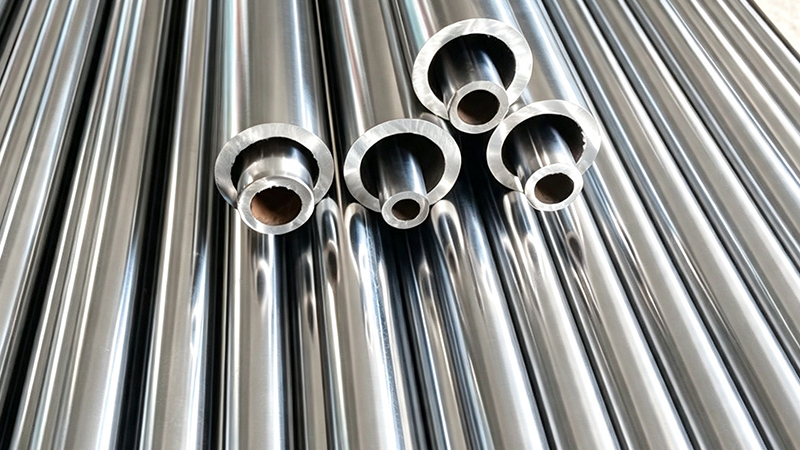
A chrome plated rod supplier quotes a twelve-week lead time, says they run three production shifts, and references a monthly output of forty thousand meters. These numbers appear in their capability statement, their sales representative cites them confidently, and there is no obvious reason to doubt them — until a large order arrives two weeks late with an explanation involving an equipment issue that “never usually happens.” Capacity claims made by suppliers in a sales context are not lies, exactly, but they represent best-case output under ideal conditions, and ideal conditions are not what you should be planning your supply chain around.
The gap between stated capacity and reliable usable capacity is normal across manufacturing suppliers of all sizes. Understanding how to assess actual usable capacity — not stated maximum capacity — is what separates procurement teams that absorb surprises from ones that anticipate them.
Published: 2026-11-02 | Last Updated: 2026-11-02
Why Stated Capacity Numbers Are Systematically Optimistic
Supplier capacity claims typically reflect theoretical maximum output under fully staffed, fully maintained, no-setup-time conditions. Real production capacity is lower than this for structural reasons that apply universally, not as evidence of a particular supplier’s dishonesty.
When a supplier quotes a capacity figure, ask specifically whether it represents maximum theoretical output, average actual output over the past twelve months, or current available capacity after existing order commitments — the answer reveals which version of capacity you’re actually being told about.
The distinction matters because theoretical capacity, average actual output, and available capacity are often very different numbers. A supplier with a theoretical capacity of forty thousand meters per month may run at thirty thousand on average and have fifteen thousand available after existing commitments — meaning your order competes for that fifteen thousand, not the forty thousand in the headline.
| Capacity Metric | What It Represents | Reliability for Planning |
|---|---|---|
| Theoretical maximum | Output under perfect conditions, no downtime | Low — never achievable consistently |
| Average actual (last 12 months) | Real throughput including maintenance, setbacks | Medium — reflects history but not current commitment level |
| Current available capacity | Remaining capacity after existing orders | High — directly relevant to your order’s lead time |
| Reserved capacity for your account | Capacity supplier has committed specifically to your orders | Highest — only relevant if contractually defined |
How to Assess Capacity Without a Factory Visit
A factory visit provides the most direct capacity evidence, but it isn’t always practical for every supplier relationship. Several verification steps provide meaningful evidence without requiring travel.
Request evidence of recent output in the form of production logs, shipping records, or invoices from the past ninety days for orders of similar specification to yours — a supplier who has recently shipped comparable volume has demonstrated actual output, not just claimed capability.
This request is easy for a capable supplier to fulfill and difficult for one whose actual throughput is significantly lower than claimed. Reluctance to share this information — even in aggregated or anonymized form — is itself informative. A supplier who can show shipping records for thirty orders of similar specification in the past quarter has provided operational evidence that no capacity statement can replace.
Other verification approaches include:
- Lead time consistency check: Ask the supplier for their average lead time on orders of your typical size over the past year, then ask for the range (shortest and longest). A wide range suggests capacity inconsistency.
- Third-party audit: Many inspection companies offer supplier capability audits that assess production floor size, equipment type and age, and staffing against claimed output. These take one to two days and cost a few hundred dollars.
- Reference check: Ask for two or three buyers who place orders of similar size and specification, and ask those buyers directly about their experience with lead time reliability.
What Capacity Utilization Rate Tells You About Future Reliability
A supplier running at sixty percent utilization and a supplier running at ninety-five percent utilization may both meet your lead time on the next order — but they have very different risk profiles for the order after that.
Ask your supplier directly what their current utilization rate is and whether they have any large orders in the pipeline that would affect capacity availability in the next quarter. A supplier who answers this question honestly and specifically — “we’re at about eighty percent, but we have a large order landing in week eight that will push us to full capacity for about three weeks” — is giving you actionable planning information. One who gives a vague answer about always having capacity available is not.
High utilization isn’t automatically a negative signal — it means the supplier is commercially active and their equipment is being maintained by regular production. The risk is in the margin: a supplier at ninety percent utilization has very little buffer for equipment downtime, staffing issues, or a larger-than-expected order from another customer.
| Utilization Range | Risk Assessment | Recommended Action |
|---|---|---|
| Below 50% | Low capacity pressure | Verify they have enough activity to maintain equipment and skills |
| 50-75% | Low-medium risk | Normal monitoring; build 1-week buffer into your planning |
| 75-90% | Medium risk | Ask about upcoming large orders; build 2-week buffer |
| Above 90% | High risk of lead time slip | Request written lead time commitment; consider capacity reservation fee |
How to Negotiate a Capacity Reservation for Critical Orders
For large or time-sensitive orders, a capacity reservation — a contractual commitment from the supplier to hold a defined production slot — provides significantly more lead time certainty than a quoted lead time without any reservation mechanism.
When placing an order where lead time certainty is critical, explicitly ask whether the supplier will commit to a specific production week in writing, and what, if anything, they require in exchange for that commitment — many suppliers will reserve capacity for a significant order if asked directly, without requiring anything additional.
A capacity reservation is distinct from an order confirmation. An order confirmation says the supplier intends to fulfill the order. A capacity reservation says a specific production slot is held, and if it’s missed the supplier has a documented obligation. Not all suppliers will offer formal capacity reservations, but most will provide a written commitment to a production week for significant orders, which provides similar practical protection.
For ongoing relationships where consistent lead time matters, a standing capacity reservation — a regular allocation of production capacity committed to your account on a rolling basis — is worth negotiating at contract renewal. It costs the supplier some scheduling flexibility and typically commands a small premium, but for buyers where a reliable four-week lead time creates genuine production planning value, the premium is usually justified.
EAST AI’s team works with service providers and OEMs to define available capacity commitments at the start of each contract period. If you want to discuss how we handle capacity allocation and what reservation options are available for your order profile, contact us at market@east-ai.com or +86 13771568763.
Why Equipment Age and Maintenance Schedule Matter for Capacity Assessment
A production line’s stated capacity is based on its equipment performing as designed. Equipment that is aging, overdue for maintenance, or running with known issues will consistently underperform its theoretical capacity — and this underperformance tends to surface as unexpected lead time slippage on specific orders rather than as an openly acknowledged capacity constraint.
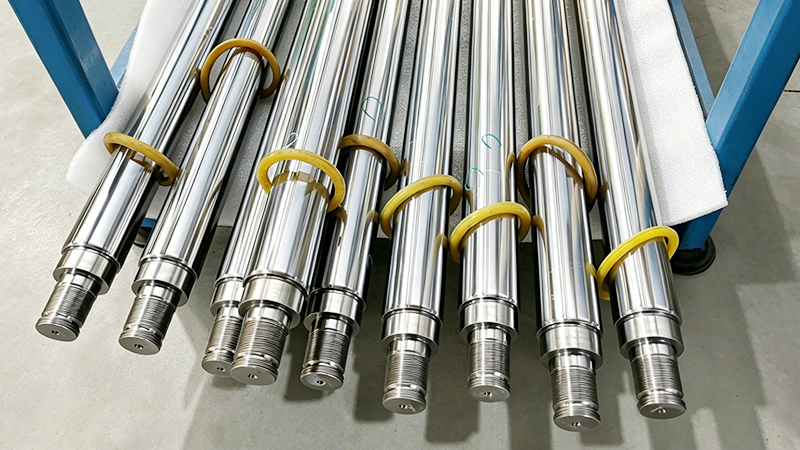
When assessing a new supplier’s capacity, ask directly about the age of their primary grinding and plating equipment and their preventive maintenance schedule — a supplier whose equipment is more than fifteen years old without a documented replacement or refurbishment program is carrying capacity risk that won’t appear in their headline output figures.
Equipment age isn’t disqualifying — well-maintained older equipment can produce reliably — but the combination of older equipment, deferred maintenance, and high utilization is the specific pattern most associated with unexpected production delays. Asking about maintenance schedules also reveals how seriously a supplier takes operational continuity, since a supplier who can describe their PM program in detail is managing their production risk more systematically than one who handles maintenance reactively.
How to Verify Capacity Claims Through Third-Party Channels
When direct supplier conversation and reference checks leave uncertainty about actual capacity, third-party verification provides independent evidence that doesn’t rely on the supplier’s own representation of their capabilities.
For any supplier relationship where you plan to allocate a meaningful share of your procurement spend, consider commissioning a third-party supplier audit before finalizing the allocation — an audit that covers production floor size, equipment inventory, staffing levels, and order book visibility provides the most reliable capacity evidence available outside of your own direct observation.
Supplier audits are available from several international inspection and certification organizations and typically cost between four hundred and twelve hundred dollars depending on scope and location. For a buyer planning to place several hundred thousand dollars per year with a supplier, this cost is immaterial relative to the supply chain risk of discovering a capacity problem after committing the business.
Buyers who are not ready to commission a full audit can often get meaningful capacity evidence through a planned factory visit, particularly if the visit is timed to coincide with production activity rather than scheduled as a formal reception. A supplier whose production floor is active and organized during an unannounced or low-preparation visit is demonstrating real operational capability more convincingly than one who presents a polished tour of a factory that happened to be fully cleaned and staffed for the visit.
| Verification Method | Cost | Time Required | Evidence Quality |
|---|---|---|---|
| Supplier-provided output records | None | 1-3 days | Medium — supplier-controlled data |
| Reference checks (2-3 buyers) | None | 3-5 days | Medium-high — independent but anecdotal |
| Planned factory visit | Travel cost | 1-2 days | High — direct observation |
| Third-party supplier audit | 400−1,200 | 1-2 weeks | Highest — independent, documented |
How to Use Capacity Findings to Structure Your Supplier Portfolio
Capacity verification data should inform not just whether to place an order with a specific supplier, but how large a share of your total procurement they should carry. A supplier verified at seventy-five percent utilization with a realistic available capacity of twelve thousand meters per month should not be allocated twenty thousand meters of your annual requirement — the math creates a delivery risk that the capacity verification itself revealed.
Map your total annual procurement requirement against each supplier’s verified available capacity, and size each supplier’s allocation so that your order volume represents no more than sixty to seventy percent of their available capacity at the time of ordering. This buffer accommodates normal production variation and minor capacity pressures without pushing your supplier into the high-utilization range where lead time slippage becomes probable.
This allocation discipline also means that as a specific supplier’s utilization grows — either because their order book from other customers increases or because your own orders to them increase — the capacity picture needs to be revisited. A supplier who was at sixty percent utilization when you onboarded them may be at eighty-five percent two years later, and the buffer that existed at onboarding may no longer be adequate. Annual capacity reviews, even brief ones, keep the allocation picture current and prevent the surprise lead time deterioration that catches buyers off guard.
Related Reading
- How Should an OEM Decide Whether to Dual-Source Honed Tube or Stay With One Supplier?
- How Should an OEM Decide Whether to Hold Safety Stock on Chrome Plated Rod or Rely on Supplier Lead Time?
- Chrome Plated Rod Products
Written by Jeff, Founder of EAST AI