
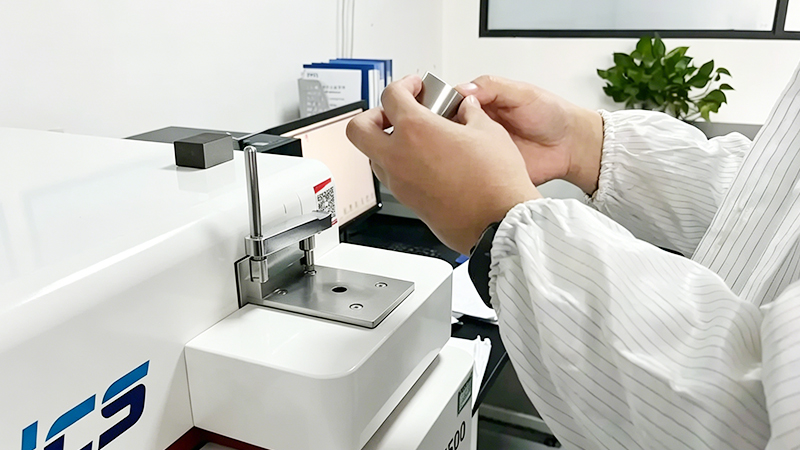
The Cylinder Passed Testing. Why Did It Still Leak?
A hydraulic cylinder manufacturer received a quality complaint from an equipment customer.The cylinder had passed pressure testing before shipment.The material certificate was correct.The piston seal specification matched the drawing.The assembly process followed the standard procedure.
However, after several months of operation, several cylinders began showing signs of internal leakage and reduced performance.The initial assumption was that the seal quality was the problem.After a detailed inspection, engineers discovered a different issue.The seals were not defective.
The actual problem was related to the internal surface condition of the cylinder bore.The bore surface roughness was outside the ideal range, affecting lubrication behavior and accelerating seal wear.This situation highlights an important engineering principle:
A hydraulic cylinder seal does not work independently. Its performance depends on the relationship between the seal, hydraulic oil film, and cylinder bore surface quality.
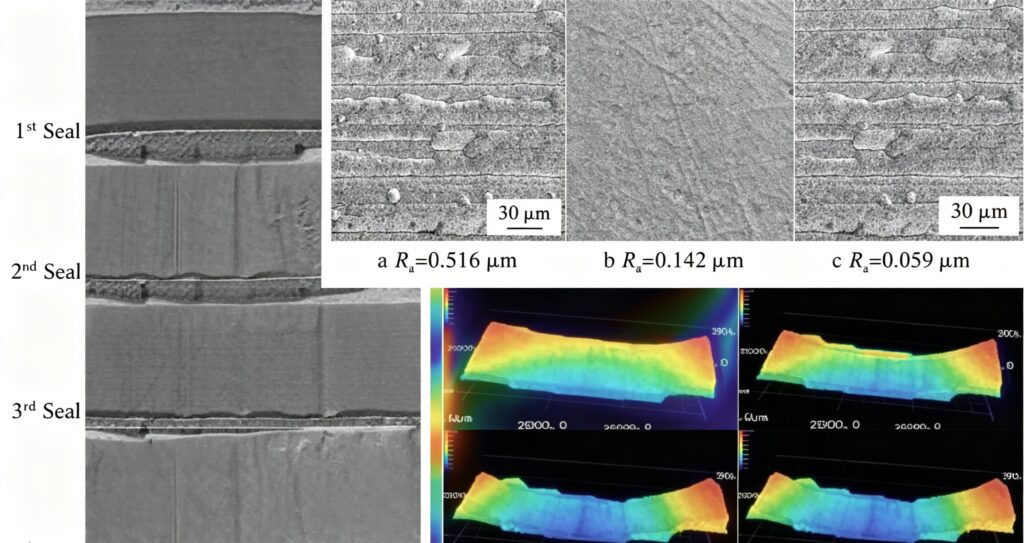
Why Surface Roughness Matters in Hydraulic Cylinders
Inside a hydraulic cylinder, the piston seal continuously moves along the cylinder bore during operation.This movement creates a complex interaction between:
- Seal material
- Hydraulic fluid
- Bore surface finish
- Operating pressure
- Sliding speed
The purpose of the bore surface is not simply to be smooth.It must provide the correct balance between:
- Supporting lubrication retention
- Reducing friction
- Maintaining sealing contact
- Preventing excessive wear
A bore that is too rough may damage the seal.A bore that is too smooth may not retain sufficient lubrication.Therefore, achieving the correct surface roughness is a critical part of hydraulic cylinder manufacturing.The goal is not the smoothest surface. The goal is the correct surface.
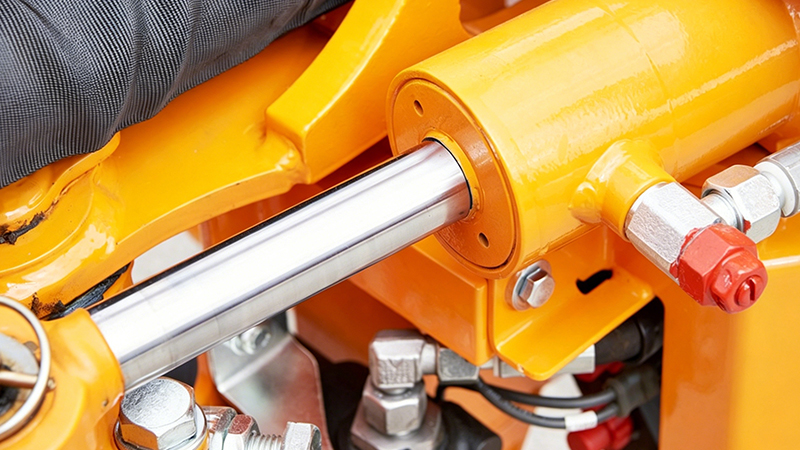
What Happens When Surface Roughness Is Too High?
When the internal surface of a hydraulic cylinder bore is excessively rough, several problems may occur.
1. Increased Seal Wear
Sharp surface peaks can continuously contact the sealing element during cylinder movement.Over time, this repeated friction can accelerate:
- Seal lip damage
- Material wear
- Loss of sealing pressure
The result may be shorter seal service life and more frequent maintenance.
2. Increased Risk of Hydraulic Leakage
A damaged seal cannot maintain the same level of contact with the cylinder bore.As wear increases, hydraulic fluid may bypass the piston seal, reducing cylinder efficiency.Symptoms may include:
- Reduced holding force
- Slow cylinder movement
- Internal leakage
- Lower system performance
3. Higher Friction During Operation
Excessive surface roughness increases resistance between the seal and bore.Higher friction can create:
- Increased heat generation
- Uneven seal movement
- Stick-slip behavior
For high-cycle hydraulic systems, these effects can significantly reduce component life.A cylinder bore is a precision working surface, not simply a hole for piston movement.
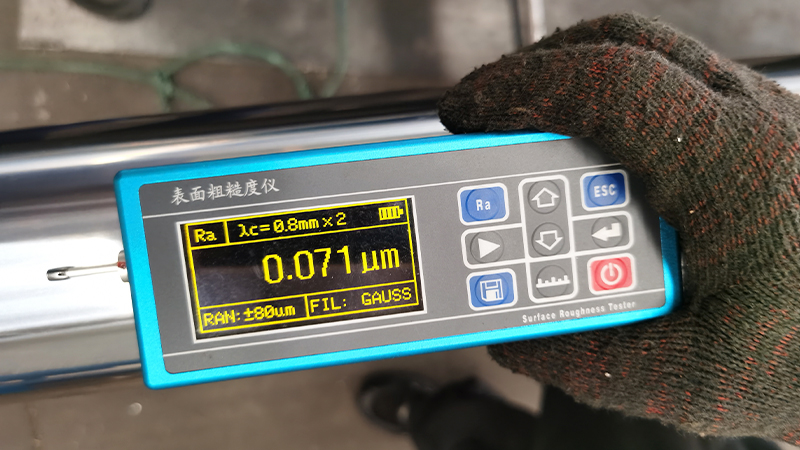
What Happens When Surface Roughness Is Too Low?
Many people assume that a smoother bore always provides better performance.However, this is not necessarily correct.A hydraulic cylinder requires a controlled surface structure that can retain a thin oil film between the seal and bore.If the surface becomes excessively smooth:
- Lubrication retention may decrease
- Friction may increase
- Seal temperature may rise
- Wear behavior may become unstable
This is why professional hydraulic cylinder manufacturers do not simply polish the bore until it appears visually perfect.The objective is to achieve a controlled finish through processes such as honing.Precision is not about removing every surface feature. It is about controlling the surface characteristics required for reliable operation.
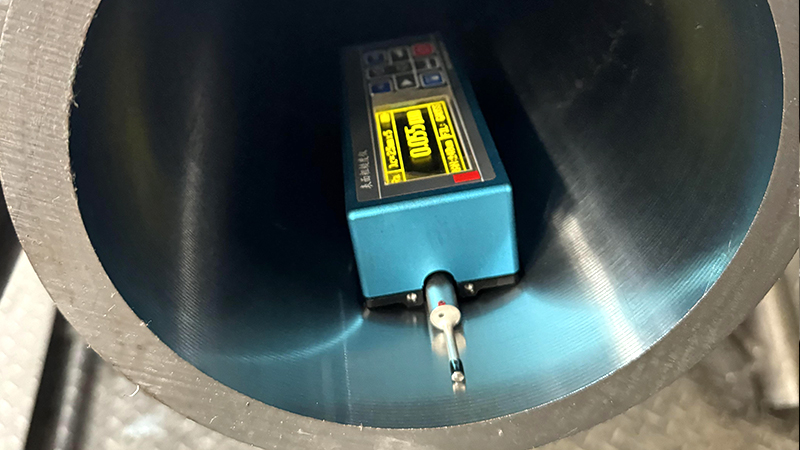
The Relationship Between Honed Tube and Seal Life
A Honed Tube is specifically manufactured to provide the internal bore quality required for hydraulic cylinder applications.Through the honing process, manufacturers can control important characteristics such as:
- Bore diameter accuracy
- Surface roughness
- Surface pattern
- Roundness
- Straightness
This controlled surface allows hydraulic seals to operate under more stable conditions.For OEM hydraulic cylinder manufacturers, consistent bore quality is especially important because small variations between batches can affect assembly performance and final product reliability.A high-quality Honed Tube helps manufacturers reduce unexpected machining adjustments and improve production consistency.
The value of a honed tube is not only the finished surface—it is the repeatability of that surface from batch to batch.

How Engineers Evaluate Bore Quality
Experienced engineers do not evaluate hydraulic cylinder tubes by appearance alone.They consider multiple technical parameters.
Surface Roughness (Ra Value)Ra value is commonly used to describe the average surface roughness of the bore.It provides a reference for evaluating whether the surface finish is suitable for sealing applications.
Bore ToleranceEven with excellent surface finish, incorrect bore dimensions can affect:
- Seal compression
- Friction
- Leakage performance
Roundness
A bore that is not sufficiently round may create uneven seal contact.This can result in localized wear and reduced service life.
Straightness
Poor straightness may increase resistance during piston movement and create uneven loading conditions.Hydraulic cylinder performance depends on the complete bore condition—not one measurement alone.
Common Mistakes When Evaluating Cylinder Bore Quality
Many purchasing decisions focus only on material grade or price.However, experienced hydraulic cylinder manufacturers also evaluate process control.Common mistakes include:
- Selecting tubes based only on steel grade.
- Ignoring surface roughness requirements.
- Assuming all honed tubes have identical bore quality.
- Comparing suppliers only by unit price.
- Overlooking batch consistency.
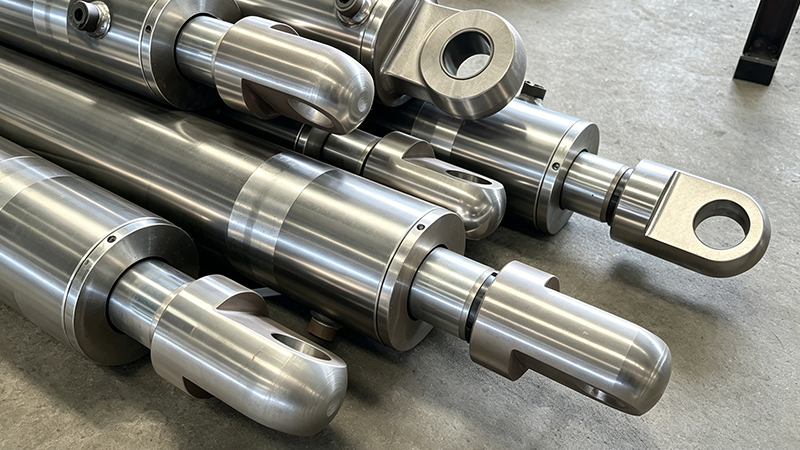
A hydraulic cylinder is a precision mechanical system.The smallest differences in manufacturing quality can influence long-term performance.Reliable cylinders are built through controlled processes, not individual inspection results alone.
Engineering Note
The internal surface of a hydraulic cylinder barrel represents one of the most important functional surfaces in the entire assembly.Unlike structural components where appearance may have little influence on performance, the cylinder bore directly interacts with sealing elements throughout the product lifecycle.For this reason, professional manufacturers control not only material selection but also:
- Honing process parameters
- Surface finish
- Dimensional accuracy
- Inspection procedures
A stable manufacturing process creates predictable performance.
Related Reading
- How to Choose the Right Honed Tube Material for Hydraulic Cylinders
- Why Hydraulic Cylinder Barrels Fail Even When Material Meets Specification
- DOM Tube vs. Honed Tube: Which Is Better for Hydraulic Cylinders?
Frequently Asked Questions
What surface roughness is required for hydraulic cylinder tubes?
The required surface roughness depends on the seal design, application requirements, and manufacturer specifications. Professional hydraulic cylinder manufacturers normally select bore finishes based on sealing performance rather than simply achieving the lowest roughness value.
Does bore surface roughness affect hydraulic leakage?
Yes. Incorrect bore surface conditions can accelerate seal wear and reduce sealing performance, which may eventually contribute to hydraulic leakage.
Why do hydraulic cylinder seals wear quickly?
Rapid seal wear can result from several factors, including incorrect surface finish, contamination, misalignment, excessive pressure, improper lubrication, or unsuitable seal materials.
Can honing improve hydraulic cylinder performance?
Yes. The honing process improves bore accuracy and surface consistency, helping create a suitable working surface for hydraulic seals.
Why are Honed Tubes used for hydraulic cylinders?
Honed Tubes are designed to provide controlled internal bore quality, including surface finish, tolerance, and consistency, making them suitable for hydraulic sealing applications.
Is a smoother cylinder bore always better?
No. Hydraulic cylinder bores require a controlled surface texture that balances sealing contact and lubrication retention. Excessive smoothness can also create performance issues.
Need Technical Support?
Selecting the correct Honed Tube involves more than choosing a steel grade or checking dimensions.
Surface quality, bore consistency, manufacturing control, and application requirements all influence hydraulic cylinder performance.
At EAST AI, we manufacture Honed Tubes and Chrome Plated Rods for hydraulic cylinder applications, focusing on stable dimensions, controlled bore quality, and consistent batch performance.
If your team is evaluating hydraulic cylinder tube requirements, reviewing leakage issues, or selecting materials for a new project, our engineering team can provide technical recommendations based on your actual application conditions.
Reliable hydraulic performance begins with the right foundation.