
珩磨管-2.jpg)
The Bore Size Was Correct. Why Did the Seal Still Fail?
A hydraulic cylinder manufacturer received a complaint from an equipment customer.The cylinder bore diameter was within the specified tolerance.The material certificate matched the customer’s requirement.The surface roughness inspection also passed.According to the standard inspection report, everything appeared acceptable.However, after several months of operation, the customer noticed abnormal symptoms:
- Uneven seal wear
- Reduced cylinder efficiency
- Internal leakage
- Increased maintenance frequency
The engineering team reviewed the production records again.The problem was not the material.It was not the surface finish.The hidden issue was the bore roundness of the honed tube.The internal diameter was correct when measured at one point, but the bore geometry was not consistent throughout the entire circumference.This created uneven contact between the seal and the tube surface.The result was premature wear and unstable cylinder performance.A hydraulic cylinder does not rely only on bore size. It relies on the complete geometry of the working surface.
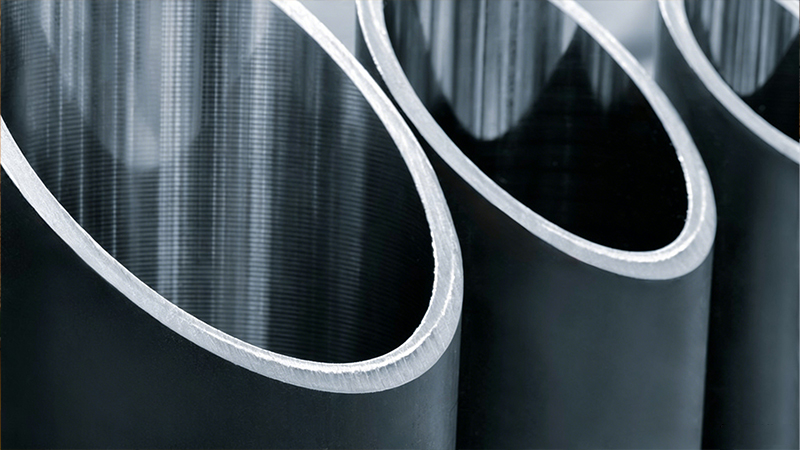
Why Bore Roundness Matters in Hydraulic Cylinders
A Honed Tube is designed to provide the precision internal surface required for hydraulic cylinder operation.During cylinder movement, the piston seal must maintain consistent contact with the bore wall.This requires the bore to have stable geometric characteristics, including:
- Diameter accuracy
- Roundness
- Straightness
- Surface finish
Among these factors, roundness directly influences how evenly the seal contacts the internal surface.A perfectly sized bore with poor roundness can still create performance problems.For example:A bore may measure exactly 100 mm at one position.However, if the cross-section is slightly oval rather than circular, the seal pressure distribution changes during movement.This can create areas of:
- Excessive compression
- Reduced sealing force
- Uneven friction
Precision hydraulic cylinders require precision geometry—not only correct dimensions.
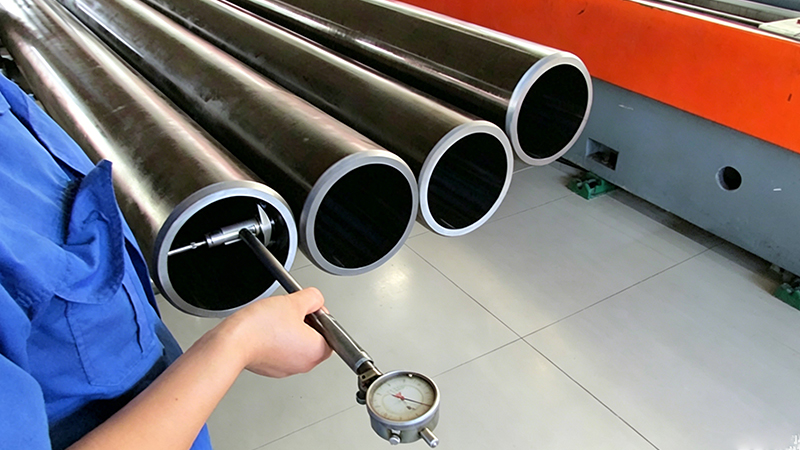
How Poor Honed Tube Roundness Creates Hidden Problems
1. Uneven Seal Loading
Hydraulic seals are designed to work under controlled compression.When bore roundness is inconsistent, the seal may experience different levels of pressure around its circumference.Some areas may have excessive contact.Other areas may have insufficient sealing force.Over time, this uneven loading can lead to:
- Irregular wear patterns
- Seal deformation
- Reduced sealing effectiveness
A seal performs best when the surrounding geometry remains stable.
2. Increased Friction During Operation
A hydraulic cylinder should move smoothly and consistently.Poor bore roundness can increase resistance because the seal must continuously adapt to changing contact conditions during movement.This may result in:
- Higher operating friction
- Increased heat generation
- Stick-slip movement
- Reduced energy efficiency
For equipment operating thousands of cycles per day, small geometric deviations can create significant long-term effects.
3. Premature Hydraulic Leakage
Internal leakage is often associated with damaged seals.However, the root cause may exist much earlier.When the seal experiences uneven pressure distribution, wear can accelerate.As sealing performance decreases, hydraulic fluid may bypass the piston seal.Common symptoms include:
- Cylinder drift
- Reduced holding force
- Slower movement
- Lower system efficiency
Many leakage problems begin with precision issues before they become visible failures.
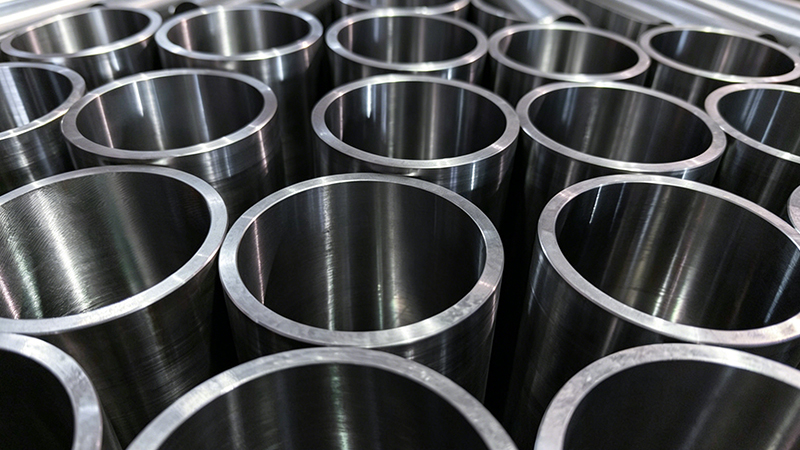
Roundness vs Bore Diameter vs Surface Roughness
When evaluating Honed Tube quality, many buyers focus heavily on diameter and surface roughness.These parameters are important.However, they describe only part of the complete bore condition.
Diameter determines whether the piston and seal assembly fit correctly.Incorrect diameter may cause:
- Excessive seal compression
- Poor sealing
- Increased friction
Surface roughness influences:
- Lubrication retention
- Seal interaction
- Wear behavior
A suitable surface finish helps maintain stable operation.
Roundness determines whether the bore maintains a consistent circular shape.Poor roundness can create:
- Uneven seal contact
- Localized wear
- Unstable movement
These three factors work together.A high-quality hydraulic cylinder requires balanced control of all three.A correct diameter with poor roundness is still an inaccurate hydraulic cylinder surface.
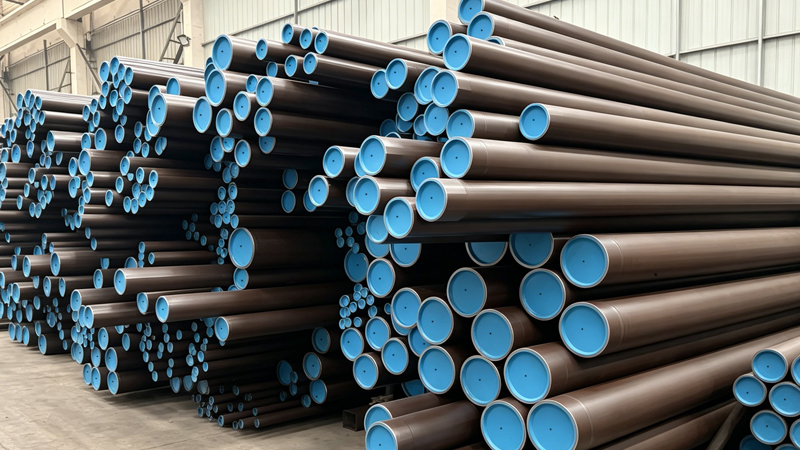
Why Roundness Is Often Overlooked During Purchasing
In many purchasing decisions, buyers evaluate the most visible specifications:
- Material grade
- Price
- Delivery time
- Bore size
- Surface finish
These factors are important.However, geometric accuracy is sometimes ignored because it is difficult to judge without proper inspection equipment.
Two tubes may have:
- The same material
- The same outside dimensions
- The same bore diameter
Yet their actual performance inside a hydraulic cylinder can be completely different.Experienced hydraulic cylinder manufacturers understand that reliability comes from controlling multiple precision factors together.These include:
- Material consistency
- Honing process stability
- Bore geometry
- Surface quality
- Inspection accuracy
The difference between an average tube and a precision Honed Tube is often hidden in the details that cannot be seen visually.
How Professional Manufacturers Control Honed Tube Roundness
Maintaining consistent roundness requires control throughout the entire manufacturing process.
1. Stable Raw Material Selection
The quality and consistency of the starting tube influence later machining stability.
Material variation can affect processing results.
2. Controlled Honing Process
The honing process is responsible for improving:
- Bore accuracy
- Surface finish
- Geometric consistency
A stable process helps maintain repeatable results.
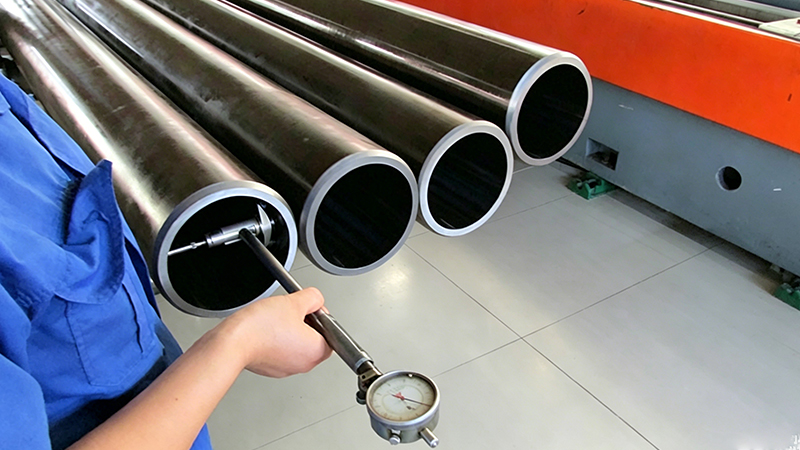
3. Precision Inspection
Professional inspection evaluates multiple parameters, including:
- Bore diameter
- Roundness
- Straightness
- Surface roughness
- Wall thickness
4. Batch Consistency
For OEM hydraulic cylinder manufacturers, one qualified sample is not enough.The supplier must maintain consistent performance across repeated orders.A reliable supplier provides not only products but also manufacturing confidence.Consistency from batch to batch is what creates long-term customer reliability.
Common Mistakes When Selecting Honed Tubes
Many procurement problems occur because buyers focus on price rather than total performance.Common mistakes include:
- Selecting suppliers only based on quotation price.
- Checking only material certificates.
- Ignoring bore geometry requirements.
- Assuming all honed tubes have the same precision level.
- Approving samples without considering future batch consistency.
The cost of a hydraulic component should not be measured only by purchase price.It should also include:
- Assembly efficiency
- Maintenance cost
- Equipment downtime
- Customer satisfaction
A precision component reduces hidden costs throughout the product lifecycle.
Lesson Learned
A hydraulic cylinder does not fail because one specification is missing. It fails when small quality differences accumulate during real operation.Roundness may appear to be a minor technical parameter.
However, inside a hydraulic cylinder, small geometric differences determine how efficiently the entire system performs.Selecting a supplier with strong process control helps manufacturers build cylinders with predictable reliability.
Related Reading
- How to Choose the Right Honed Tube Material for Hydraulic Cylinders
- Why Hydraulic Cylinder Barrels Fail Even When Material Meets Specification
- DOM Tube vs. Honed Tube: Which Is Better for Hydraulic Cylinders?
Frequently Asked Questions
What is honed tube roundness?
Honed tube roundness refers to how accurately the internal bore maintains a circular shape across its cross-section. It is an important factor affecting piston movement and sealing performance.
Can poor bore roundness cause hydraulic cylinder leakage?
Yes. Poor roundness can create uneven seal contact, accelerate wear, and eventually contribute to internal leakage.
What is the difference between bore diameter and roundness?
Bore diameter measures the overall size of the internal opening, while roundness evaluates whether the bore maintains a consistent circular shape.
Why does seal wear become uneven in hydraulic cylinders?
Uneven seal wear can occur when the seal experiences inconsistent pressure or friction caused by poor bore geometry, contamination, misalignment, or incorrect operating conditions.
How is honed tube roundness measured?
Manufacturers use precision inspection equipment to evaluate bore geometry according to customer requirements and production standards.
Is surface roughness more important than roundness?
Neither parameter replaces the other. Surface roughness affects lubrication and seal interaction, while roundness affects contact stability and movement accuracy.
Need Technical Support?
Selecting the right Honed Tube requires more than checking material grade and bore size.Bore geometry, surface quality, dimensional accuracy, and manufacturing consistency all influence hydraulic cylinder reliability.
At EAST AI, we manufacture Honed Tubes and Chrome Plated Rods for hydraulic cylinder applications, focusing on stable production processes, precise dimensional control, and consistent batch quality.
For OEM manufacturers and industrial partners, reliable hydraulic performance begins with reliable component foundations.Precision inside the tube creates performance in the field.