

Introduction
Production delays are usually blamed on familiar problems.A machine breaks down.A shipment arrives late.A drawing changes.Occasionally, the reason is far less obvious.A production line begins running slower than normal. Additional inspections become necessary. Operators spend more time adjusting machines, and assembly no longer feels as smooth as it did a few weeks earlier.
Nothing appears seriously wrong.Yet overall efficiency starts to decline.This type of situation is frustrating because the problem rarely points to a single cause. In many cases, the answer can be traced back to something that looked perfectly acceptable when it arrived at the factory: the incoming material.

The First Signs Were Easy to Ignore
A hydraulic cylinder manufacturer once noticed that production output had gradually decreased.
The change wasn’t dramatic.A few additional minutes were needed during machining.Some assemblies required minor adjustments.Several parts were rechecked before moving to the next process.
None of these events seemed significant on their own.The material certificates were correct.Dimensional inspections showed no major concerns.At first, nobody suspected the incoming material.
For more details, please click here.

Small Variations Started Creating Larger Problems
As production continued, the effects became more visible.Machine operators reported that cutting behaviour felt different.Tool wear became less predictable.Some parts required additional attention before assembly.Inspection frequency increased.
None of the individual issues justified stopping production.Together, however, they created something every manufacturer tries to avoid:Uncertainty.Production planning became more difficult because cycle times were no longer consistent.

The Investigation Moved Upstream
The first assumption was that something had changed inside the factory.The machining programs were checked.Equipment was inspected.Operators reviewed process parameters.Nothing unusual was found.Eventually, attention shifted to incoming materials.The dimensions met specification.The material certificates matched previous orders.Even the visual appearance looked the same.The investigation continued.
For more details, please click here.
Looking Beyond the Certificate
After comparing several batches, engineers found subtle differences in material behaviour during processing.
The issue was not related to a defective shipment.It was the accumulation of small variations that influenced manufacturing stability.The incoming material still met specification.It simply did not behave exactly like previous batches.This distinction is important.
A material can be compliant and still introduce variation into production.For manufacturers running high-volume operations, that variation often translates directly into additional cost.
Where the Real Cost Appears
Production delays are rarely caused by a single large event.More often, they are created by many small interruptions:
- Additional machine adjustments
- More frequent inspections
- Longer setup times
- Lower machining efficiency
- Increased rework
- Reduced confidence in production schedules
The cost of these activities is difficult to see on a purchase order.It becomes obvious only after production begins.This is one reason experienced buyers pay close attention to consistency, not just price.
Why Stable Materials Simplify Manufacturing
Every production system benefits from predictability.When incoming materials behave consistently:
- Machining becomes easier to control.
- Process planning becomes more reliable.
- Inspection requirements become more stable.
- Delivery schedules become easier to maintain.
Manufacturing teams spend less time reacting and more time producing.This is often where the value of a reliable supplier becomes most visible.Not during the first shipment.Not during incoming inspection.But months later, when production continues to run smoothly.
For more details, please click here.
A Lesson Many Manufacturers Learn
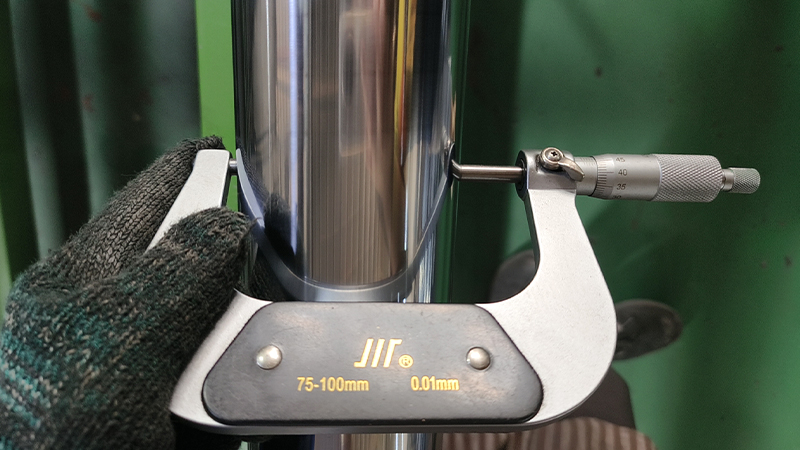
The manufacturer in this case eventually traced the issue back to variation in incoming material characteristics.No material certificates were incorrect.No dimensions were out of tolerance.No shipment was formally rejected.Yet the differences were enough to influence production performance.
After supplier controls and incoming material verification procedures were adjusted, production gradually returned to its previous level of stability.The lesson was simple.A specification defines what a material should be.Consistency determines how it behaves over time.
Looking at Supplier Performance Differently
When evaluating suppliers, the discussion often begins with:
- Price
- Lead time
- Material certificates
- Dimensions
These factors are important.However, experienced manufacturers eventually begin asking additional questions:
- How stable is the material source?
- How consistent is the production process?
- How much variation exists between batches?
- Can the supplier maintain the same quality over time?
Because in manufacturing, repeatability is often more valuable than a single successful shipment.
Final Thoughts
Incoming material variation rarely announces itself immediately.More often, it appears through slower production, additional inspections, and reduced efficiency.The material may still comply with every requirement on paper.Yet small inconsistencies can gradually influence an entire production system.
For manufacturers of hydraulic cylinders and hydraulic components, stable incoming materials are not simply a purchasing preference.They are part of maintaining predictable production, reliable delivery schedules, and long-term product quality.And sometimes, the difference between a smooth production month and a difficult one begins long before machining ever starts.
For more details, please click here.
FAQ
Can material variation affect production even if specifications are met?
Yes. Small differences in material behaviour can influence machining efficiency, tool wear, and production stability.
Why are production delays difficult to trace back to materials?
Because the effects usually appear gradually and often resemble machine or process issues.
What is the hidden cost of material variation?
Additional inspections, machine adjustments, longer setup times, and reduced production efficiency.
Why do experienced manufacturers focus on consistency?
Because stable materials create predictable production conditions and reduce uncertainty throughout manufacturing.
Can two compliant material batches perform differently?
Yes. Compliance with specifications does not always guarantee identical processing behaviour.
Need Technical Support?
Production challenges are not always caused by equipment or process settings.In many cases, incoming material consistency plays a larger role than expected.
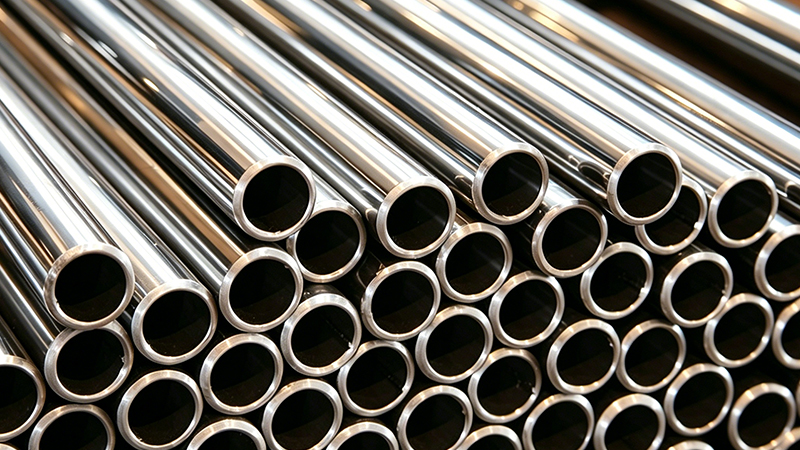
EAST AI manufactures Honed Tubes, Chrome Plated Rods, and hydraulic cylinder components according to customer drawings and application requirements, with an emphasis on batch consistency and manufacturing stability.
If you are reviewing suppliers, investigating production variation, or looking to improve process reliability, our engineering team is available to discuss technical requirements and share practical manufacturing experience.Because sometimes solving a production problem starts with looking further upstream than the machine itself.