
Introduction
In hydraulic component sourcing, price comparison is usually the starting point of every purchasing decision.On paper, suppliers often look similar. The specifications match. The material grades are equivalent. Delivery times appear acceptable.
This makes it natural for procurement teams to focus on unit price as the main decision factor.But in long-term production, many manufacturers eventually notice a gap between expected savings and actual operating cost.A lower price does not always lead to lower total cost.The difference usually becomes visible after production starts, not during quotation review.
When “Low Cost” Works and When It Doesn’t
A low-cost supplier can be a reasonable choice in some situations, especially for non-critical components or short-term demand.However, in hydraulic systems where components must work together under pressure, temperature variation, and continuous mechanical stress, the sourcing structure becomes more sensitive.
The real issue is not whether a supplier meets specification.The issue is whether the supplier can maintain consistent behavior across multiple production batches.
Stability Is Not the Same as Compliance
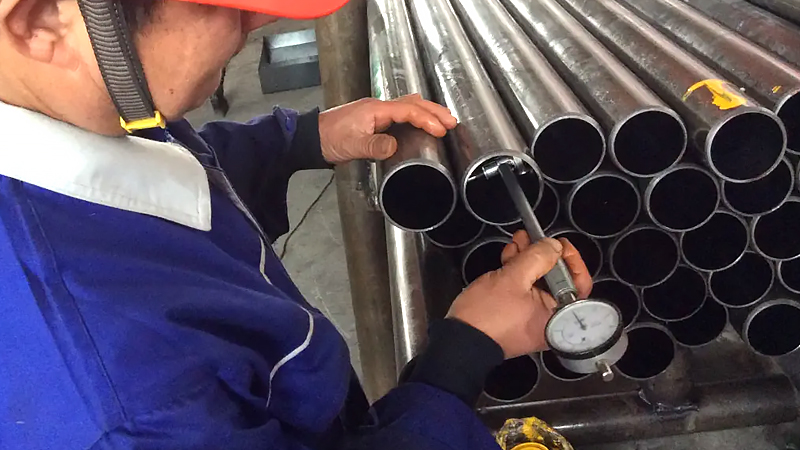
Most suppliers can provide material certificates and inspection reports.This confirms compliance with specification.But compliance alone does not guarantee identical performance between batches.In production environments, engineers often observe differences in:
- machining stability
- surface response during finishing
- assembly behavior
- dimensional drift during processing
None of these necessarily indicate defective material.They simply reflect variation within acceptable ranges.When multiple suppliers are involved, these small variations begin to accumulate across the system.
Where Hidden Costs Start to Appear
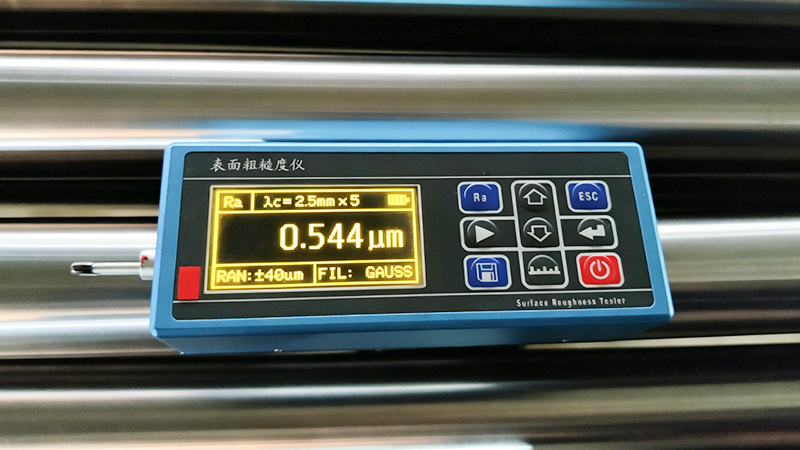
The actual cost difference between low-cost sourcing and stable sourcing is rarely visible in procurement reports.It appears in production flow.Typical hidden costs include:
- longer machine setup time
- additional inspection steps
- increased adjustment during assembly
- inconsistent cycle time
- higher rejection or rework rate
- production planning uncertainty
Each item alone is small.Together, they can exceed the initial savings from unit price reduction.

A Situation Common in OEM Production
In one hydraulic cylinder production environment, a manufacturer introduced multiple suppliers for different components in order to reduce purchasing cost.At the beginning, everything appeared normal.Components passed inspection.Initial batches assembled without major issues.After several production cycles, assembly time started to increase.Operators needed more adjustments to achieve the same fit.
Inspection frequency increased.Production scheduling became less predictable.No single component was found defective.The issue was traced back to accumulated variation between suppliers.Each supplier met specification independently, but system-level consistency was lost.
For more details, please click here.
Why Stability Often Outperforms Low Price
Stable suppliers do not necessarily produce cheaper parts.Their value lies in predictability.When incoming components behave consistently, production teams can:
- maintain stable machining parameters
- reduce inspection dependency
- improve assembly efficiency
- plan output with higher accuracy
- reduce troubleshooting time
In many OEM environments, predictability directly affects profitability more than unit price differences.

The Real Decision Factor in Mature Procurement
Experienced procurement teams usually move beyond simple price comparison.They begin evaluating:
- batch-to-batch consistency
- process control capability
- long-term supply stability
- engineering support responsiveness
- historical production performance
At this stage, sourcing becomes less about buying parts and more about controlling production risk.
Conclusion
Low-cost sourcing can reduce initial procurement spending.Stable sourcing reduces uncertainty in manufacturing.In hydraulic production systems, uncertainty is often more expensive than price differences.For manufacturers focused on long-term efficiency, stability becomes a more valuable parameter than unit cost.
For more details, please click here.
FAQ
Why does low-cost sourcing sometimes increase total cost?
Because hidden costs such as rework, inspection, and production delays can exceed initial savings.
Is using multiple suppliers a bad strategy?
Not necessarily. The challenge is maintaining consistency across different sources.
What is the main risk in low-cost sourcing?
Variation between batches that affects production efficiency and predictability.
What do experienced manufacturers prioritize?
Consistency, repeatability, and long-term supply stability.
CTA
If you are evaluating hydraulic suppliers or trying to optimize long-term production cost, it is often useful to look beyond quotation-level comparison.Understanding how supplier consistency affects machining, assembly, and system performance can help reduce hidden manufacturing costs.
EAST AI manufactures honed tubes, chrome plated rods, and hydraulic cylinder components with a focus on batch stability and production repeatability.
If you are reviewing sourcing strategy or comparing supplier performance, our engineering team can discuss technical details based on real manufacturing experience.