
Introduction
It is common in hydraulic applications to find two cylinders designed from the same drawing but performing differently in actual use.From a design perspective, they are identical. Dimensions match, materials are the same, and tolerances are within specification.Yet in real operation, one cylinder may run smoothly while another shows earlier performance variation.
This difference is often difficult to explain from drawings alone.In most cases, the cause is not design change but accumulated variation during manufacturing and assembly.
Design Identity Does Not Guarantee Performance Identity
A drawing defines geometry and tolerance requirements.It does not guarantee that every production batch achieves those requirements in exactly the same way.Even when all parts are within tolerance, small differences can still exist in:
- surface interaction behavior
- material response under load
- assembly alignment characteristics
- friction conditions during operation
Individually, these differences are small.Over time, they influence system behavior.
For more details, please click here.
Performance Depends on System Interaction
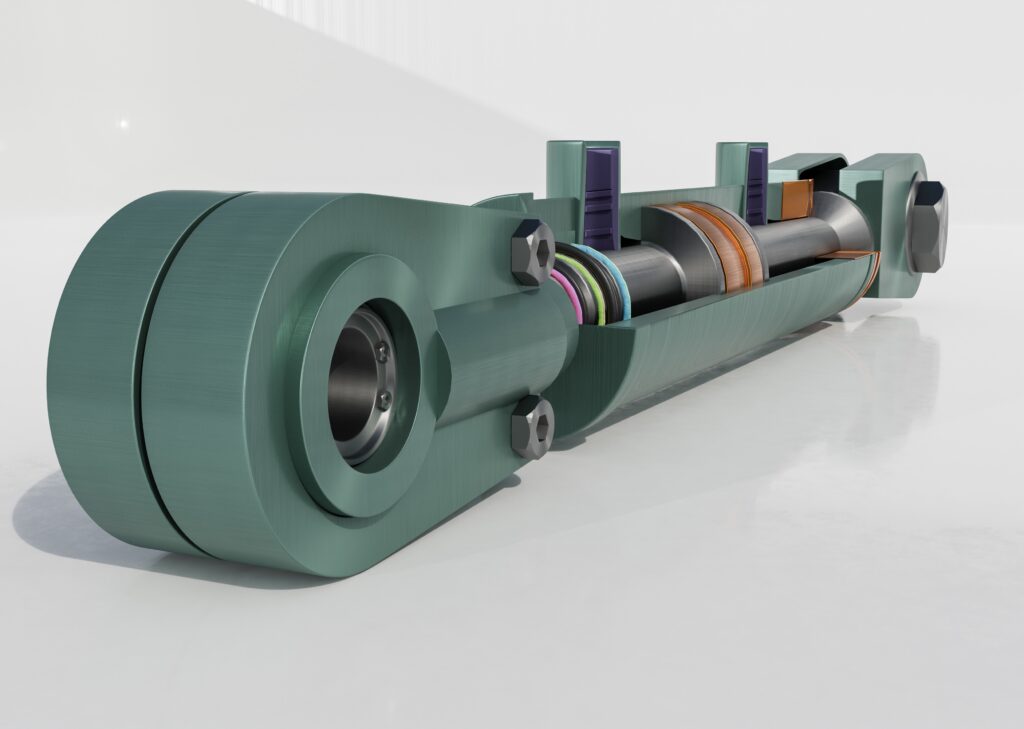
A hydraulic cylinder is not a single component system.It is a combination of interacting parts including:
- piston rod
- tube bore
- sealing system
- machining quality
- assembly condition
Each component may meet specification independently.However, system performance depends on how consistently these components interact.When variation exists, system behavior becomes less predictable.
Why Differences Appear After Time in Operation
In many cases, performance differences are not immediate.Initial operation may appear normal.Differences gradually appear during use.This is usually related to:
- uneven wear development
- variation in friction behavior
- small differences in sealing conditions
- accumulation of mechanical stress
Once variation begins, it often increases gradually instead of stabilizing.
A Typical Industry Observation
In one production environment, identical hydraulic cylinders were used in the same application batch.Initial performance was consistent.After a period of operation, differences appeared in maintenance frequency and operating stability.
Further investigation showed that variation in manufacturing consistency contributed to long-term performance differences.No individual part was defective.System-level behavior, however, was not uniform.
Hydraulic Cylinder Introduction:https://eaihydraulic.com/product-cate/hydraulic-cylinder/
Why This Matters for OEM Manufacturers
OEM manufacturers are not judged on individual components.They are judged on system behavior:
- reliability
- maintenance interval
- operational stability
- service life consistency
Even small variations in component manufacturing can influence these outcomes.
How Stability Is Achieved
Manufacturers that achieve consistent cylinder performance usually focus on:
- stable material sourcing
- controlled machining processes
- consistent surface finishing
- strict batch management
- repeatable assembly standards
The goal is not only compliance with drawings, but repeatability across production cycles.
For more details, please click here.
Conclusion
When two hydraulic cylinders with identical designs perform differently, the cause is rarely found in drawings or specifications.It is usually the result of accumulated variation across manufacturing and assembly processes.Reducing this variation improves both component quality and system reliability.
FAQ
Why do identical hydraulic cylinders perform differently?
Because small variations in manufacturing and assembly affect system behavior over time.
Do drawings guarantee performance consistency?
No. Drawings define requirements but do not ensure identical manufacturing execution.
Why do differences appear after operation begins?
Because wear and friction differences accumulate gradually.
What influences hydraulic cylinder consistency most?
Material stability, machining accuracy, surface finish, and assembly control.
CTA
If you are evaluating hydraulic cylinder performance issues or comparing suppliers, it is important to look beyond drawings and focus on manufacturing consistency.
EAST AI manufactures honed tubes, chrome plated rods, and hydraulic cylinder components for OEM applications with emphasis on batch repeatability.If you are reviewing production variation or supplier performance, our engineering team can provide practical insights based on real manufacturing experience.