
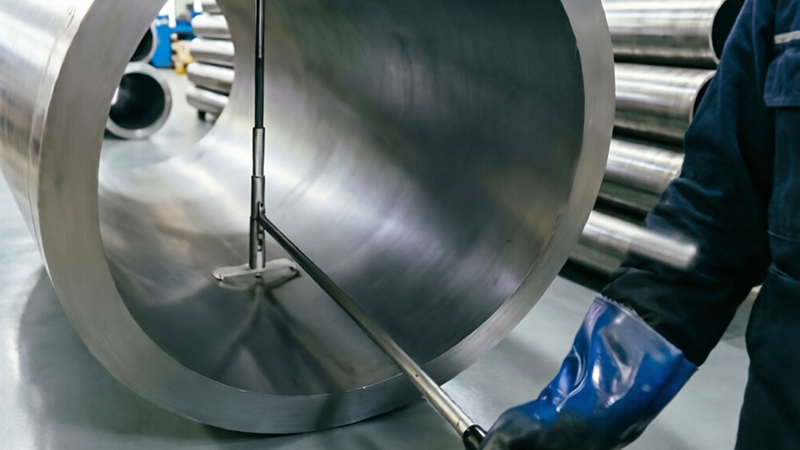
A Practical Look at the Relationship Between Surface Finish and Seal Life
Introduction
Seal failures are often treated as a seal problem.A cylinder starts leaking, friction increases, or maintenance intervals become shorter than expected, and the first response is usually straightforward:Replace the seal.In some cases, that solves the issue.In many others, the new seal performs no better than the old one.After several replacements, attention finally shifts elsewhere.The problem was never the seal itself.It was the surface the seal had been running against.
For hydraulic cylinders, seals do not work independently. Their performance depends heavily on the condition of the piston rod and the tube bore. When those surfaces are inconsistent, even a high-quality seal can struggle to achieve its expected service life.
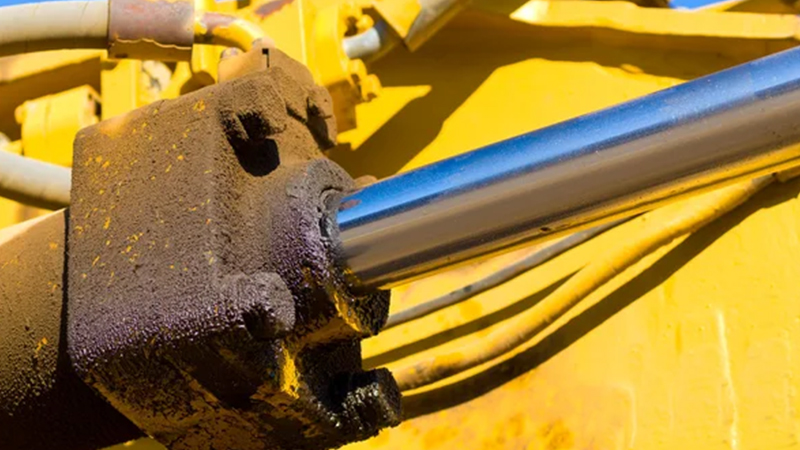
Why Surface Finish Matters
A seal is designed to operate within a very narrow range of conditions.
It relies on:
- Controlled friction
- Stable lubrication
- Consistent contact pressure
- Predictable surface interaction
The rod and the tube create those conditions.If either surface falls outside the ideal range, the seal must compensate.Over time, that additional stress usually appears as:
- Premature leakage
- Uneven wear
- Increased friction
- Shorter maintenance intervals
The seal becomes the visible failure, even though the root cause lies elsewhere.
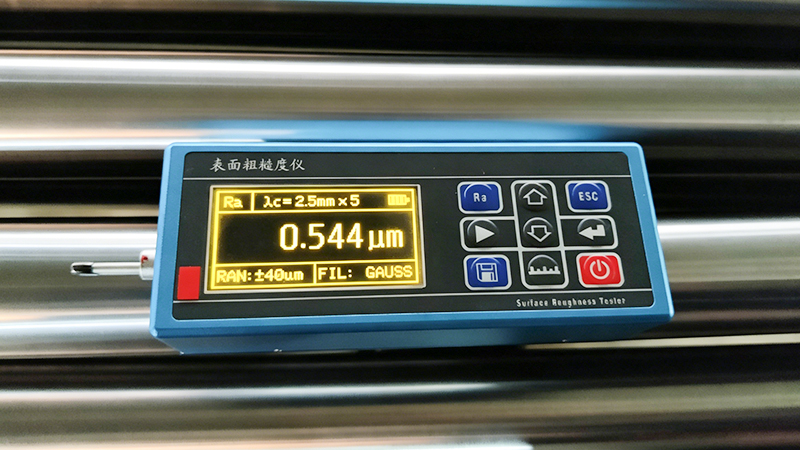
The Surface Doesn’t Need to Look Damaged
One of the reasons these issues are difficult to diagnose is that the rod and tube often appear perfectly acceptable.There may be:
- No visible scratches
- No corrosion
- No obvious dimensional issues
Yet the surface may still be contributing to seal problems.Small variations in roughness, finishing consistency, or surface preparation can influence how a seal behaves during thousands of operating cycles.These are differences that are rarely visible to the naked eye but become significant over time.
For more details, please click here.
When the Rod Surface Becomes the Problem
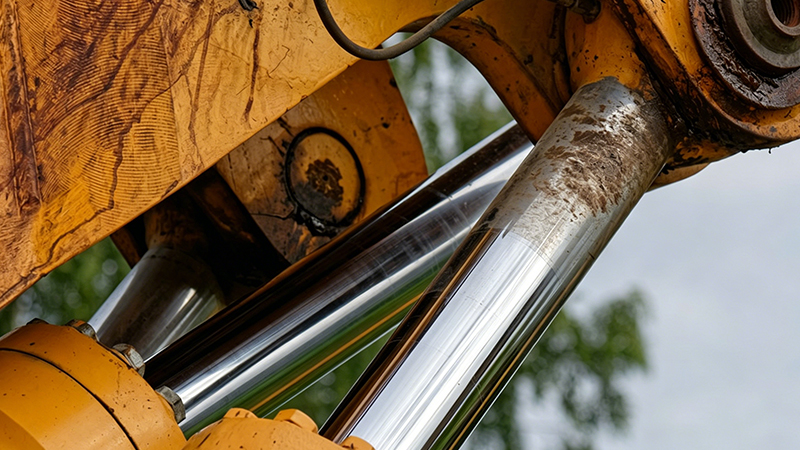
The piston rod has two jobs.It provides mechanical strength and it provides a running surface for the seal.If the surface finish is too rough, the seal experiences increased friction and wear.If the surface becomes excessively smooth, lubrication retention can become less stable.Neither condition is ideal.The goal is consistency.
This is why experienced cylinder manufacturers pay close attention to rod finishing processes rather than simply measuring dimensions.A rod can meet every dimensional requirement on the drawing and still shorten seal life if the working surface is inconsistent.
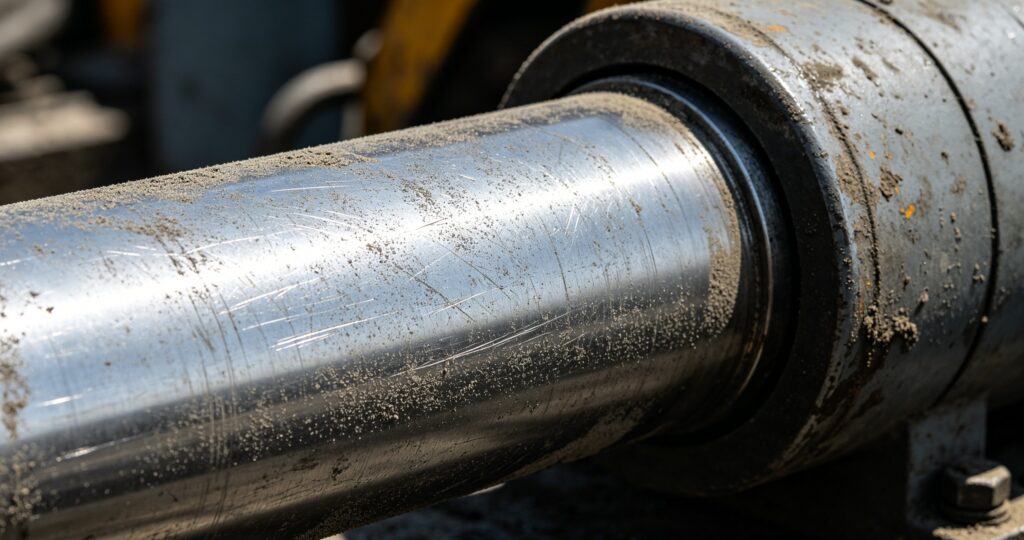
The Tube Bore Matters Just As Much
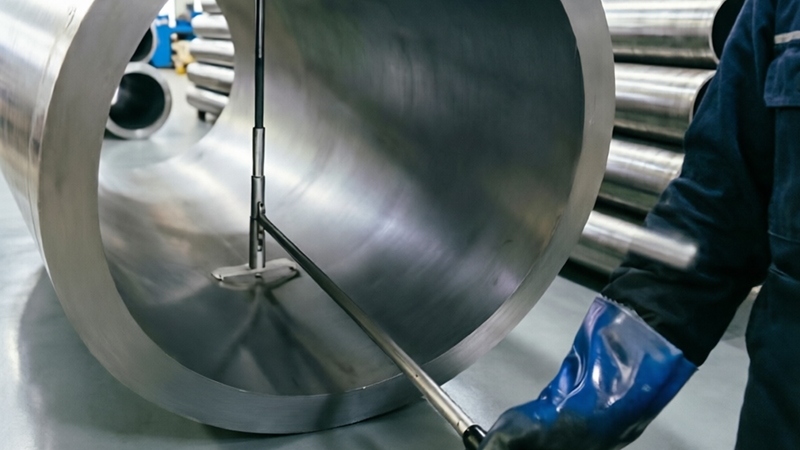
The same principle applies inside the cylinder.The honed tube is not simply a structural component.It is part of the sealing system.Bore finish influences:
- Lubrication behaviour
- Seal stability
- Internal leakage
- Wear patterns
In practice, some seal issues can be traced back to bore conditions that appeared acceptable during incoming inspection.A small variation in surface quality can gradually change the way the seal behaves under pressure.Eventually, the symptom appears as leakage or reduced holding performance.
A Situation That Happens More Often Than People Realize
A hydraulic cylinder manufacturer once investigated a series of seal failures that appeared shortly after installation.The first assumption was straightforward.The seal supplier must have changed something.Several seal replacements later, the problem remained.The investigation eventually shifted toward incoming materials.
Further inspection showed that the surface finish of the piston rods had changed slightly between production batches.The difference was small enough to pass normal inspection.It was also large enough to influence seal performance.After the rod finishing process was adjusted, seal life returned to normal.The seals had never been the real problem.
For more details, please click here.
Why Replacing the Seal Sometimes Doesn’t Work
Replacing a seal treats the symptom.It does not always address the operating conditions that caused the failure.This is why repeated seal replacement can become frustrating.The new seal is introduced into exactly the same environment that damaged the previous one.Without understanding the interaction between:
- Rod finish
- Tube finish
- Alignment
- Lubrication
- Operating conditions
The same problem often returns.
Looking at Seal Life from a Different Perspective
Long seal life is rarely the result of one exceptional component.It is usually the result of multiple components working together consistently.This includes:
- Stable rod surface finish
- Consistent bore quality
- Controlled manufacturing processes
- Reliable material quality
- Proper assembly practices
When these conditions are maintained, seals generally achieve far more predictable service life.
Final Thoughts
Seal failures are not always seal failures.Sometimes they are surface problems that simply reveal themselves through the seal.For manufacturers and maintenance teams, understanding this relationship can prevent unnecessary component changes and reduce troubleshooting time.
The next time seal life becomes shorter than expected, it may be worth looking beyond the seal itself.Because in many hydraulic systems, the condition of the working surfaces determines how well the sealing system can perform.
For more details, please click here.
Can surface finish really affect seal life?
Yes. Surface condition directly influences friction, lubrication, and wear behaviour.
Why do new seals sometimes fail quickly?
Because the operating conditions that damaged the previous seal may still exist.
Is a smoother surface always better?
Not necessarily. Extremely smooth surfaces can affect lubrication retention and may not improve sealing performance.
Can a honed tube cause seal problems?
Yes. Bore finish consistency has a direct influence on seal stability and internal leakage behaviour.
What should be checked before changing seal suppliers?
Surface finish, rod condition, tube quality, and operating conditions should all be evaluated before assuming the seal itself is responsible.
Need Technical Support?
When seal problems become recurring issues, replacing components is not always the most effective solution.Understanding how surface finish, material consistency, and manufacturing stability influence seal performance often provides a clearer path to solving the problem.
EAST AI manufactures Honed Tubes, Chrome Plated Rods, and hydraulic cylinder components according to customer drawings and application requirements.
If you are investigating premature seal wear, reviewing incoming material quality, or trying to improve cylinder reliability, our engineering team is available to discuss technical requirements and share practical manufacturing experience.