
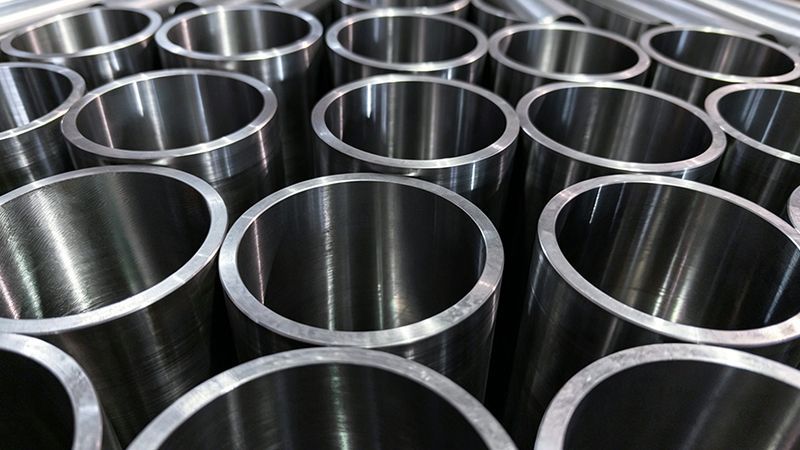
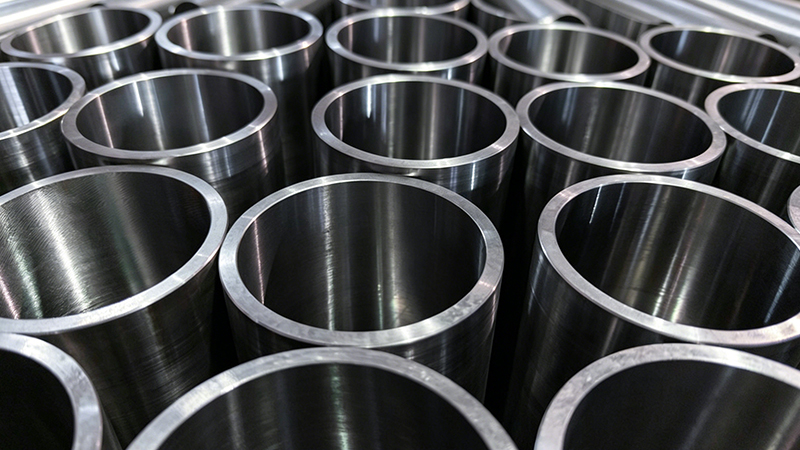
Two hydraulic cylinders built from honed tube with identical bore diameters and identical Ra roughness numbers behaved differently in service: one ran cool and sealed cleanly for years, the other ran hotter, wept slightly, and wore its seals faster. On paper the bores were the same. Under a microscope they were not. The difference was the cross-hatch pattern left by honing, the angle of the intersecting scratch lines that give a honed bore its characteristic finish, and how well that pattern held a film of oil. Cross-hatch is not decoration; it is a lubrication feature, and its geometry directly affects how a cylinder seals, runs, and lasts.
This article is for hydraulic engineers and cylinder builders who specify honed tube, and it explains what the cross-hatch does, why the angle matters, and how oil-film retention connects the finish to real service life.
What the Cross-Hatch Actually Is
Honing finishes a bore by running abrasive stones that rotate and reciprocate simultaneously, so each abrasive grit traces a helical path along the bore. Because the stones move up and down while turning, successive passes lay down scratch lines that cross each other, producing the distinctive cross-hatch pattern of two sets of intersecting helical grooves. The cross-hatch angle is the angle between these two sets of lines, and it is set by the ratio of the honing tool’s rotational speed to its reciprocating speed.
This pattern is fundamentally different from the surface left by a simple bore or grind, which tends to have circumferential or axial lines in one direction. The crossing grooves of a honed bore form a network of tiny channels that can hold oil, and it is this oil-holding capacity, not merely the smoothness, that makes a honed bore good for a sliding seal.
Why Oil-Film Retention Matters
A hydraulic rod or piston seal does not run dry against the bore; it runs on a thin film of oil that lubricates the contact and prevents the seal from dragging directly on bare metal. If that film breaks down, friction rises, heat builds, the seal wears rapidly, and stick-slip motion can set in. The bore’s job is to help maintain that film, and the cross-hatch grooves act as tiny reservoirs that retain oil and feed it into the contact as the seal passes, replenishing the film continuously.
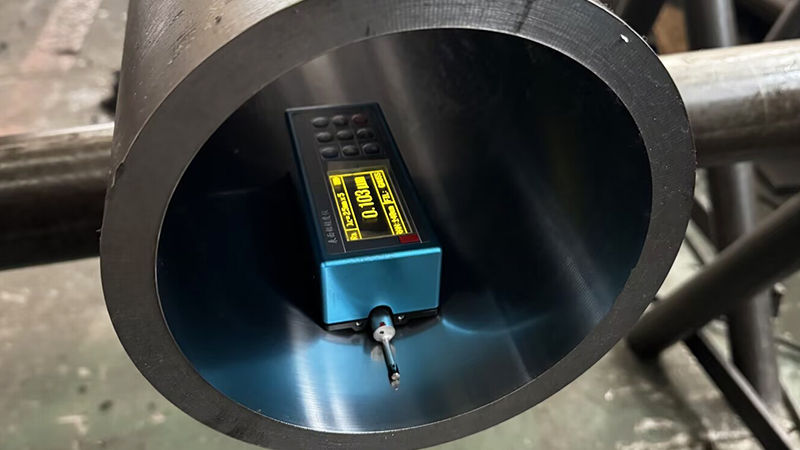
A bore that is too smooth, with no meaningful cross-hatch, has nowhere to hold oil; the film can be wiped away and not replaced, starving the interface. A bore that is too rough, or has too aggressive a pattern, holds oil but also abrades the seal and can leak past the deeper grooves. The right cross-hatch strikes the balance: enough groove structure to retain and supply oil, fine enough not to damage the seal or provide a leak path. This is why two bores with the same average Ra can perform differently, because Ra alone does not capture the pattern’s geometry or its oil-holding character.
The Role of the Cross-Hatch Angle
The cross-hatch angle governs how the grooves distribute and retain oil and how the seal interacts with them. A shallower angle (grooves closer to circumferential) and a steeper angle (grooves closer to axial) change how readily oil is carried along versus retained, and how the seal rides over the pattern. In practice a moderate cross-hatch angle is targeted for hydraulic bores because it retains oil well while presenting a stable surface to the seal, avoiding both the oil-starvation of a near-circumferential pattern and the potential leak paths of a near-axial one.
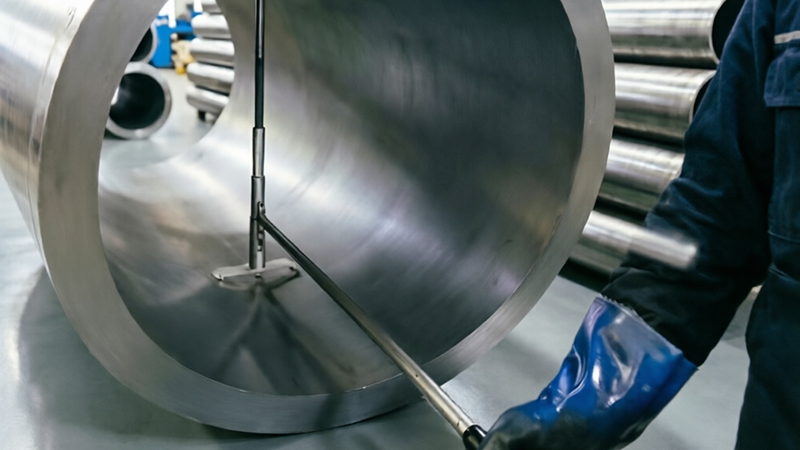
Achieving a consistent angle along the whole bore is itself a mark of process control. Variation in the pattern along the length, from inconsistent honing speeds or tool wear, means variation in lubrication behavior along the stroke, which shows up as uneven wear. A well-controlled honing process delivers a uniform cross-hatch from end to end, so the seal sees the same friendly surface everywhere it travels.
Plateau Honing and the Bearing Surface
Beyond angle, the shape of the surface peaks matters. A freshly honed surface has sharp peaks between the grooves, and if left sharp these peaks can abrade a new seal during break-in. Plateau honing adds a finishing step that shears off the sharp peak tips, leaving flat-topped plateaus between the oil-retaining grooves. The result is a surface that offers a broad, smooth bearing area for the seal to ride on while keeping the deep grooves that hold oil, combining low seal wear with good lubrication. The cross-hatch grooves supply the oil; the plateaus carry the seal. Together they give a bore that is both kind to seals and good at maintaining a film.
Matching the Finish to the Duty
The ideal cross-hatch and surface finish depend on the application. A fast-cycling cylinder with low-friction PTFE seals wants a finish tuned for minimal friction and good film support at speed. A slow, heavily loaded cylinder with resilient elastomeric seals tolerates and may benefit from a slightly different pattern that ensures oil is retained during long dwell times. High-pressure cylinders need a surface that supports the film under the higher contact stresses the seal generates. Communicating the seal type and duty to the tube supplier lets the honing be targeted, rather than delivering a generic finish and hoping it suits.
This is the practical upshot for a cylinder builder: do not specify a bore by Ra alone. Consider the cross-hatch character and the plateau finish as part of the requirement, because they, not the single roughness number, determine how the bore lubricates the seal in service. A supplier who controls the honing pattern deliberately delivers bores that seal cleanly and run cool, which is ultimately what the whole cylinder is judged on.
Related Reading
- Honed Tube category
- Honed Tube for Agricultural Machinery Cylinders
- High-Performance Marine Hydraulic Cylinders
Specify the Finish That Lubricates, Not Just the Number
A honed bore lives or dies by its cross-hatch and plateau, not its Ra alone. Specify the pattern for your seal and duty, and source it from a process that holds the finish uniform end to end.
What We Offer
- Honed tube with controlled cross-hatch angle and plateau finish for reliable oil-film retention
- Consistent honing pattern along the full bore length for even lubrication and wear
- Finish tuned to your seal type and duty, not a generic Ra target
- Full material traceability and guidance on specifying the bore surface
Contact EAST AI (eaihydraulic.com) Email: market@east-ai.com Phone: +86 13771568763 Address: Wuxi, Jiangsu, China.
Written by Alex, Production Engineer at EAST AI