
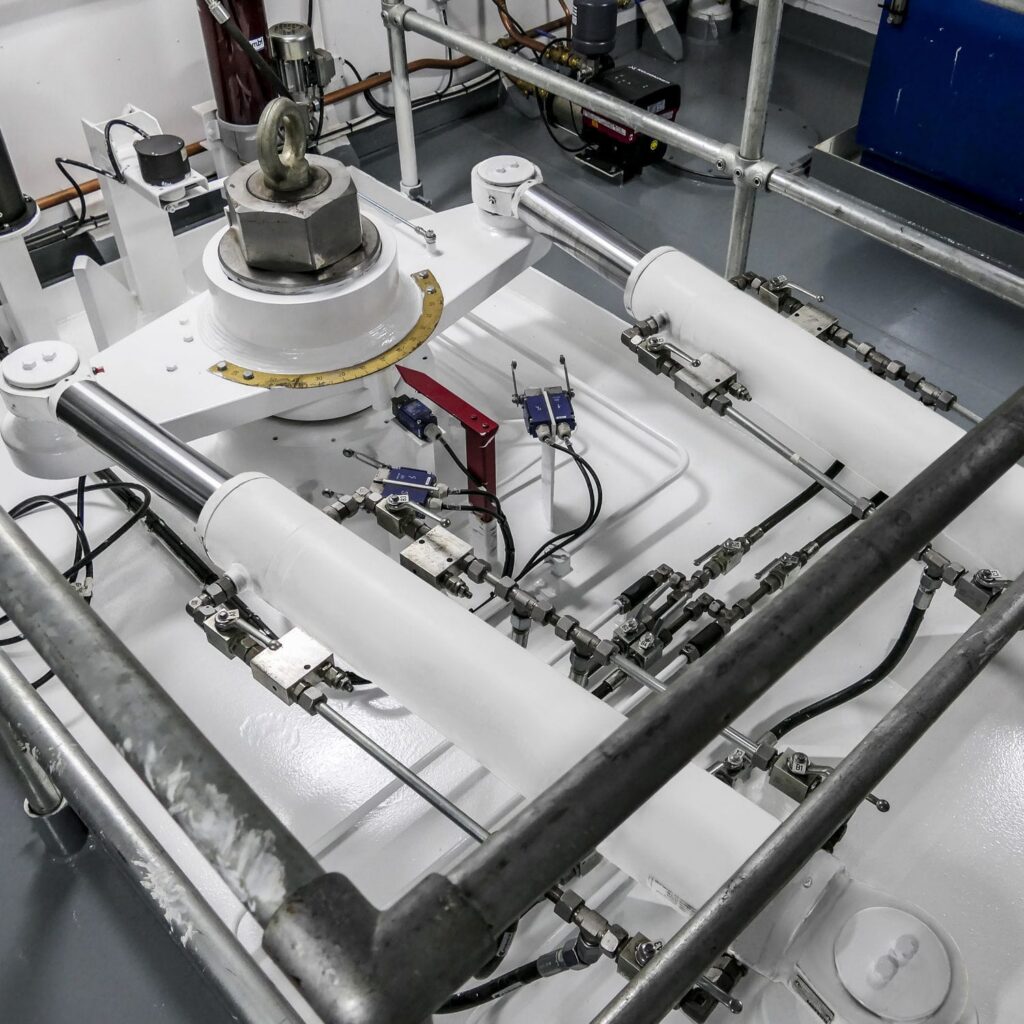
Wind turbine hydraulics don’t get discussed as often as construction or mobile equipment, but pitch and yaw cylinders on a turbine hub present a genuinely different duty profile than almost anything else running on honed tube. These cylinders move slowly, cycle infrequently compared to a cycling industrial press, and are expected to stay in service for years without the kind of routine maintenance access a ground-based machine gets. That combination — low cycle count, extreme accessibility difficulty, decades-long design life — changes what actually matters in the bore specification.
Slow-speed sealing is a real engineering problem, not a footnote. Hydraulic seals generally rely on motion to maintain the oil film that keeps friction and wear in check. A cylinder that moves in small, slow increments, as pitch control systems do when making fine adjustments, doesn’t always maintain that film as reliably as a fast-cycling cylinder does. The practical result is that a bore surface finish tuned for typical industrial cycling can actually underperform on a slow-motion application, because the oil film behavior that finish assumes doesn’t fully develop at low speed.
Why Accessibility Drives the Real Spec
A turbine hub sits dozens of meters off the ground, and getting a technician up there to service a cylinder is expensive and sometimes weather-dependent for weeks at a stretch. This isn’t a theoretical inconvenience — it directly changes the economics of what “good enough” means for bore quality and seal selection. A cylinder that needs rebuilding every few years because its bore finish was specified for ground-level convenience, rather than for minimizing maintenance visits, costs far more over the turbine’s life than a cylinder specified correctly from the start.
This is the same logic that applies to offshore and marine equipment, where access cost justifies a higher upfront material and finish specification than a comparable application that sits in an accessible yard.
Surface Finish Tuned for Low-Speed Oil Retention
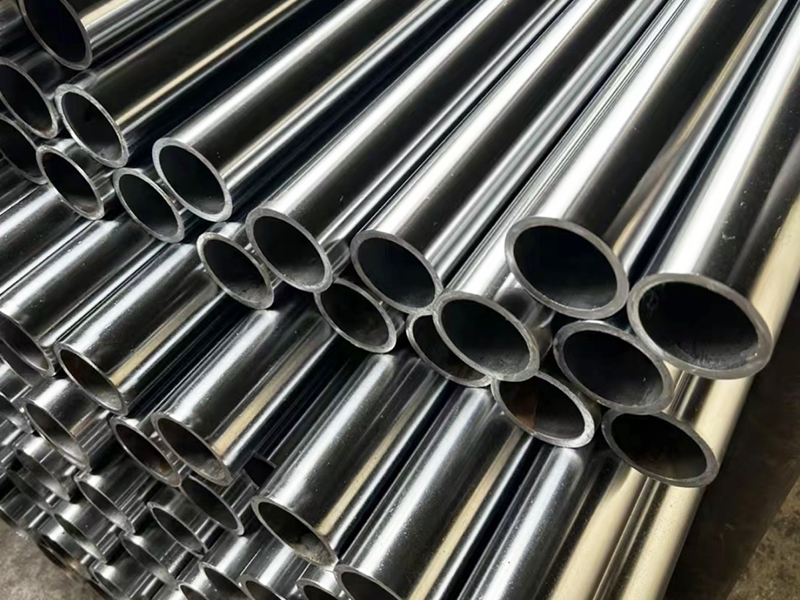
For slow-cycling applications, the cross-hatch honing pattern’s groove depth and angle matter more than they would on a fast-cycling industrial cylinder, because the grooves are what retain oil film during the periods between strokes when the piston is essentially stationary or moving very slowly. A finish specified toward the retentive end of the acceptable range, rather than defaulting to a general industrial standard, gives the seal a better chance of maintaining adequate lubrication through the long dwell periods typical of pitch control operation.
Temperature Swing Adds Another Layer
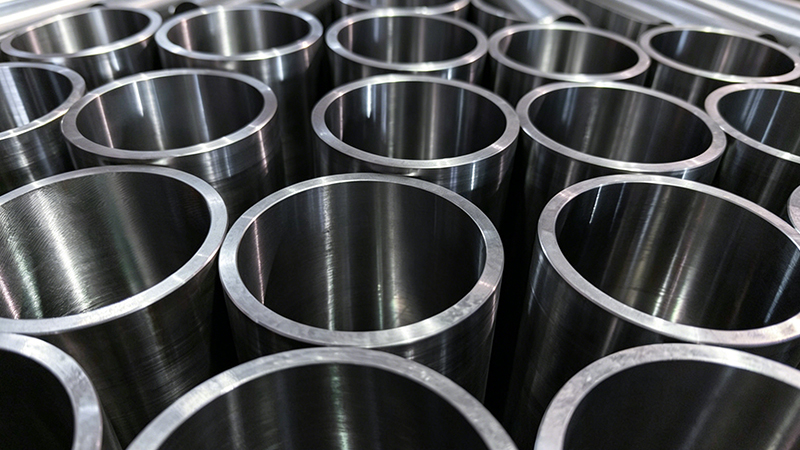
Turbine hubs see real temperature extremes — cold starts in winter, solar heating inside the nacelle in summer, and the thermal cycling that comes from intermittent operation rather than steady-state running. Base steel selection and seal material compatibility both need to account for this range explicitly, since a seal compound that performs fine at moderate temperature can lose sealing force or go brittle at the extremes a turbine actually sees over a full year.
Corrosion Protection for Decades, Not Years
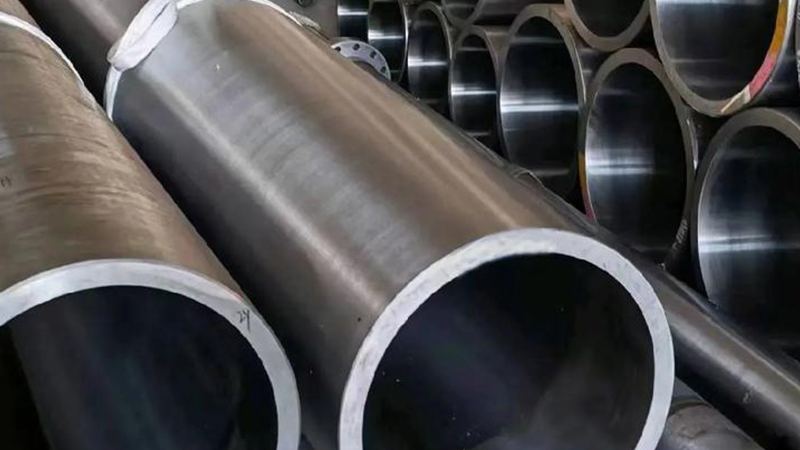
A thirty-year wind farm design life is a different ask than the five-to-ten-year service life typical of mobile equipment. Chrome thickness and base steel corrosion resistance both need to be specified against that longer horizon, particularly for offshore installations where salt-laden air reaches the nacelle regardless of how well-sealed the housing is.
Specifying for the Actual Service Profile
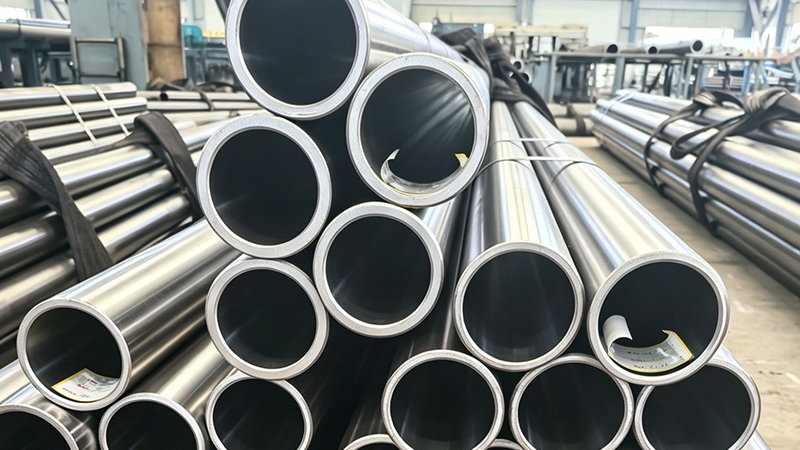
The practical takeaway for turbine OEMs and tier suppliers is to specify honed tube and chrome rod against the application’s real duty profile — slow cycling, long dwell periods, extreme access cost, decades-long design life — rather than against a generic hydraulic cylinder specification that assumes more typical cycling and easier maintenance access. Getting the finish, chrome thickness, and base steel right the first time avoids a maintenance visit that costs far more than the material specification ever would have.

Related Reading
- Honed Tube ID Cross-Hatch Angle and Oil Film Retention
- Corrosion-Resistant Honed Tube Options for Wet and Washdown Environments
- Honed Tube for Marine and Offshore Deck Equipment Cylinders
What We Offer
- Honed tube with cross-hatch finish specified for slow-speed oil retention
- Base steel and chrome thickness guidance matched to decades-long service life expectations
- Technical consultation for turbine OEMs on duty-specific specification, not generic hydraulic defaults
- Full material traceability supporting long-term maintenance planning
Contact EAST AI (eaihydraulic.com) Email: market@east-ai.com Phone: +86 13771568763 Address: Wuxi, Jiangsu, China.
Written by Alex, Production Engineer at EAST AI