

Published: 2026-10-19 | Last Updated: 2026-10-19
A procurement manager who receives a mid-contract price increase notice from a honed tube supplier faces an immediate decision under time pressure: push back hard, accept it to avoid supply disruption, or something in between. The right response depends less on negotiating leverage in the moment and more on what the original contract actually says about price adjustment, and whether the stated reason for the increase is verifiable rather than just asserted. OEMs that handle this well treat it as a documentation and verification exercise first, and a negotiation second.
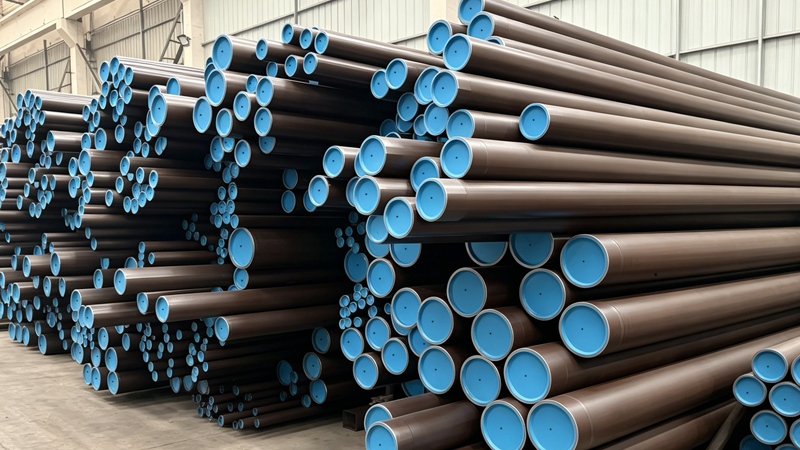
The First Question: What Does the Contract Actually Permit
Before any negotiation, the practical first step is checking whether the supply agreement includes an explicit price adjustment clause — tied to a raw material index, a fixed review period, or a specific triggering condition — versus a contract that was silent on mid-term pricing changes entirely. A supplier invoking a contractual price adjustment clause tied to a published steel index is on different ground than a supplier simply announcing a new price with no contractual basis, and an OEM’s response should differ accordingly: the former is largely a verification exercise, the latter is a genuine negotiation where the OEM has more standing to push back or hold the supplier to the original terms.
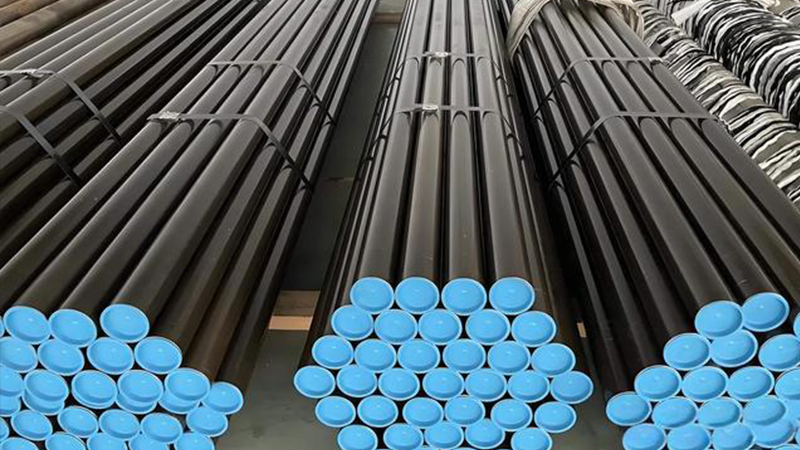
Verifying Whether the Stated Reason Holds Up
| Claimed Reason | How to Verify | What a Reasonable Increase Looks Like |
|---|---|---|
| Raw steel price increase | Check published steel index movement over the relevant period | Increase roughly proportional to the material cost share of total price |
| Energy or utility cost increase | Less independently verifiable, but ask for the specific cost driver | Smaller proportional impact — material dominates tube cost structure |
| Currency movement (cross-border supply) | Check relevant exchange rate movement over the period | Increase should track the actual currency shift, not exceed it |
| General “market conditions” | Request specifics — this framing alone is not verifiable | Reasonable to request a more specific justification before accepting |
An increase that’s proportionally larger than the verified input cost movement is worth directly questioning, not necessarily rejecting outright — sometimes a supplier is bundling a margin recovery into a cost-justified increase, and asking the supplier to separate the two gives an OEM a clearer basis for the conversation than accepting or rejecting a blended number.

Why the Material Cost Share Matters for Sanity-Checking the Number
Base steel typically represents the majority of a honed tube’s total cost, with honing, inspection, and logistics making up the remainder — which means a steel-index-driven cost increase should translate to roughly proportional, not amplified, final price movement. An OEM that understands this rough cost structure can do a quick sanity check on any proposed increase without needing full visibility into the supplier’s actual books, simply by comparing the proposed percentage increase against the percentage movement in a public steel price index over the same period.
When Switching Suppliers Mid-Contract Actually Makes Sense
A price increase alone is rarely sufficient reason to switch suppliers mid-contract, given the qualification cost and risk already discussed as a factor in sourcing decisions generally — but a price increase combined with a pattern of other issues (quality drift, missed deliveries, unresponsive communication) changes that calculation meaningfully. The decision to switch should weigh the verified magnitude of the price issue against the real cost of requalifying a new source, not treat the price increase in isolation as if switching were free. OEMs with an already-qualified second source in their back pocket, per the dual-sourcing framework many apply to critical components, are in a much stronger negotiating position during exactly this kind of conversation, because the threat of moving volume is credible rather than theoretical.
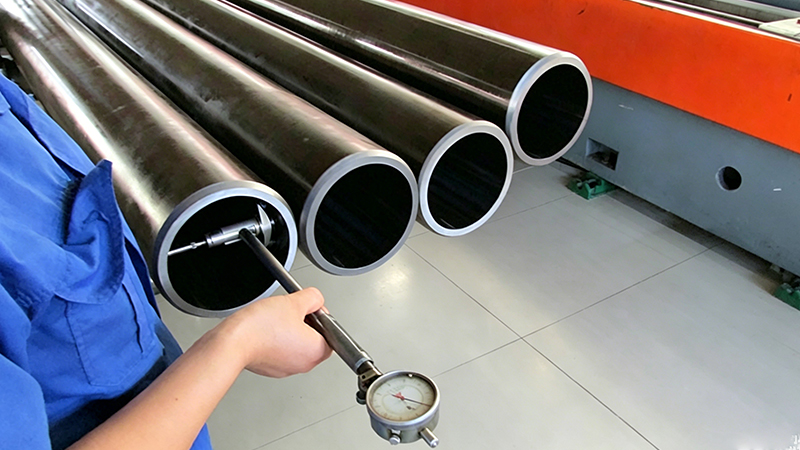
Negotiating a Phased or Partial Increase
Even when an increase is largely justified, an OEM doesn’t have to accept the full amount immediately — proposing a phased implementation (partial increase now, remainder at a defined future date) or a temporary absorption split (supplier and OEM sharing the cost increase for a transition period) are common middle-ground outcomes that preserve the relationship while acknowledging the underlying cost pressure is real. Suppliers facing genuine cost increases are often more willing to negotiate timing and structure than to negotiate the total amount away entirely, since a phased approach still gets them to the needed price eventually while giving the OEM time to adjust their own downstream pricing if needed.
Documenting the Outcome for Future Reference
Whatever gets agreed — full acceptance, partial, phased, or rejected — documenting the specific justification provided and the final terms agreed creates a reference point for the next price conversation, which is rarely the last one in a multi-year supply relationship. An OEM that keeps a record of past price adjustment justifications and outcomes has a stronger position in future negotiations, because patterns of justification quality (or the lack of it) become visible over multiple cycles in a way that a single isolated conversation doesn’t reveal.

Why the Timing of a Price Increase Announcement Matters
A supplier who announces a price increase with weeks of advance notice before it takes effect is giving an OEM meaningfully more room to plan — time to evaluate alternatives, adjust downstream pricing, or at minimum budget for the change — than one who announces an increase effective immediately or retroactively on orders already placed. How much advance notice a supplier provides is itself useful information about how that supplier manages the relationship more broadly, independent of whether the increase itself turns out to be justified. An OEM negotiating the terms of a long-term supply agreement should consider building a minimum notice period for any price change directly into the contract language, removing this as a point of friction in any future increase conversation.
How to Handle an Increase That Affects Multiple Components Simultaneously
Some price increase announcements bundle multiple components together — honed tube and chrome plated rod pricing adjusted in the same notice, for example — which can make it harder to evaluate each component’s justification independently if the supplier presents only a blended total increase. Requesting the increase broken out by component, rather than accepting a single bundled percentage across an entire order, lets an OEM verify each piece against its own relevant cost driver — steel index movement affects honed tube and chrome rod base steel similarly, but chrome plating process costs (energy, chemical inputs) move somewhat independently from base steel costs, and a bundled increase can obscure whether one component is absorbing a disproportionate share of the total adjustment.
What a Pattern of Repeated Small Increases Signals Versus a Single Large One
A supplier announcing several smaller increases across a year, each modest and each individually justified by verifiable cost movement, is fundamentally different from one that occasionally announces a single large increase — and an OEM tracking the cumulative effect over time, rather than evaluating each increase in isolation, gets a more accurate picture of total cost trajectory with that supplier. This cumulative view matters particularly for OEMs comparing total cost of ownership across multiple suppliers over a multi-year horizon, since a supplier with a pattern of frequent small increases might end up costing more over several years than a supplier with an occasional larger adjustment, even if each individual increase from the first supplier looked more reasonable at the time it was announced.
Involving Procurement and Engineering Together in the Response
A price increase notice often lands first with procurement, who may lack full visibility into whether an engineering-driven alternative — a minor specification adjustment, an approved alternate material, or a different rod configuration — could offset some of the cost increase without compromising the design intent. Looping engineering into the response conversation early, rather than treating a price increase purely as a procurement negotiation, sometimes surfaces a technical option that reduces the practical cost impact even when the supplier’s price increase itself is fully justified and non-negotiable. This is particularly relevant when an increase is tied to a specific raw material or process step that has an available, qualified alternative — information that procurement alone usually isn’t positioned to evaluate.
What to Do When a Price Increase Coincides With a Capacity Constraint
A price increase that arrives alongside signs of supplier capacity pressure — longer lead times, reduced willingness to accommodate schedule flexibility — deserves a different read than one arriving during otherwise stable supply conditions, because it may signal the supplier using price as a demand-management tool rather than purely passing through verified cost increases. An OEM noticing this combination should treat the conversation as partly about securing committed capacity and allocation, not just about the price number itself, since in a genuine capacity-constrained market, locking in guaranteed volume allocation at an accepted price can matter more than negotiating the price down by a percentage point or two, if the alternative is uncertain future availability regardless of price.
Why the Scale of the OEM’s Purchasing Relationship Shapes the Negotiation
A supplier’s willingness to negotiate a price increase — through phasing, partial absorption, or accepting a counter-justification — is naturally influenced by how significant the OEM’s volume is to that supplier’s own business, and an OEM should calibrate expectations accordingly rather than assuming every supplier has equal flexibility regardless of relative purchasing scale. A smaller OEM representing a modest share of a supplier’s overall volume has less natural leverage than a large OEM representing a significant share, and recognizing this realistically shapes what negotiation approach is likely to succeed — a smaller buyer may get further with a well-documented, collaborative request for phasing than with an aggressive demand for the increase to be withdrawn entirely, while a larger buyer has more room to push back harder if the justification doesn’t hold up to scrutiny.
Keeping the Relationship Perspective Through a Difficult Pricing Conversation
A price increase conversation handled adversarially, even when the OEM has legitimate concerns about the justification, can damage a supplier relationship that otherwise has significant long-term value in terms of quality consistency, responsiveness, and accumulated process knowledge about the OEM’s specific requirements. Approaching the conversation as joint problem-solving around a shared cost pressure — rather than as an adversarial negotiation where one side’s gain is the other’s loss — tends to produce outcomes that work better for both parties over the life of the relationship, particularly when the underlying cost increase is genuinely verified rather than opportunistic, and the only real question is how the OEM and supplier share the burden of an input cost neither of them created.
Related Reading
- How Should an OEM Decide Whether to Dual-Source Honed Tube or Stay With One Supplier?
- How Much Does Switching Honed Tube Suppliers Actually Cost an Equipment Manufacturer, Beyond the Unit Price?
- Honed Tube Wall Thickness and Pressure Rating: A Selection Guide
Discuss a Pricing Concern With Our Team
Facing a price adjustment conversation and want a transparent breakdown of what’s driving it? Contact our team for a documented cost basis before you negotiate.
What We Offer
- Transparent, index-referenced justification for any contractual price adjustment
- Willingness to discuss phased implementation for significant cost-driven increases
- Documented cost basis available on request to support your internal approval process
- Stable long-term supply agreements structured to reduce surprise mid-contract changes
Contact EAST AI (eaihydraulic.com) Email: market@east-ai.com Phone: +86 13771568763 Address: Wuxi, Jiangsu, China.
Written by Alex, Production Engineer at EAST AI