

Published: 2026-10-29 | Last Updated: 2026-10-29
A single chrome plated rod order, large enough to require two separate plating runs to complete on schedule, raises a question suppliers don’t always handle consistently: does the buyer need to know the order was split, or is it enough that the finished rods all meet the same specification regardless of which run produced them? The honest answer depends on what “meeting specification” actually guarantees, and what it doesn’t. Specification compliance is a floor, not a promise of indistinguishability, and confusing the two is where disclosure expectations and actual practice tend to diverge.
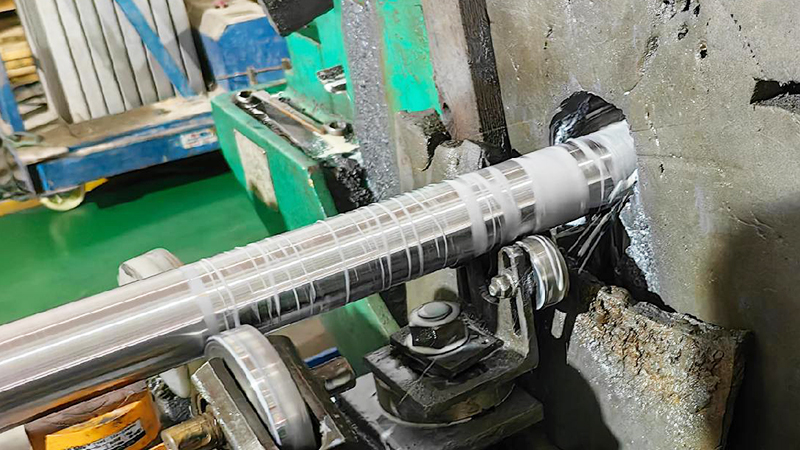
Why Two Production Runs Rarely Produce Perfectly Identical Results
Even under tightly controlled process conditions, two separate plating runs — potentially using different chemical bath charges, run at slightly different times, possibly even different shifts or equipment lines — introduce small amounts of batch-to-batch variation that a single continuous run wouldn’t have. Rods from two different runs can both individually pass every specified quality check while still differing from each other in ways that matter for certain downstream applications, particularly where visual consistency across a full set of rods or extremely tight dimensional matching between paired components is required. A buyer unaware that their order spans two runs has no reason to specifically check for this kind of batch-to-batch variation, even in situations where it would genuinely matter for their application. The variation itself is rarely large enough to trigger an outright specification failure, which is exactly what makes it easy to miss during a standard receiving inspection focused primarily on confirming compliance rather than cross-batch consistency.
When Split-Run Disclosure Actually Matters to the Buyer
Not every application is sensitive to this kind of variation. A buyer using rods as individual replacement components in unrelated equipment has little practical reason to care whether an order came from one run or two. A buyer assembling multiple rods into a single visible installation, or pairing rods that must match closely for a precision application, has a legitimate reason to know about a split production run, since undisclosed batch variation in exactly these scenarios is where a mismatch becomes visible or functionally relevant. Suppliers who understand which of their customers fall into this more sensitive category can proactively flag split runs for those accounts specifically, rather than treating disclosure as an all-or-nothing policy applied uniformly regardless of actual customer need. Identifying this sensitivity upfront, during initial account setup or specification review, is more efficient than relying on each individual order to reveal whether disclosure matters, since the sensitivity is generally a property of the application rather than something that varies order to order for a given customer.
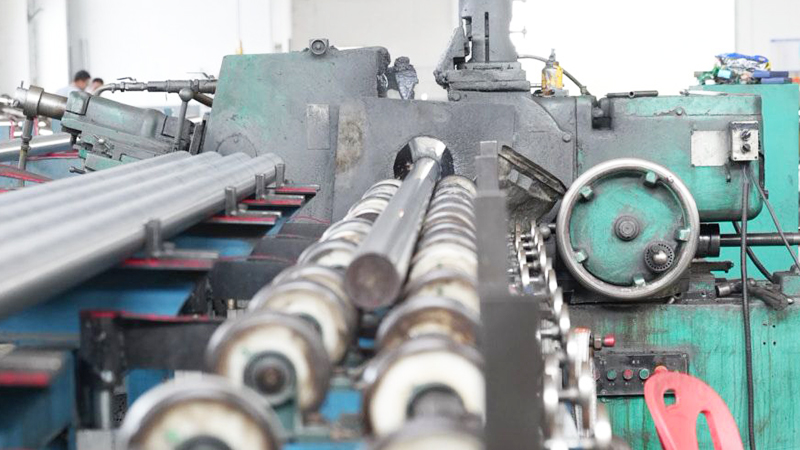
What a Transparent Supplier Does Differently
A supplier confident in their process consistency across runs generally has no reason to hide a split-run situation, and proactively disclosing it — along with offering to source matched rods from the same run specifically for sensitive applications, even if it requires a modest delay — demonstrates a level of process maturity and customer-focused thinking. Ask prospective suppliers directly how they handle large orders that require multiple production runs, and whether they proactively flag this to customers or only disclose it if specifically asked, since the answer reveals meaningful information about their general approach to customer transparency beyond this one specific scenario. A supplier who treats this as an unremarkable, routine disclosure is signaling a healthier overall approach to customer communication than one who treats it as something to avoid mentioning unless directly confronted. Asking this question during initial supplier qualification, well before any specific order is at stake, also avoids putting the supplier in a position where their answer might be shaped by a desire to avoid jeopardizing an order already in progress.
Building This Into Your Own Purchase Order Language
Rather than relying on a supplier to voluntarily disclose a split production run, buyers with genuinely sensitive matching requirements can explicitly specify in the purchase order that the full order quantity must come from a single continuous production run, with any deviation requiring prior notification and approval. Writing this requirement explicitly into the purchase order, rather than assuming it will be handled correctly by default, shifts the burden of disclosure onto a contractual requirement rather than depending entirely on the supplier’s own discretion about what counts as worth mentioning. This kind of explicit specification costs nothing to include and provides a clear, enforceable basis for a quality claim if a split-run situation later turns out to have caused a genuine matching problem that wasn’t disclosed in advance. Including this language as a standard clause for any order flagged as matching-sensitive, rather than drafting custom purchase order language each time, makes the requirement easy to apply consistently without adding meaningful overhead to the ordering process.
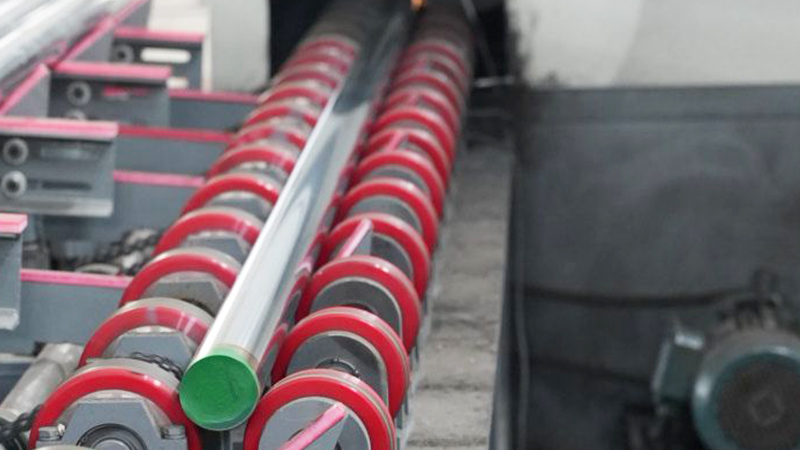
How to Verify Run Consistency When It Genuinely Matters
For applications where split-run variation is a real concern, requesting the actual batch or run identifiers for the received shipment, along with a comparison of key dimensional and plating thickness measurements across the different runs represented in the order, provides concrete verification beyond simply trusting that specification compliance implies adequate consistency. This kind of verification step takes modest additional time but directly answers the specific question that matters — not whether each run individually passed its own quality check, but whether the variation between runs is small enough to be functionally irrelevant for the specific application at hand. Building this verification into receiving inspection for large, visually or dimensionally sensitive orders catches a genuine mismatch before it reaches an assembly line or a customer-facing installation. Keeping these comparison measurements on file also provides useful documentation if a dispute arises later about whether an observed inconsistency was actually present at receipt or developed afterward during storage or handling at the buyer’s own facility.
Why This Decision Reflects a Broader Pattern in Supplier Communication
The split-run disclosure question is really a specific instance of a more general pattern: suppliers deciding what information counts as relevant enough to proactively share versus what gets disclosed only under direct questioning. A supplier’s default posture on this kind of borderline disclosure decision — proactive transparency versus minimal disclosure — tends to be consistent across many different situations, not just this one, which makes a supplier’s handling of split-run orders a reasonably useful signal about their broader communication style across the entire relationship. Buyers who notice a pattern of minimal, reactive disclosure on seemingly minor issues like this one may want to apply extra scrutiny to larger, more consequential disclosures as well, since the underlying communication philosophy tends to be the same regardless of the specific situation. Small disclosure decisions, precisely because they feel low-stakes enough that a supplier might not think carefully about them, often reveal more honestly how that supplier actually operates than their response to a high-stakes situation where every party is already on guard.
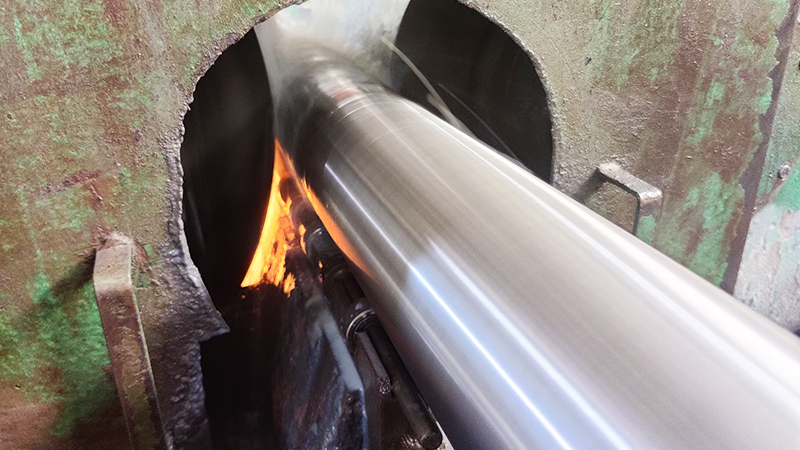
What Happens When a Mismatch Is Discovered After the Fact
Discovering a batch-to-batch mismatch only after rods from a split run have already been installed into a visible or functionally sensitive application puts both buyer and supplier in a worse position than catching it during receiving inspection. The corrective options at that point are limited and costly — either accepting the visible or functional inconsistency, or replacing already-installed components at significant additional expense — which is precisely why catching this issue before installation, through either supplier disclosure or buyer-side verification, matters so much more than addressing it reactively. A supplier relationship that handles this kind of issue well when it does surface after the fact, offering a fair remedy without extensive negotiation, still deserves credit for that response even though the ideal outcome would have avoided the problem reaching that stage in the first place. The asymmetry here is substantial — prevention costs a few minutes of verification, while remediation after installation can mean disassembly, rework, and schedule disruption that dwarfs the original order value many times over.
How This Issue Differs for Domestic Versus International Orders
An international order that spans two production runs carries additional complexity beyond the domestic case, since the runs may be separated by enough time that intervening changes to raw material sourcing, plating chemistry, or even minor equipment maintenance could introduce additional variation beyond what a domestic order completed within a tighter timeframe would typically see. For international orders specifically, requesting the production dates for each run represented in a shipment provides useful context for assessing how much time separated the two runs, since a longer gap between runs generally increases the realistic probability of meaningful variation compared to two runs completed within the same week. This additional scrutiny is particularly worth applying to large international orders where the logistics and cost of addressing a mismatch after the fact are considerably higher than they would be for a domestic shipment that could be more easily supplemented or corrected. Requesting this information as a standard part of the order confirmation documentation, rather than only after a concern has already surfaced, builds the verification step into the process from the start rather than treating it as an exception.

Setting a Standing Policy for Your Procurement Team
Rather than evaluating the split-run disclosure question fresh each time a large order comes in, establishing a standing internal policy — specifying which categories of orders require single-run sourcing by default, and which can reasonably tolerate multi-run fulfillment without special handling — gives your procurement team consistent guidance without needing to escalate every borderline case for individual judgment. A written policy that classifies orders by sensitivity level, rather than leaving this as an ad hoc judgment call made differently by whichever buyer happens to be handling a given order, produces more consistent outcomes and reduces the chance that a genuinely sensitive order slips through without the single-run requirement being specified. This kind of policy, once established, requires only periodic review rather than ongoing case-by-case deliberation for every large order that comes through the pipeline. The modest upfront effort of defining this policy pays back repeatedly across every future large order that would otherwise require a fresh ad hoc decision.

Related Reading
- The Batch Number on Your Chrome Plated Rod Packing List Matters More Than Most Buyers Realize
- A Customer Wants to Supply Their Own Steel for Chrome Plating. Should You Agree?
Written by Alex, Production Engineer at EAST AI
Contact EAST AI (eaihydraulic.com) Email: market@east-ai.com Phone: +86 13771568763 Address: Wuxi, Jiangsu, China.