

Published: 2026-10-29 | Last Updated: 2026-10-29
A design revision shaves half a millimeter off a honed tube’s wall thickness to save weight and cost across a production run. On paper it looks like a minor dimensional tweak. Whether it actually requires full requalification — new pressure testing, new fatigue validation, updated supplier qualification records — depends on how close the original design was running to its pressure rating margin, not on how small the dimensional change looks on a drawing. Treating every small dimensional revision as automatically low-risk, simply because the number on paper looks minor, is exactly the assumption that eventually leads to an underqualified design reaching production.
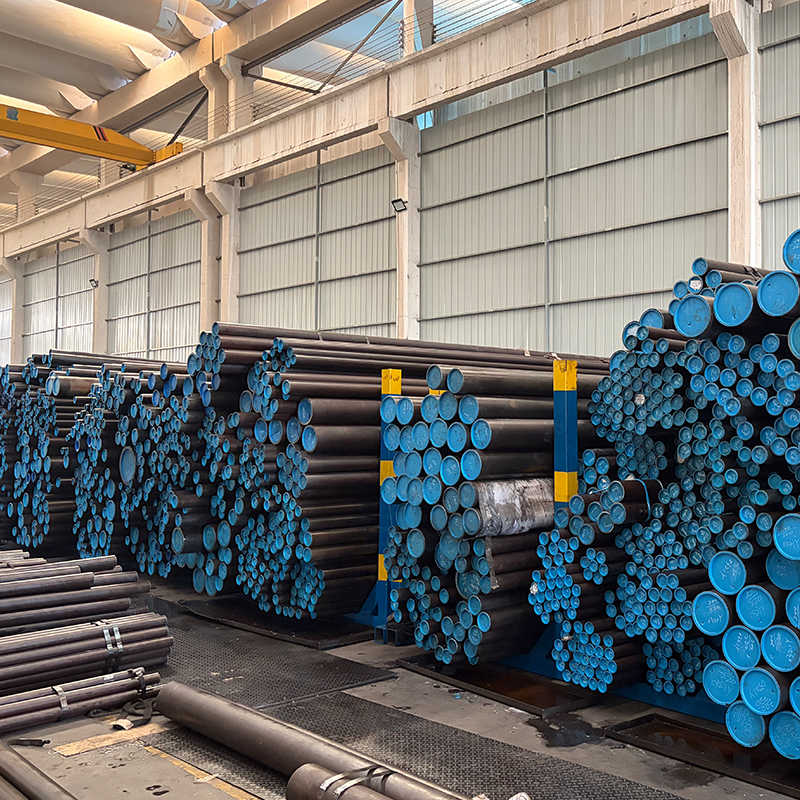
Why a Small Dimensional Change Can Have a Disproportionate Pressure Rating Impact
Wall thickness and pressure rating don’t scale linearly in a simple, intuitive way — a honed tube’s burst pressure and working pressure rating are functions of wall thickness, material yield strength, and diameter together, and a half-millimeter reduction can represent a meaningfully larger percentage change in pressure capacity than the same absolute dimensional change would represent on a thicker-walled tube. Recalculate the actual pressure rating using the standard thin-wall or thick-wall cylinder formula appropriate to the new wall thickness, rather than assuming a small absolute dimensional change implies a proportionally small performance change. A design that was already running with limited margin above its required working pressure before the change may fall below an acceptable safety factor after even a modest wall thickness reduction, while a design with substantial original margin may absorb the same change without any real risk. This calculation takes a qualified engineer a modest amount of time to perform correctly, and skipping it in favor of a purely intuitive judgment about whether half a millimeter “sounds significant” is a shortcut that occasionally produces exactly the wrong answer.
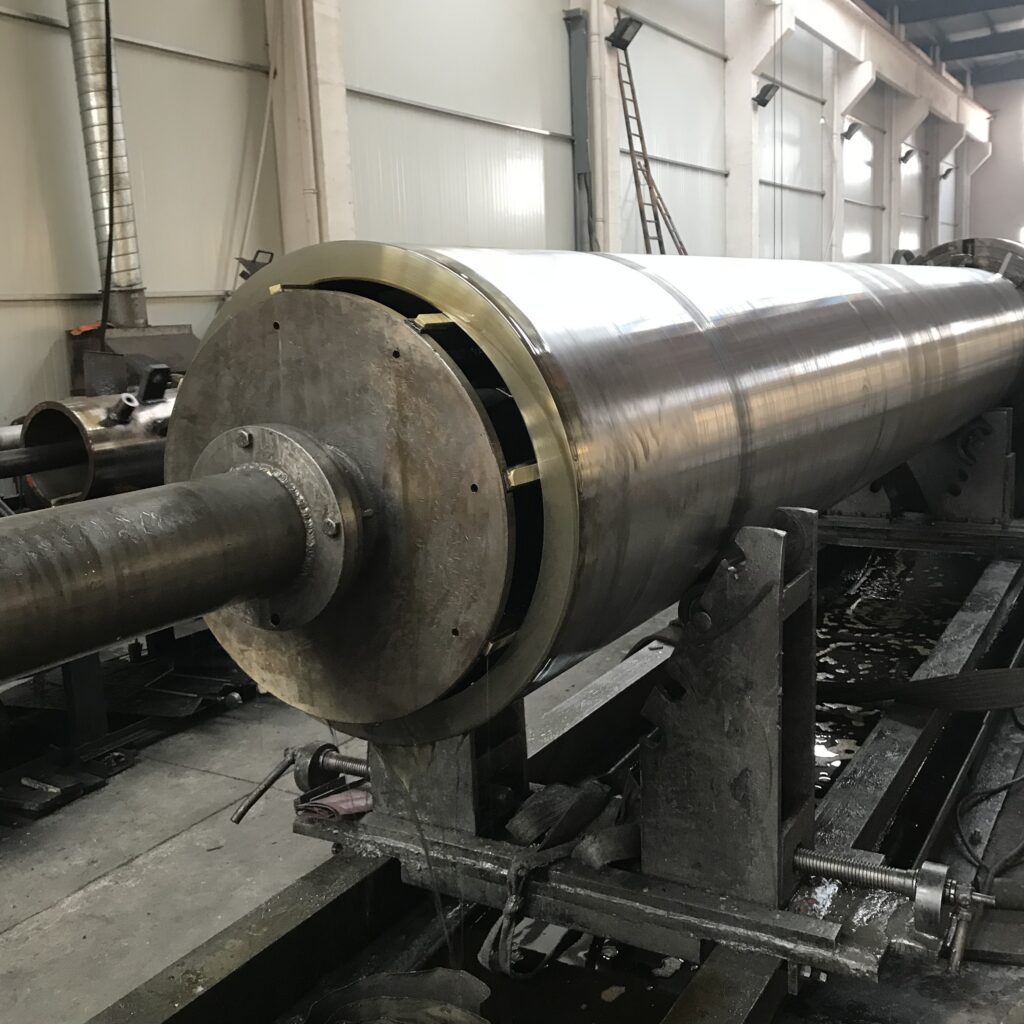
What Changes in the Honing Process Itself When Wall Thickness Shifts
A thinner wall tube behaves differently during the honing process than a thicker one, with different susceptibility to distortion from honing pressure and different heat generation characteristics during material removal. Confirm with your honing supplier whether their existing process parameters are directly applicable to the new, thinner wall specification, or whether process parameters need adjustment to maintain the same dimensional accuracy and surface finish on the revised design. A supplier who simply applies unchanged process parameters to a thinner-walled tube without this kind of review risks introducing new dimensional or surface finish issues that weren’t present on the original, thicker-walled specification. Requesting a short trial run on the revised specification before committing to full production is a reasonable, low-cost way to confirm the existing process parameters still deliver acceptable results, rather than discovering a surface finish issue only after a full production quantity has already been honed to the new dimension.
Deciding Whether Existing Field Performance Data Still Applies
Years of successful field performance on the original wall thickness specification represents real, valuable evidence about reliability — but that evidence was generated on the original specification, not the revised one, and the question of how much of that track record still transfers after a dimensional change deserves honest consideration rather than an automatic assumption that past performance fully carries forward. Treat the revised specification as having a meaningfully shorter track record than the original, even if the change seems modest, and weight your confidence accordingly until the revised design accumulates its own field history. This doesn’t necessarily mean starting from zero confidence, but it does mean avoiding the trap of citing years of field success on a specification that, strictly speaking, no longer exists in its original form. A useful practical compromise is tracking field performance separately by specification revision from this point forward, so that confidence in the revised design builds on its own genuine track record rather than inheriting the previous specification’s history by default.

Building a Formal Change Control Threshold Rather Than Judging Case by Case
Rather than deciding on an ad hoc basis each time a dimensional revision comes through whether requalification is warranted, a formal change control policy — specifying a percentage threshold below which changes can proceed without full requalification, and above which a defined requalification protocol triggers automatically — removes inconsistency and ensures the decision doesn’t depend on which engineer happens to review a given revision. A written threshold, even an imperfect one, is more valuable than relying purely on individual engineering judgment applied inconsistently across different revisions and different reviewers over time. This kind of formal threshold also protects against the quiet accumulation of several small, individually-approved changes that together add up to a significant cumulative shift nobody formally reviewed as a whole. Tracking the cumulative change from the original baseline specification, not just each individual revision in isolation, catches this accumulation pattern before it silently erodes the design margin that the original engineering review assumed was still intact.
Why Documenting the Original Design Rationale Makes Future Revisions Easier to Evaluate
A design change is far easier to evaluate responsibly when the original specification’s rationale — why that particular wall thickness was chosen, what margin above the required working pressure it was designed to provide — is documented and accessible, rather than requiring the reviewing engineer to reconstruct that reasoning from scratch or guess at it. Maintaining a living design rationale document alongside the formal drawing, updated whenever a dimensional change is approved, turns every future revision review into a more informed, faster process than starting from an undocumented specification each time. This kind of documentation discipline pays for itself the first time a revision proposal arrives and the reviewing engineer can quickly confirm exactly how much margin the original design carried, rather than needing to reverse-engineer that information from old test reports. Organizations that treat this documentation as optional often find themselves repeating the same investigative work on every revision review, since the institutional knowledge about the original design intent lives only in the memory of whichever engineer happened to work on it originally, and that memory fades or leaves the organization over time.
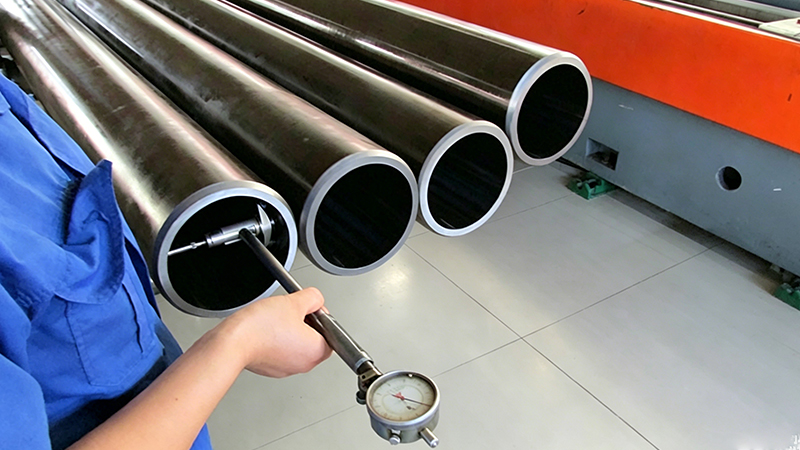
What to Do When the Answer Is Genuinely Unclear
For revisions that fall into a genuine gray area — not obviously safe to approve without further review, but not obviously requiring a full requalification protocol either — a limited-scope validation test, focused specifically on the pressure rating and fatigue characteristics most likely to be affected by the specific dimensional change, provides meaningful confidence without the full cost and timeline of complete requalification. This kind of targeted, risk-proportional validation is often the most practical middle path for borderline cases, giving real engineering confidence without defaulting to either extreme of skipping validation entirely or requiring the full qualification protocol every time. Deciding in advance what specific test outcomes would trigger escalation to the full protocol, before the limited-scope validation even begins, keeps the process objective rather than leaving the escalation decision to a subjective judgment call made after results are already in hand. This upfront commitment also protects the review from pressure to retroactively justify a favorable conclusion once limited-scope results are already in hand.
How This Decision Changes Depending on the Application’s Consequence of Failure
The appropriate rigor for evaluating a wall thickness change scales with how severe the consequences of an unexpected failure would be in the specific application the tube serves. A wall thickness reduction on a tube destined for a low-consequence application, where an unexpected failure would cause inconvenience but no safety risk, can reasonably proceed with a lighter validation burden than the same change on a tube serving a high-consequence application where failure could cause injury or major equipment damage. This isn’t a suggestion to skip validation on low-consequence applications entirely, but rather to calibrate the validation effort proportionally rather than applying a single uniform standard regardless of what’s actually at stake if the revised design underperforms expectations.
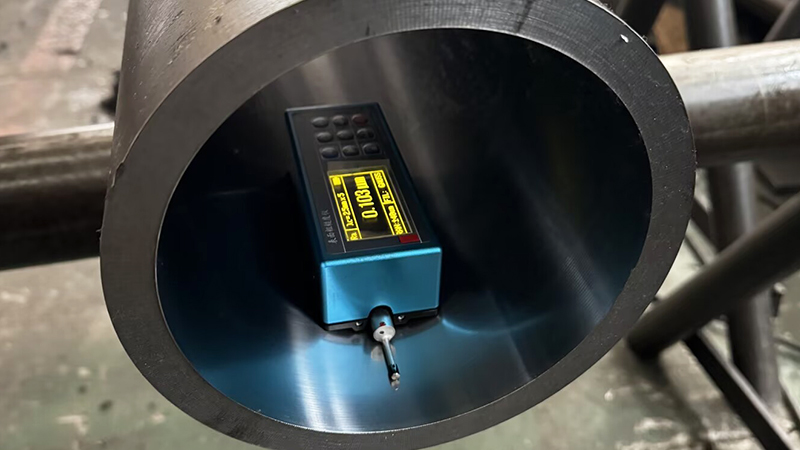
Why Involving the End Customer in This Conversation Is Often Worthwhile
For a distributor supplying honed tube into an OEM’s own product, a wall thickness revision initiated on the distributor’s or supplier’s side can have downstream implications the OEM customer isn’t aware of unless explicitly informed. Proactively notifying an OEM customer of a wall thickness change, along with the rationale and validation performed, rather than treating it as an internal supply-chain detail invisible to the customer, maintains the kind of transparency that protects the relationship if any question later arises about the specification history of a particular component. Some OEM customers may have their own internal requirements for approving supplier-side dimensional changes that feed into their equipment, and skipping this notification step risks a compliance or contractual issue entirely separate from the engineering question of whether the change itself was sound.
What a Realistic Timeline for Full Requalification Actually Looks Like
When a change does genuinely warrant full requalification, understanding the realistic timeline — typically several weeks for pressure testing, fatigue cycling, and documentation review, depending on the complexity of the application and the testing capacity available — helps set appropriate expectations with internal stakeholders and customers who may be pushing for a faster implementation timeline than the validation process can responsibly support. Communicating this realistic timeline upfront, before commitments are made to customers about when the revised specification will be available, avoids the awkward position of later needing to walk back an overly optimistic timeline because the requalification process took longer than initially assumed. Building a standard requalification timeline template, based on past experience with similar changes, helps set these expectations consistently rather than estimating from scratch each time a new change comes through.

The Cost of Getting This Decision Wrong in Either Direction
Skipping warranted requalification to save time and cost carries the obvious risk of an undetected design flaw reaching the field, potentially resulting in costly failures, warranty claims, or in serious cases, safety incidents that dwarf whatever cost was saved by skipping validation. The less obvious but still real cost runs in the other direction too — requiring full requalification on every dimensional change regardless of actual risk level creates unnecessary delay and expense on changes that posed minimal genuine risk, slowing down legitimate cost and weight reduction efforts that could otherwise proceed with lighter, proportional validation. Both failure modes are avoidable with a thoughtful, risk-based approach rather than defaulting to either extreme as a blanket policy applied uniformly regardless of the specific change under consideration.

Related Reading
- The Honed Tube Tolerance Your Drawing Specifies Might Be Tighter Than Your Application Needs
- Your Honed Tube Supplier Passed Their Last Audit. That Doesn’t Mean They’ll Pass the Next One.
Written by Alex, Production Engineer at EAST AI