
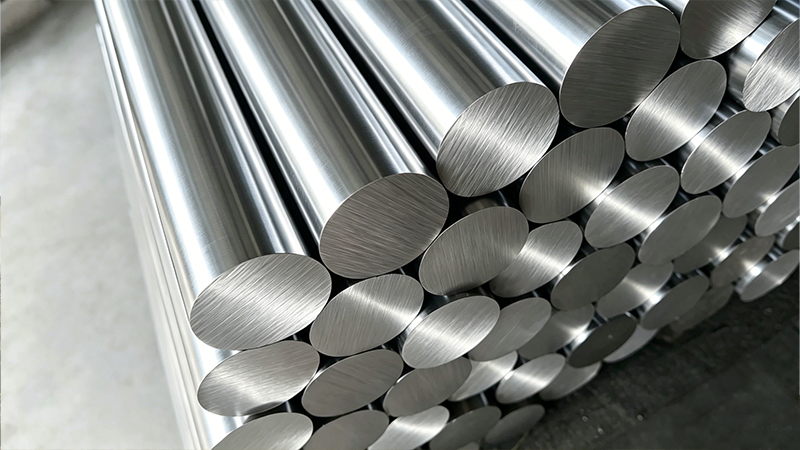
Why Long Chrome Plated Rods Are Different
A chrome plated rod may appear to be a relatively simple cylindrical component, but manufacturing becomes considerably more demanding as the rod becomes longer. A short piston rod and a long piston rod can have the same diameter and surface requirements while presenting very different production challenges.
Length increases the importance of straightness, dimensional stability, machining control, chrome plating consistency, grinding, polishing, inspection, and handling. A small deviation that may have little practical significance on a short rod can become much more noticeable when it extends across several meters.
This is particularly relevant to long-stroke hydraulic cylinders, where the piston rod may need to travel a considerable distance while maintaining stable alignment with the cylinder, guide, and sealing system.
Long Length Makes Straightness More Important
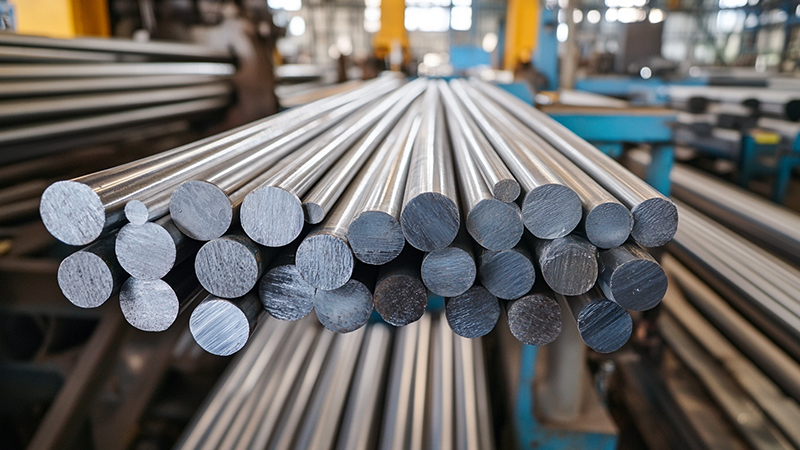
Straightness is one of the first characteristics that becomes more demanding as rod length increases. A long piston rod needs to maintain its geometry over the entire working length rather than simply meeting the diameter requirement at individual measurement points.
EAST AI’s product specification lists chrome plated rods with lengths up to 15 m and a straightness requirement of ≤0.2/1000 mm. This shows why long-length production cannot be treated as simply producing a standard rod and making it longer.
For long hydraulic cylinders, straightness needs to be considered together with rod diameter, mounting arrangement, loading direction, stroke, and guiding system.
Diameter Consistency Along the Entire Rod
A long rod also requires stable diameter control throughout its length.
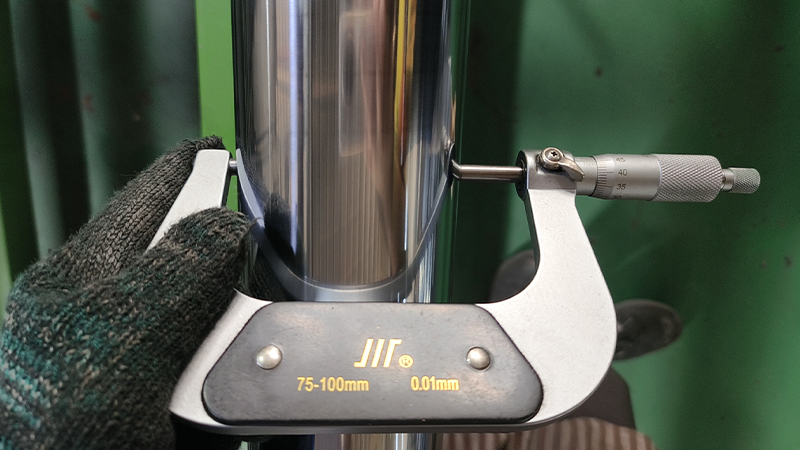
It is not enough for the two ends of a rod to meet the required diameter while the middle section varies outside the customer’s specification. Dimensional consistency becomes particularly important when the rod works with precision seals and guides.
The product range includes diameter tolerances such as f7, f8, and g6, with available diameters from 6 to 500 mm. The required tolerance depends on the customer’s specification and the final hydraulic cylinder design.
Chrome Plating a Long Surface
Applying a consistent chrome layer becomes more challenging when the working length increases.
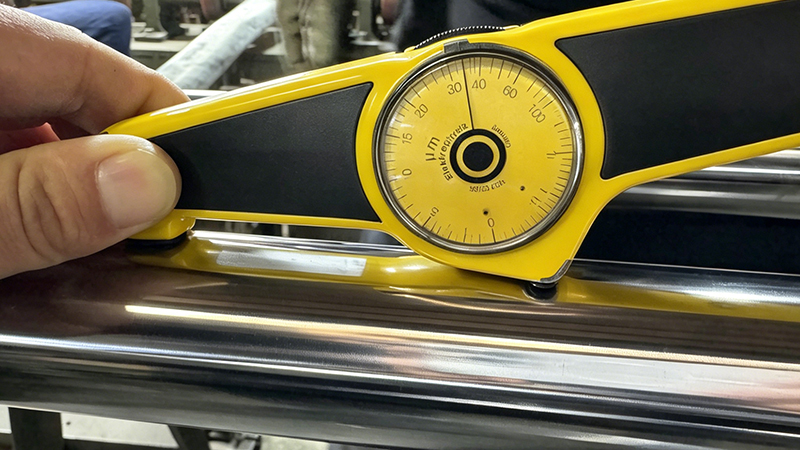
The chrome layer needs to maintain the required characteristics along the rod rather than being acceptable only at selected areas. Variations in plating, subsequent grinding, or polishing can influence the final surface condition and dimensions.
EAST AI’s product specification gives a chrome thickness range of 20–100 μm and a chrome layer hardness of 850 HV. These values are part of the finished rod specification, but achieving consistent results over a long working length requires controlled manufacturing processes.
Why Grinding and Polishing Matter After Plating
Chrome plating is not necessarily the final dimensional operation.
After plating, the rod may require grinding and polishing to achieve the specified diameter, tolerance, and surface finish. The finishing process therefore needs to maintain the geometry created by the earlier manufacturing stages.
This becomes more demanding as the rod becomes longer because the finishing process has to control the working surface across the entire length. Local variation can affect how the rod interacts with seals and guides.
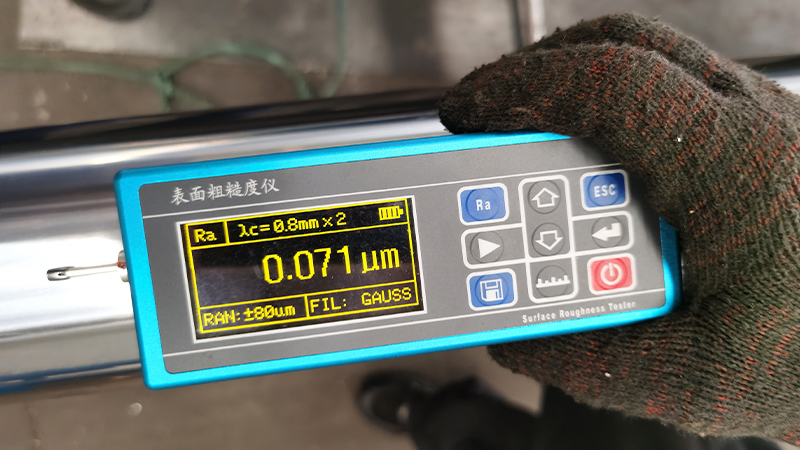
The product specification lists a surface roughness of Ra ≤0.2 μm, making the final surface condition an important part of the finished chrome plated rod.
Long Rods Require More Than One Inspection Point
For a short rod, inspection at a limited number of locations may provide a useful indication of the overall condition. With a long rod, relying on only one or two measurement points can provide an incomplete picture.
Diameter, straightness, surface condition, and other characteristics may need to be checked at appropriate locations along the working length according to the customer’s quality requirements.
This is particularly important for OEM customers because a long rod is normally installed as one complete component. A problem in the middle of the rod can be just as important as a problem near either end.
Long-Length Rods and Hydraulic Cylinder Alignment
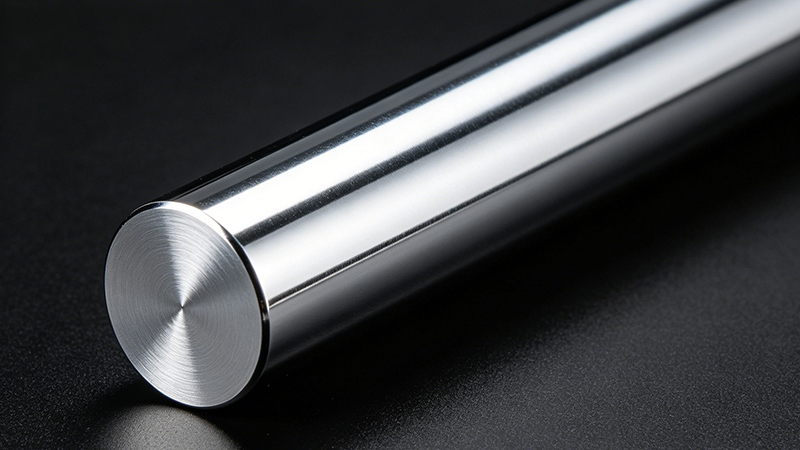
A long piston rod operates within a mechanical system that includes the cylinder tube, piston, guide, seals, and external mounting structure.
If the rod is long, the relationship between these components becomes more sensitive to geometry and alignment. The cylinder mounting arrangement also needs to support the intended movement without introducing unnecessary side loads.
This means a long chrome plated rod should not be selected by length alone. The rod specification should be considered together with the complete cylinder design and the actual stroke and loading conditions.
Handling a 10 or 15 Meter Rod Is Also a Manufacturing Issue
Long rods are more difficult to handle than conventional short components.
During machining, plating, grinding, inspection, storage, and packaging, the rod needs to be supported appropriately to avoid unnecessary deformation or surface damage. Handling equipment and production layout therefore become part of the manufacturing challenge.
This is especially important after the final surface has been finished. A rod that meets the required specification during final inspection can still be damaged during subsequent handling if adequate protection is not provided.
Surface Protection During Storage and Transport
The chrome plated surface is the working surface of the piston rod, so protection should continue after manufacturing.
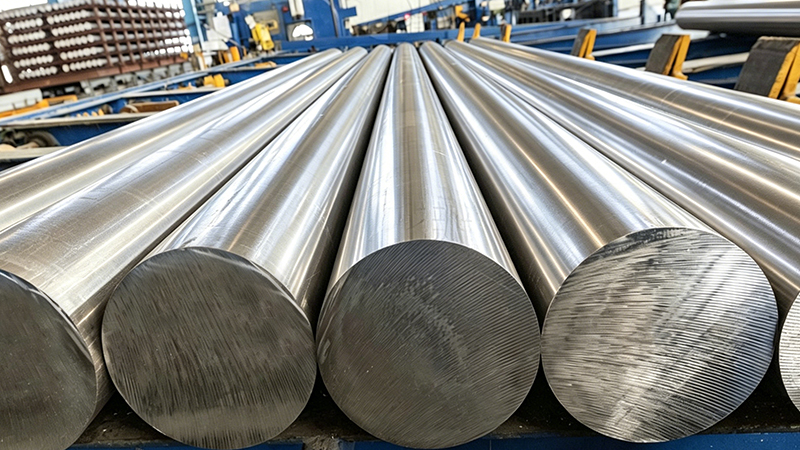
Long rods may require careful support and packaging to reduce the risk of scratches, impacts, corrosion, or deformation during movement and transportation. This is particularly important when the rod is shipped over long distances before being installed into the hydraulic cylinder.
For OEM buyers, packaging requirements should therefore be discussed together with the technical specification when ordering long-length rods.
Why Long-Length Capability Matters to OEM Customers
A supplier’s ability to manufacture a long chrome plated rod is not simply a question of having enough raw material.
The supplier needs to control the entire process from material preparation through machining, plating, grinding, polishing, inspection, handling, and final protection. Each stage can influence the final condition of the long rod.
This is why long-length capability can be an indicator of broader manufacturing control. The longer the component, the more opportunities there are for dimensional or surface variation to develop if the process is not properly controlled.
Long Chrome Plated Rods for Long-Stroke Cylinders
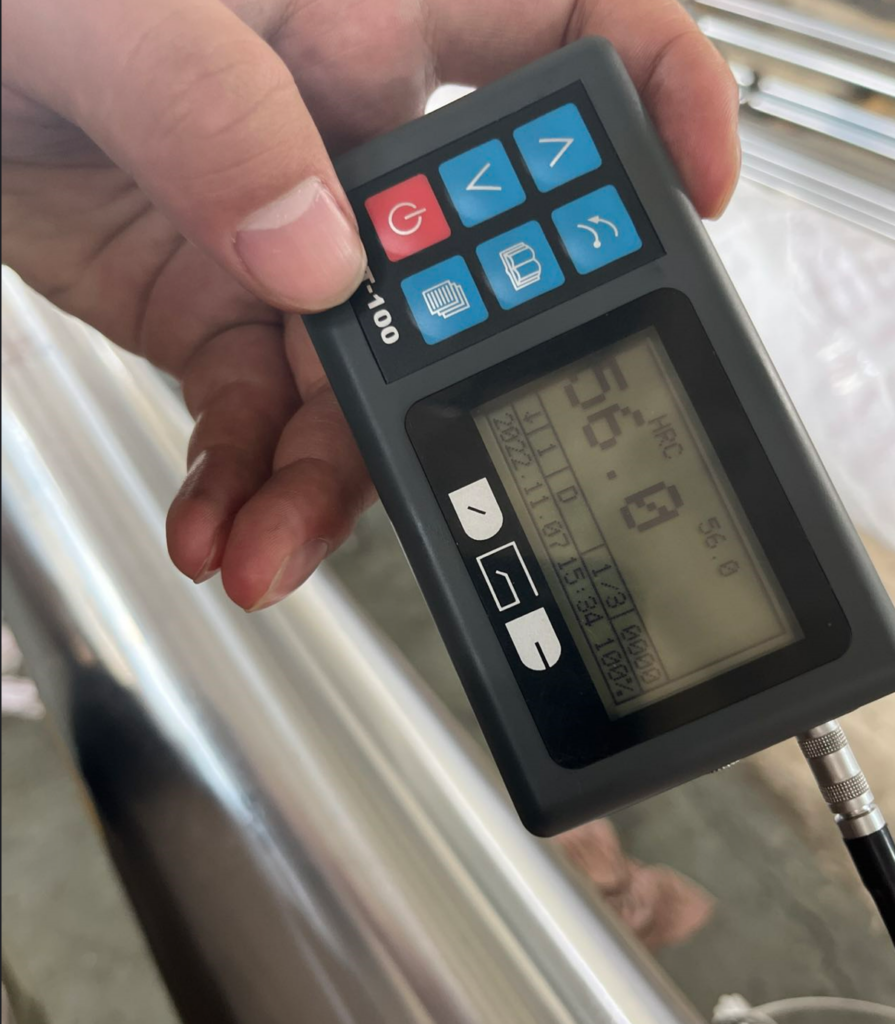
Long-stroke hydraulic cylinders are one of the most obvious applications for long piston rods.
These cylinders can be found in industrial machinery, material handling equipment, construction equipment, lifting systems, and other hydraulic applications where substantial linear movement is required.
The rod length must be matched to the actual stroke and cylinder design. At the same time, diameter, material, surface treatment, straightness, and mounting conditions need to be considered so that the rod can operate reliably throughout the required movement.
When a Long Rod Should Be Specified as an OEM Component
For standard applications, a buyer may be able to select a conventional rod size from an existing product range.
For long or specialized cylinders, however, it is often more effective to provide the supplier with the complete technical requirements. These may include diameter, length, material, tolerance, chrome thickness, surface finish, straightness, mechanical requirements, and application conditions.
This allows the supplier to evaluate the rod as a complete component instead of treating length as the only special requirement.
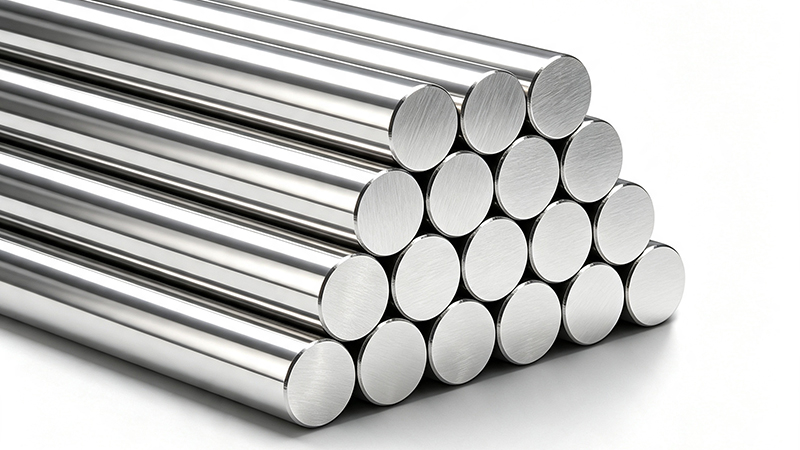
What Buyers Should Ask About Long Chrome Rods
When purchasing a long chrome plated rod, buyers should ask how straightness is controlled, how diameter consistency is maintained along the full length, and how the chrome layer and final surface are inspected.
It is also useful to understand how the finished rod is supported during handling, storage, and transportation. These practical details can have a direct impact on the condition of the component when it arrives at the customer’s factory.
For OEM production, the most important question is whether the supplier can repeatedly produce the same long-length specification rather than whether one sample can meet it.
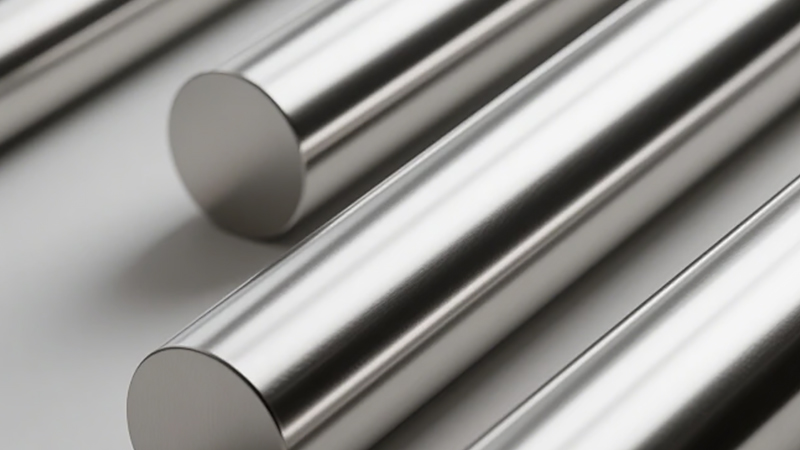
Long Length Requires Process Stability
The longer the chrome plated rod, the less room there is for uncontrolled variation.
Machining, plating, grinding, polishing, inspection, and handling all need to work together. If one stage introduces excessive variation, the following stages may not be able to fully correct it.
This is why long-length chrome rod production is closely connected with process stability. The finished product is the result of the entire manufacturing route rather than one individual operation.
The Right Long Chrome Rod Is More Than a Long Steel Bar
A long chrome plated rod is a precision hydraulic component with requirements that extend across the entire working length.
Diameter, tolerance, straightness, surface roughness, chrome thickness, hardness, material, handling, and final protection all contribute to the finished product. As the rod becomes longer, maintaining these characteristics consistently becomes increasingly important.
EAST AI’s chrome plated rod range supports diameters from 6–500 mm and lengths up to 15 m, with specifications including f7/f8/g6 tolerances, straightness of ≤0.2/1000 mm, chrome thickness of 20–100 μm, chrome layer hardness of 850 HV, and surface roughness of Ra ≤0.2 μm according to the product specification.
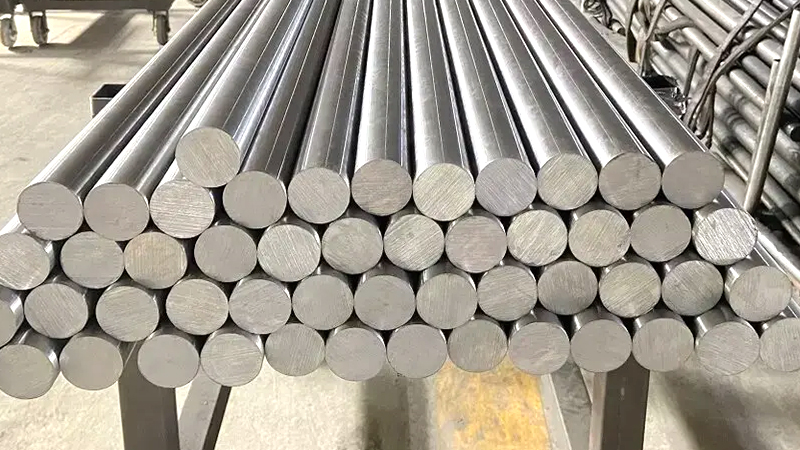
Frequently Asked Questions
What is the maximum chrome plated rod length available from EAST AI?
The product specification lists chrome plated rod lengths up to 15 m. Actual availability should be confirmed according to diameter, material, tolerance, and production requirements.
Why is straightness important for long chrome plated rods?
Long rods need to maintain their geometry across the full working length. Excessive deviation can affect alignment, guiding, sealing, and overall cylinder operation.
What straightness is specified?
The product specification lists straightness of ≤0.2/1000 mm.
What chrome thickness can be supplied?
The listed chrome thickness range is 20–100 μm.
What surface roughness is available?
The product specification lists Ra ≤0.2 μm surface roughness for the chrome plated rod.
Are long chrome plated rods suitable for long-stroke hydraulic cylinders?
Yes. Long chrome plated rods can be used in long-stroke hydraulic cylinders when the rod dimensions, material, structural requirements, surface specifications, and cylinder design are properly matched.
Related Products & Applications
Construction Machinery Hydraulic Applications
Industrial Hydraulic Applications
Heavy Equipment Hydraulic Applications

Need Technical Support?
Long chrome plated rods require more than simply extending the length of a conventional rod. Straightness, diameter consistency, surface finish, chrome plating, inspection, handling, and transportation all become increasingly important as the working length increases.
EAST AI supplies chrome plated rods with lengths up to 15 m and a broad range of diameters, materials, tolerances, and surface specifications for hydraulic cylinder manufacturers and OEM applications.