
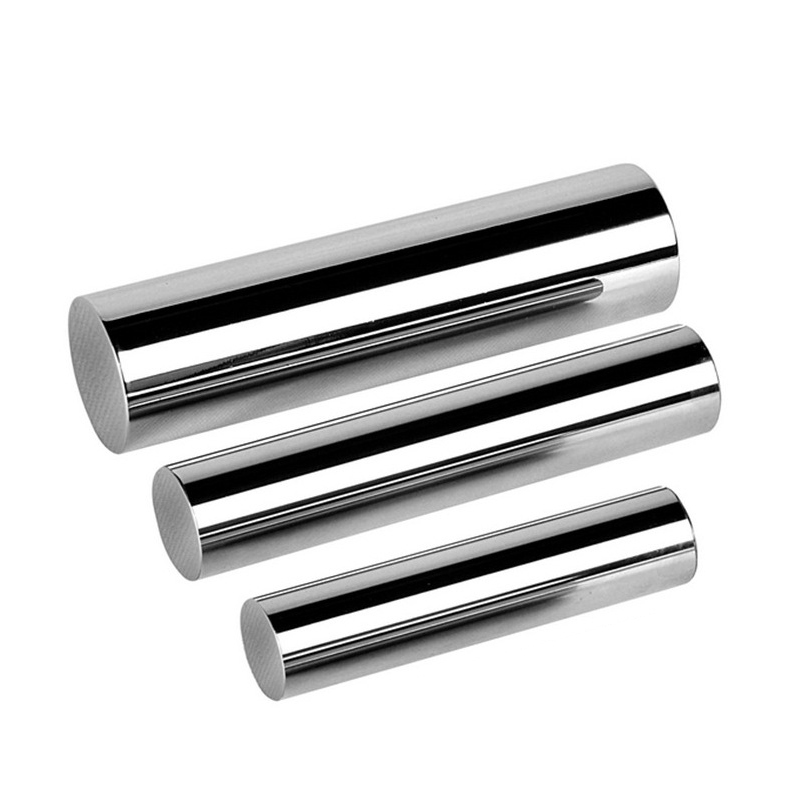
Why Surface Hardness Matters on a Hydraulic Piston Rod
A hydraulic piston rod works in a very different environment from a stationary steel component. During every cylinder cycle, the rod moves through the sealing and guiding system while part of its surface is exposed to the surrounding environment. This repeated movement creates continuous requirements for wear resistance, surface stability, and corrosion protection.
For this reason, the surface hardness of a chrome plated rod is an important consideration when selecting a piston rod for hydraulic cylinders. The steel substrate provides the structural foundation of the rod, while the chrome-plated surface provides the working layer that directly interacts with seals and the external environment.
EAST AI’s chrome rod specification lists a chrome layer hardness of 850 HV, together with chrome thickness from 20–100 μm and surface roughness of Ra ≤0.2 μm. These characteristics work together rather than acting as isolated specifications.
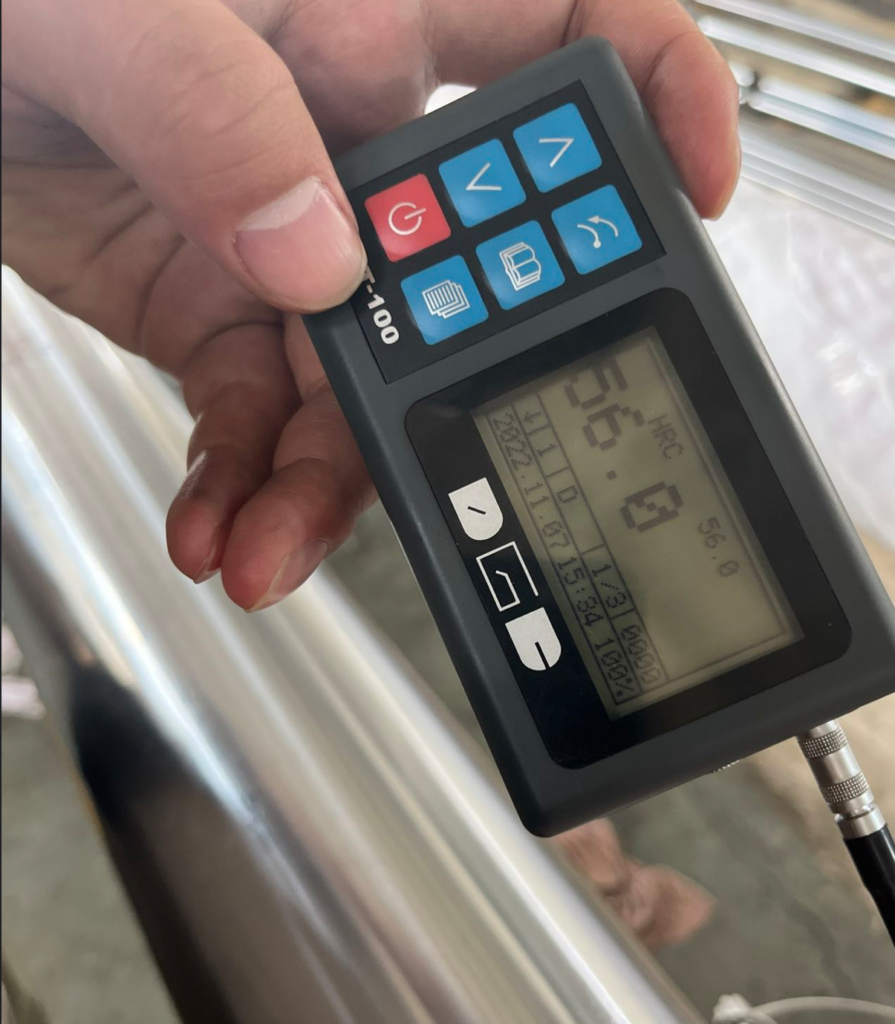
What Does 850 HV Mean for a Chrome Plated Rod?
HV refers to Vickers hardness, a commonly used method for evaluating the hardness of metallic materials and surface layers. In the context of a hydraulic piston rod, the hardness of the chrome layer indicates the resistance of the working surface to mechanical deformation and wear.
A harder surface can be particularly valuable when the rod repeatedly passes through seals and guiding components. The rod surface needs to maintain its condition through many operating cycles while limiting unnecessary wear at the working interface.
However, hardness should not be considered independently. A hydraulic rod is a complete manufactured component, so base material, chrome thickness, surface roughness, dimensional accuracy, straightness, and final finishing all contribute to the final performance.
Hardness and Wear Resistance
Hydraulic cylinders used in construction machinery, industrial equipment, agricultural machinery, and other applications may complete thousands of movement cycles during service. Each cycle creates repeated interaction between the piston rod and the sealing system.
If the working surface wears excessively, the rod can gradually lose the surface condition required for stable sealing and movement. A controlled hard chrome surface provides a durable working layer designed for this repeated mechanical interaction.
The purpose of the chrome layer is therefore not simply to make the rod look bright. Its surface properties are part of the functional design of the hydraulic cylinder rod.
Hardness and Hydraulic Cylinder Sealing
The piston rod passes directly through the rod sealing system. The seal needs to retain hydraulic fluid while allowing the rod to move in and out repeatedly.
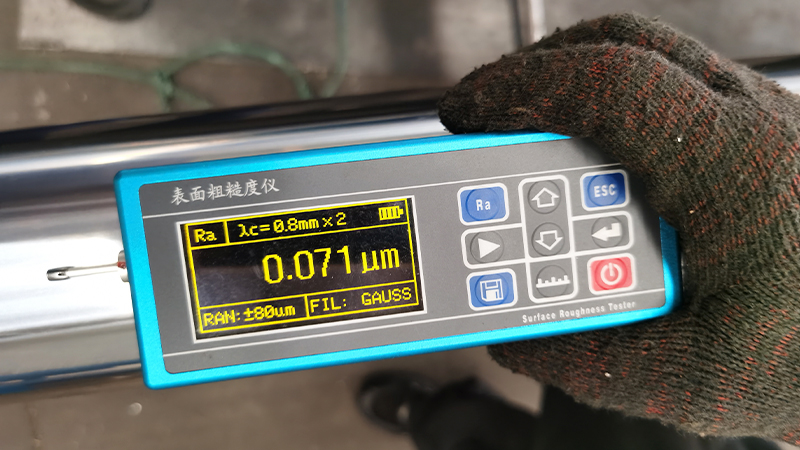
This makes the rod surface an important part of the sealing environment. Surface condition, roughness, hardness, and dimensional consistency can all influence how the rod and seal interact during operation.
EAST AI’s product specification lists Ra ≤0.2 μm surface roughness together with 850 HV chrome layer hardness. The combination provides a useful example of why a piston rod should be evaluated as a complete surface-engineered component rather than by hardness alone.
Chrome Thickness Also Matters
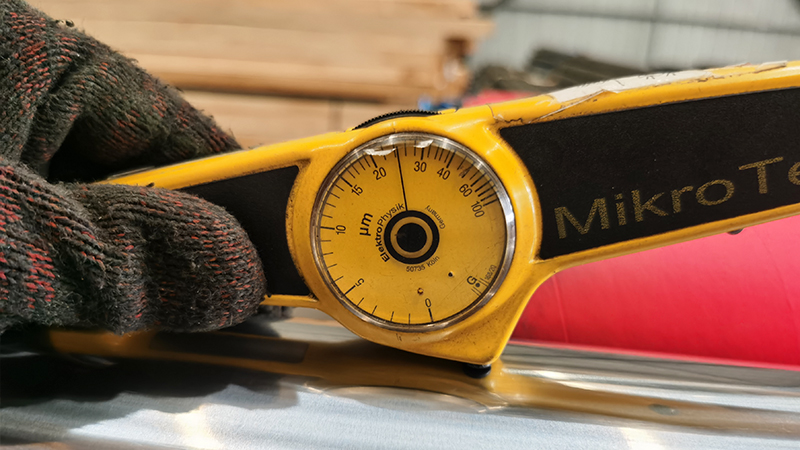
Hardness tells us about the surface layer, but the thickness of that layer is another important consideration.
According to the product specification, EAST AI chrome plated rods can be supplied with a chrome thickness of 20–100 μm. The appropriate thickness can depend on the rod design, application, surface requirements, and customer’s technical specification.
A thicker chrome layer is not automatically better for every application. The coating needs to be manufactured and finished correctly so that the final rod achieves the required dimensions, surface condition, and working characteristics.
Base Material Still Matters
The chrome layer is only the surface of the piston rod. Beneath it is the steel substrate that provides the structural properties required by the hydraulic cylinder.
EAST AI’s product specification lists a broad range of available materials, including CK45, SAE1045, ST52, 4140, 42CrMo, 40Cr, 20MnV6, stainless steel grades, and other options. This allows the rod material to be considered according to the mechanical and environmental requirements of the application.
For example, the product data lists CK45 in normalized, induction-hardened, and quenched-and-tempered conditions, while 20MnV6 and 42CrMo4 are also included with their respective mechanical properties. Material selection and surface treatment therefore need to be considered together when engineering a piston rod.
Why Rod Surface Roughness Cannot Be Ignored
A hard surface alone does not guarantee good hydraulic cylinder performance. The rod also needs a suitable surface finish because the chrome plated surface interacts directly with the sealing system.
The product specification gives a surface roughness of Ra ≤0.2 μm. This provides a clear example of how hardness and surface finish are specified together for a hydraulic piston rod.
For OEM cylinder manufacturers, maintaining a consistent surface condition from batch to batch is particularly important because the same rod specification may be used across large production quantities.
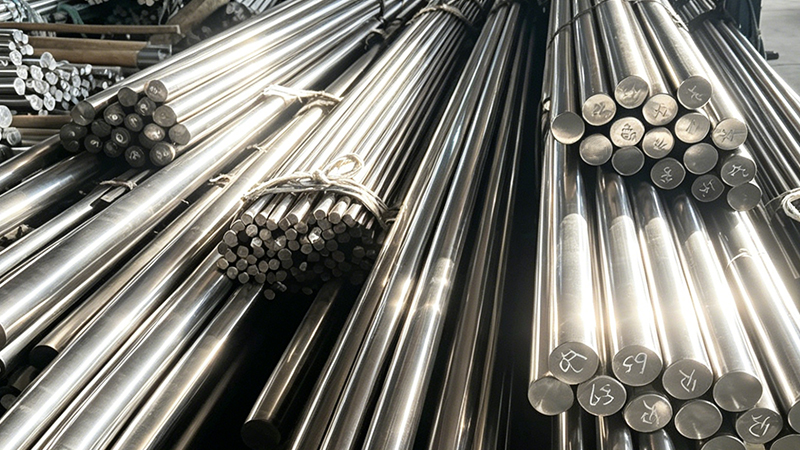
Straightness and Dimensional Accuracy Still Matter
The rod must also maintain suitable geometry during movement. A piston rod that has the correct material and chrome hardness but poor dimensional control may still create problems during assembly or operation.
EAST AI’s specification includes straightness of ≤0.2/1000 mm and diameter tolerances such as f7, f8, and g6, depending on the required specification. The product range covers diameters from 6 to 500 mm, with lengths up to 15 m.
This is why professional buyers should evaluate the complete rod specification instead of asking only about chrome hardness.
Why Different Hydraulic Applications Need Different Rod Specifications
A piston rod used on an industrial hydraulic machine may operate under very different conditions from one installed on construction equipment.
Construction machinery can expose the rod to dust, moisture, mud, impact, and changing outdoor conditions. Industrial equipment may place greater emphasis on repeated movement, dimensional consistency, and controlled operating cycles.
The required rod specification should therefore be based on the actual equipment and working environment. Material, diameter, chrome thickness, hardness, surface roughness, straightness, and tolerance should be considered together.
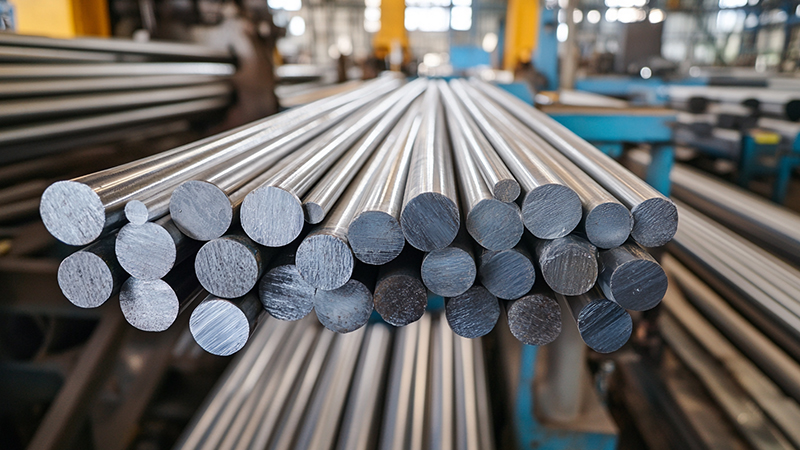
When a Standard Chrome Plated Rod Is Not Enough
Standard specifications are suitable for many conventional hydraulic cylinder applications, but OEM equipment can have very specific requirements.
A manufacturer may need a particular steel grade, diameter, length, mechanical condition, tolerance, chrome thickness, or surface finish. In these cases, the rod should be specified around the actual cylinder design rather than simply selecting the nearest standard size.
EAST AI’s product range includes both solid piston rods and hollow rod solutions. The product brochure lists hollow rod dimensions from 6–20 mm and 20–300 mm, with specified lengths depending on diameter range, as well as f7 external diameter accuracy, Ra ≤0.2 μm surface roughness, 850 HV surface hardness, and 20–100 μm hard chrome thickness.
How OEM Buyers Should Evaluate Chrome Plated Rods
When comparing chrome plated rod suppliers, buyers should look beyond the nominal diameter and price.
The technical specification should cover the base material, mechanical condition, diameter tolerance, straightness, surface roughness, chrome thickness, chrome hardness, length, and inspection requirements. For repeated OEM orders, production consistency and the supplier’s ability to maintain the same specification are equally important.
A supplier that can provide a complete technical specification gives the buyer a much better basis for evaluating whether the rod is suitable for the finished hydraulic cylinder.
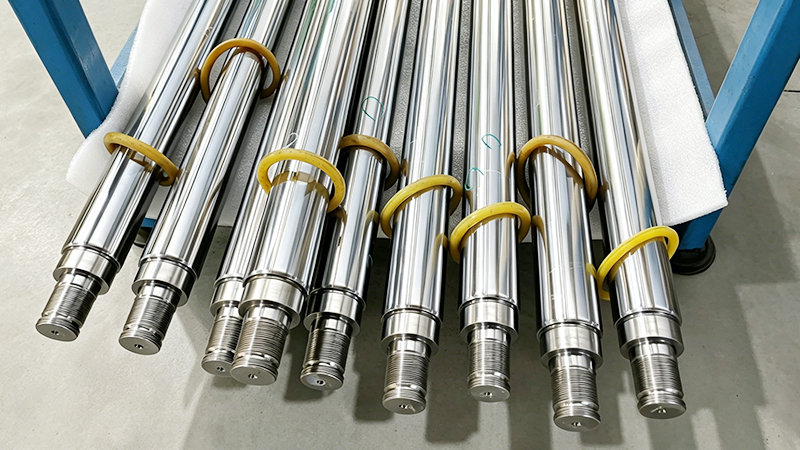
Chrome Plated Rod as Part of the Complete Cylinder
The piston rod is one part of a complete hydraulic cylinder system. It works together with the honed tube, piston, seals, guides, mounting structure, and hydraulic circuit.
The rod surface needs to work with the sealing system, while the base material and rod diameter need to withstand the mechanical loads generated during operation. This is why chrome hardness, surface roughness, dimensional accuracy, and material should be evaluated together.
A properly specified chrome plated rod gives hydraulic cylinder manufacturers a more reliable foundation for repeated movement and long-term service.
Frequently Asked Questions
What is the chrome hardness of EAST AI’s chrome plated rod?
The product specification lists a chrome layer hardness of 850 HV.
Why is chrome hardness important?
The hard chrome surface provides a durable working layer for repeated interaction with seals and guiding components, helping the rod resist surface wear.
How thick is the chrome layer?
The product specification lists a chrome thickness range of 20–100 μm. The required thickness should be matched to the specific application and technical specification.
What surface roughness is specified?
The product specification lists Ra ≤0.2 μm for the chrome plated rod surface.
What materials are available for chrome plated rods?
The listed materials include CK45, SAE1045, JIC45C, ST52, 4140, 42CrMo, 40Cr, 20MnV6, SS430, SS431, stainless steel 304/316/2205, and others.
What diameter range is available?
The product specification covers diameters from 6–500 mm, with lengths up to 15 m. Actual availability should be confirmed according to the required material, diameter, tolerance, and production specification.
Related Products & Applications
Construction Machinery Hydraulic Applications
Industrial Hydraulic Applications
Heavy Equipment Hydraulic Applications

Need Technical Support?
Chrome hardness is an important part of piston rod performance, but it should never be evaluated alone. A reliable hydraulic cylinder rod requires the right combination of base material, chrome thickness, surface hardness, surface roughness, dimensional accuracy, straightness, and application-specific requirements.
EAST AI supplies chrome plated piston rods with diameters from 6–500 mm, lengths up to 15 m, chrome layer hardness of 850 HV, chrome thickness from 20–100 μm, and surface roughness of Ra ≤0.2 μm according to the current product specification.