
Introduction
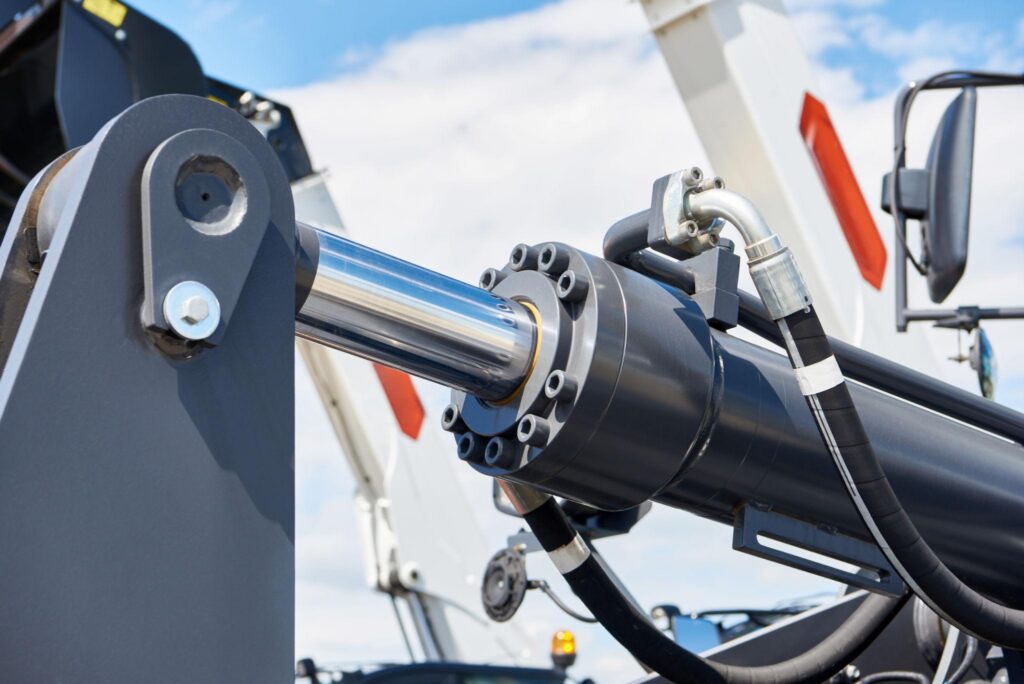
Hydraulic cylinder rod surface damage is a common issue observed in industrial hydraulic systems.
In many real-world applications, the problem does not start with sudden failure. It usually develops gradually, beginning with small surface marks, minor scratches, or uneven wear patterns.
Operators often first notice:
- Scratches on the piston rod surface
- Localized chrome layer damage
- Increased seal wear rate
- Slight performance degradation over time
From an engineering perspective, these symptoms are usually not caused by a single factor, but by a combination of operating conditions, assembly accuracy, and surface stability.
This article is based on practical manufacturing and inspection experience in hydraulic cylinder components. Sensitive project information has been removed for confidentiality.
1. Problem Description
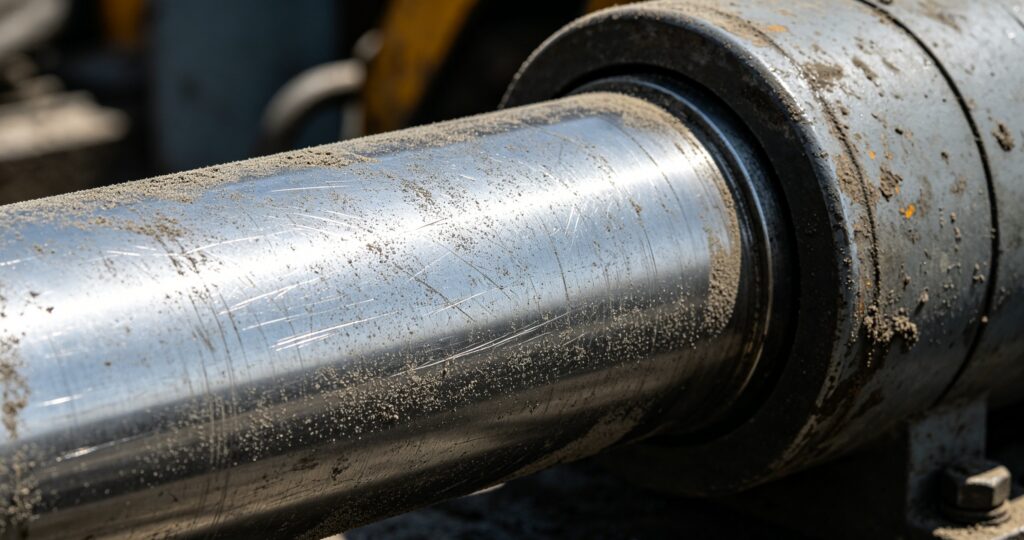
In typical hydraulic applications, rod surface damage usually presents as:
- Visible scratches on piston rod surface
- Chrome coating wear or partial peeling
- Uneven wear marks along movement direction
- Increased seal friction and reduced lifespan
In most cases, the hydraulic system is still operational at this stage. However, performance stability gradually decreases.
2. When This Problem Usually Occurs
Rod surface damage is more likely to appear under the following conditions:
- Long-term high-load operation
- Dusty or particle-contaminated environments
- Frequent reciprocating motion cycles
- Slight misalignment during installation or operation
These conditions do not cause immediate failure, but gradually accelerate surface degradation.
3. Root Cause Analysis
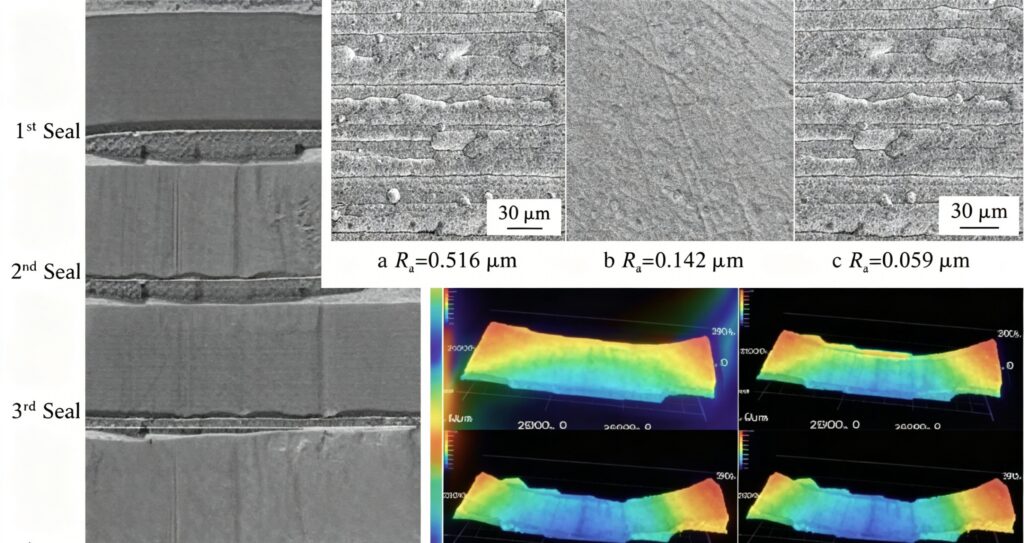
Based on engineering inspection experience, the main contributing factors are typically as follows:
3.1 External Contamination
If sealing or protection is insufficient, fine particles may enter the contact interface.
Over time, these particles cause micro-abrasion on the rod surface, leading to visible scratches.
3.2 Surface Hardness and Chrome Layer Stability
If the chrome plating layer is inconsistent in thickness or hardness, localized wear may occur under continuous friction.
This issue often becomes more visible under high-frequency operating conditions.
3.3 Side Load or Misalignment
Improper installation or uneven structural loading can cause side force on the piston rod.
This results in uneven contact stress and localized wear patterns on one side of the rod surface.
3.4 Tolerance and Assembly Deviation
Even small deviations in alignment or fitment can affect load distribution across the sealing and sliding surfaces.
Over time, this accelerates uneven wear and surface damage.

4. Engineering Diagnosis Approach
In field applications, root cause identification typically includes:
- Visual inspection of wear direction and pattern
- Seal condition analysis
- Rod straightness measurement
- Alignment check of hydraulic cylinder installation
- Surface roughness (Ra) testing
By combining these inspection results, engineers can usually identify whether the issue is caused by contamination, misalignment, or surface inconsistency.
5. Engineering Solution Approach
In most cases, solving rod surface damage issues requires improving consistency rather than changing a single parameter.
Common engineering approaches include:
- Improving surface hardness consistency of piston rods
- Controlling chrome plating thickness uniformity
- Optimizing honing and polishing processes
- Ensuring proper alignment during installation
- Strengthening pre-shipment inspection standards (dimension + surface + pressure testing)
The key objective is to reduce variation across production and operating conditions.
6. Engineering Insight
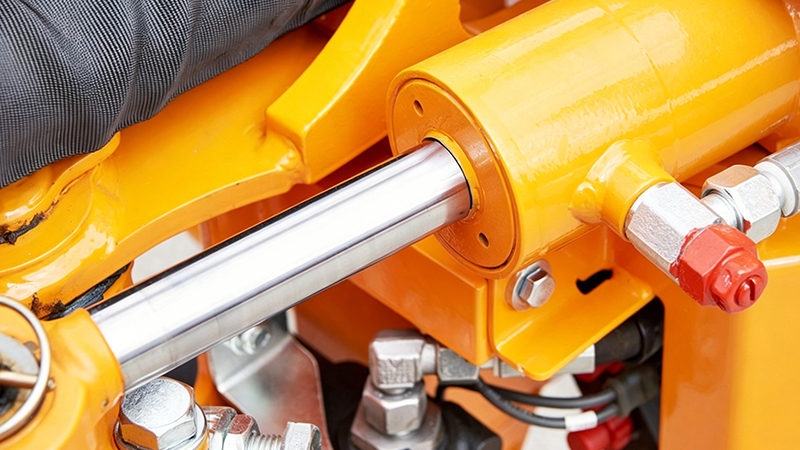
Based on field experience, rod surface damage is rarely caused by a single failure point.
It is usually the result of multiple factors combined, such as:
- External contamination
- Mechanical misalignment
- Surface treatment inconsistency
- Long-term wear accumulation
This is why similar systems may show different failure rates even under identical operating conditions.
7. Application Scope
This type of issue is commonly found in:
- Construction machinery hydraulic systems
- Industrial hydraulic equipment
- Agricultural machinery
- Automated mechanical systems
8. Engineering Support
If hydraulic cylinder rod surface damage, scratches, or uneven wear are observed in your system, it is recommended to evaluate both operating conditions and manufacturing consistency of components.
EAST AI supports the manufacturing of hydraulic cylinder rods, tubes, and related hydraulic components based on engineering drawings and application requirements.
Technical evaluation and engineering discussion are available for OEM manufacturers, distributors, and industrial equipment integrators.
What causes hydraulic cylinder rod surface damage?
Hydraulic cylinder rod surface damage is usually caused by a combination of contamination, misalignment, and surface treatment inconsistency rather than a single factor.
Can poor chrome plating cause rod scratches?
Yes. Inconsistent chrome layer thickness or hardness can lead to localized wear under continuous friction conditions.
How does misalignment affect piston rod wear?
Misalignment creates side load on the rod surface, resulting in uneven stress distribution and accelerated wear on one side.
Can contamination damage hydraulic cylinder rods?
Yes. Dust or fine particles entering the system can cause micro-abrasion and visible scratches over time.
📩 Contact Engineering Support (CTA)
If you are currently facing issues such as hydraulic cylinder rod wear, surface scratching, or chrome layer damage, our engineering team can assist in evaluating potential root causes from both design and manufacturing perspectives.
We provide component-level solutions including:
- Hydraulic cylinder rods
- Honed tubes
- Custom hydraulic components based on drawings
Feel free to contact us for technical consultation or project evaluation.