
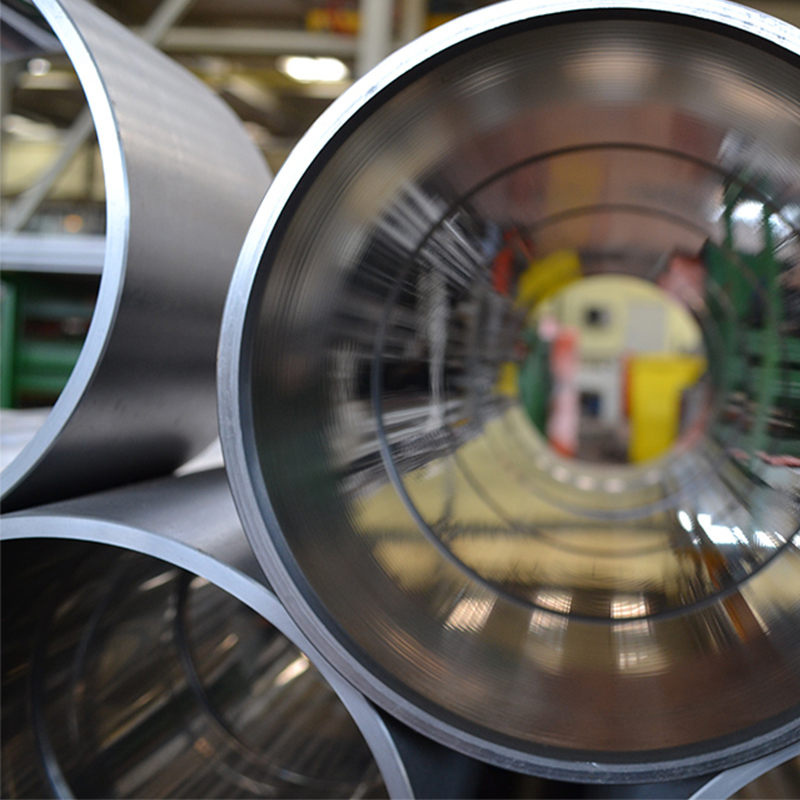
An equipment builder specifying a new mining cylinder asked us for honed tube at a familiar bore size but wanted to shave cost by dropping to a thinner wall. On paper the thinner wall still cleared the working pressure with margin. In service, the cylinders were seeing pressure spikes on load reversal that the steady-state calculation never captured, and the thinner wall left too little reserve. Choosing wall thickness is not simply reading a pressure off a chart; it is understanding how hoop stress, safety factor, and duty interact.
This guide is for hydraulic cylinder designers and builders who need to match honed tube wall thickness to a real working pressure with an honest margin, and for the stockists who need to carry the wall thicknesses their customers will actually ask for.
The Physics: Hoop Stress and the Barlow Relationship
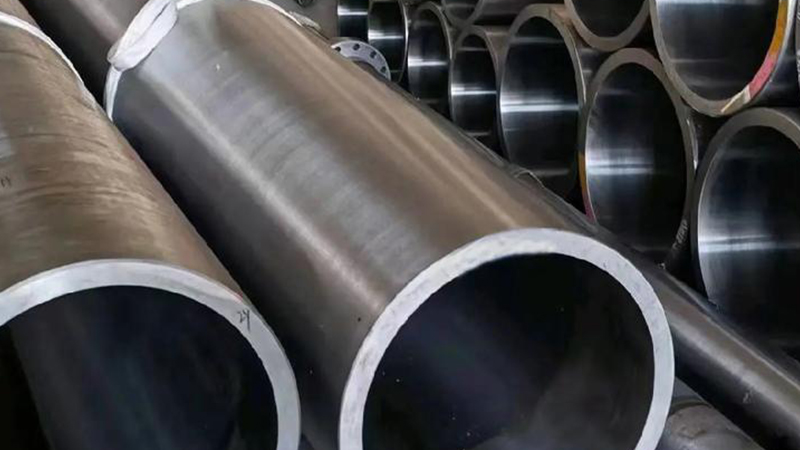
When internal pressure acts inside a tube, it tries to burst the tube outward, and the wall resists this through a circumferential tension called hoop stress. For a thin-walled tube the relationship is captured by the classic Barlow / hoop-stress formula, where the hoop stress equals the pressure multiplied by the diameter, divided by twice the wall thickness. The practical form used to size a wall rearranges this to solve for the minimum wall thickness needed to keep the hoop stress below the material’s allowable stress. A clear, worked treatment of this relationship and its variants is published by Engineering ToolBox in its Barlow’s Formula reference.
Two things follow immediately. First, hoop stress rises with diameter: a bigger bore at the same pressure needs a proportionally thicker wall. Second, hoop stress is inversely proportional to wall thickness, so halving the wall roughly doubles the stress. This is why a seemingly small reduction in wall can move a design from comfortable to marginal.
Why the Steady-State Number Is Only the Start
The formula gives a minimum wall for a static pressure. Real hydraulic cylinders do not live at static pressure. They see pressure spikes on load reversal, shock when a load is caught or dropped, and in some duties, pressure intensification where a differential-area effect drives rod-side or cap-side pressure well above pump pressure. A wall sized only for nominal working pressure can be badly undersized for the peaks the cylinder actually experiences.
This is the purpose of the safety factor. Hydraulic design practice commonly applies a substantial factor—often on the order of several times the working pressure toward the burst pressure—precisely to absorb spikes, material variation, and the inevitable gap between the idealized formula and reality. A thin-walled approximation like Barlow is also conservative in that it uses outside diameter, but that conservatism is not a licence to skip the safety factor; the two address different uncertainties.
Fatigue: The Slow Killer
For cylinders that cycle frequently, fatigue rather than single-event burst is often the governing concern. Every pressure cycle loads and unloads the wall, and over millions of cycles, stress concentrations—at bore transitions, weld-on bosses, ports, and threads—can initiate cracks even when the peak stress is comfortably below yield. A wall chosen with fatigue in mind carries more margin than one chosen for a single static pressure, and it pays particular attention to the details where stress concentrates. For high-cycle mobile and industrial cylinders, this is where a slightly heavier wall or a more careful design of transitions earns its cost back many times over.
Machining Allowance: The Wall You Buy Is Not the Wall You Keep
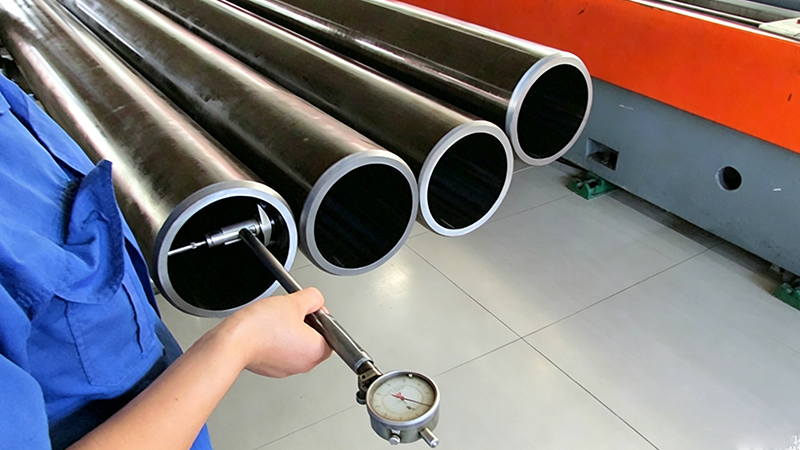
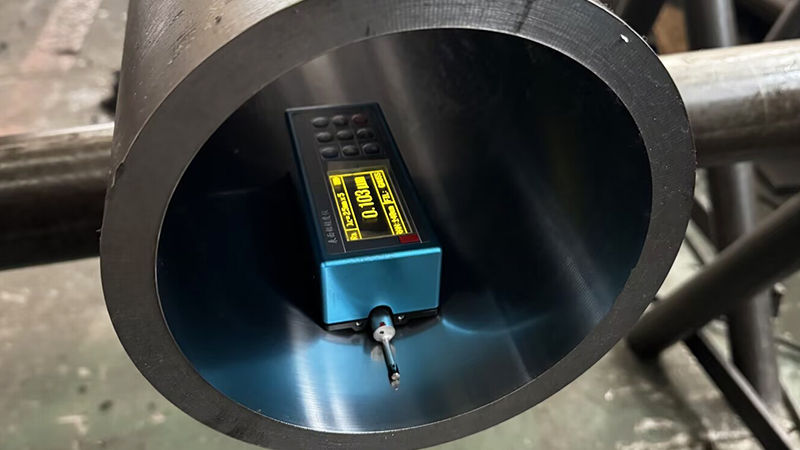
A subtlety that catches builders out: the as-supplied wall thickness is not always the final structural wall. If the tube’s outside diameter will be machined—for instance to fit a specific gland, to add mounting features, or to clean up the OD—material comes off the wall, and the structural calculation must be based on the finished, minimum wall after machining, not the incoming dimension. Add to this the tube’s own wall thickness tolerance and any eccentricity between bore and OD, and the true minimum wall at the thinnest point can be noticeably less than the nominal figure. A sound design sizes on that worst-case minimum, not the average.
Selecting Wall Thickness in Practice
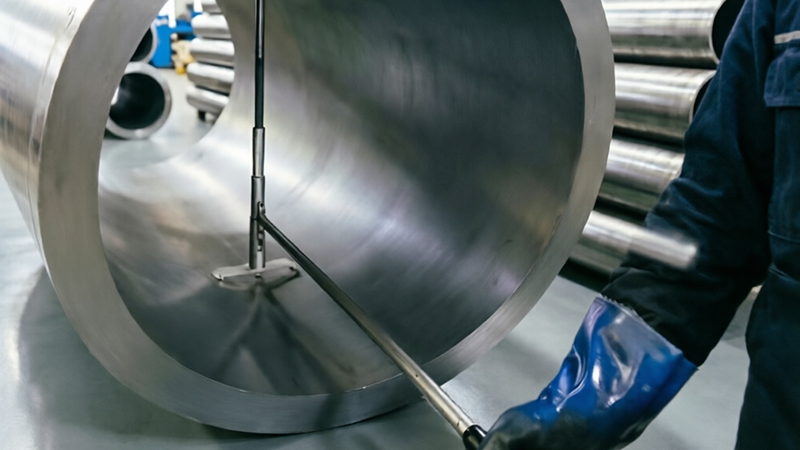
The disciplined sequence is: establish the true peak pressure, not just nominal working pressure; apply an appropriate safety factor for the duty; compute the required minimum wall from the hoop-stress relationship using the correct allowable stress for the chosen steel; then add back the machining allowance, the wall tolerance, and any eccentricity so the delivered tube still meets the minimum at its thinnest point. For high-cycle duties, cross-check against fatigue rather than static burst.
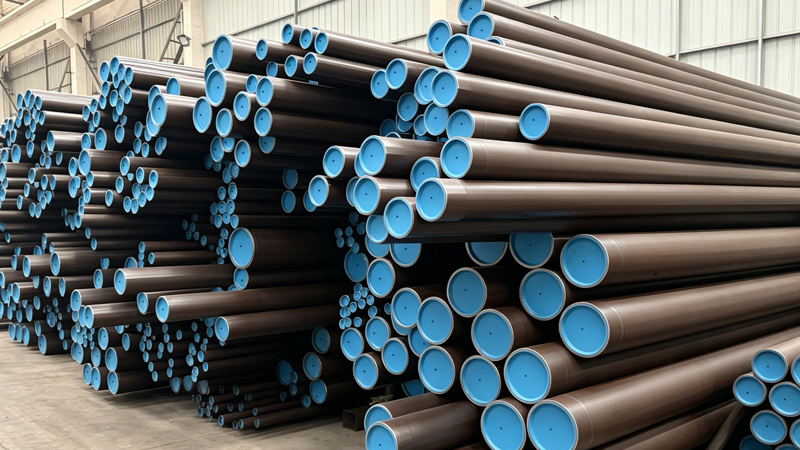
For stockists, the takeaway is which walls to carry. The most-requested combinations cluster around common bore sizes paired with the wall that gives a sensible pressure rating for general and heavy-duty hydraulics. Carrying a standard-wall line for general service and a heavy-wall line for high-pressure and high-cycle mining and construction duty covers the large majority of demand, and lets you answer a customer’s pressure question with stock on the shelf rather than a mill order.
Material Choice Interacts With Wall
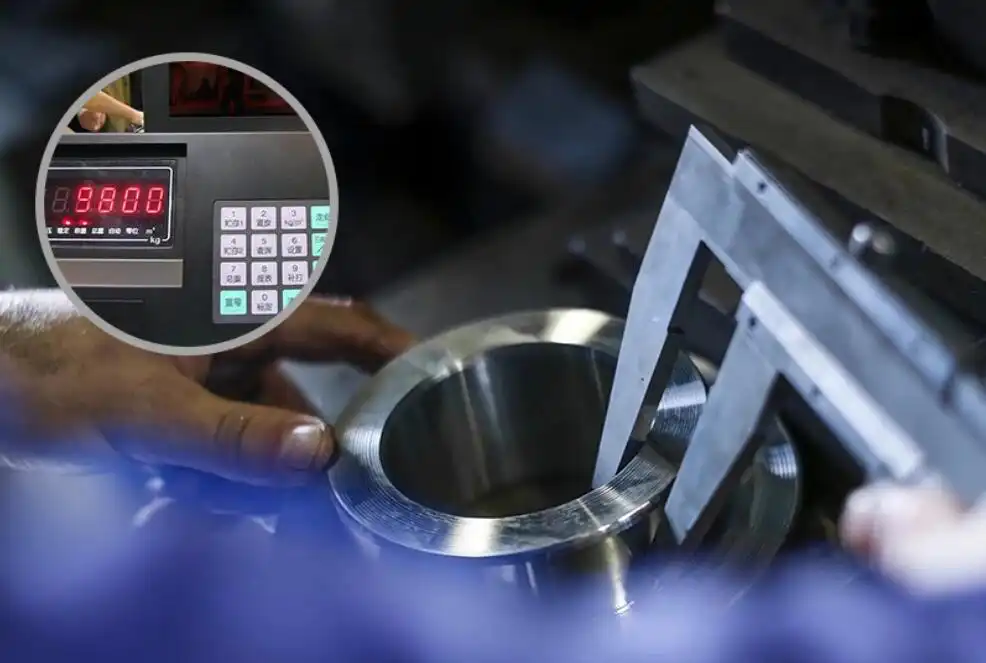
Wall thickness and material grade are not independent. A higher-strength steel with a greater allowable stress can meet the same pressure at a thinner wall, saving weight and cost—valuable in mobile equipment where weight matters. Conversely, a lower-strength grade needs more wall for the same rating. The right answer balances strength, weight, cost, and availability, and it is worth having that conversation at the specification stage rather than defaulting to a single grade for every pressure.
Related Reading
- Honed Tube category
- Hydraulic Cylinders for Mining and Heavy Machinery
- Honed Tube for Agricultural Machinery Cylinders
Size the Wall for the Pressure You Really See
A wall sized for the nominal number and nothing else is a warranty claim waiting to happen. Size it for peak pressure, an honest safety factor, fatigue, and machining allowance—and buy it from a supplier who holds the wall consistently.
What We Offer
- Honed tube in standard-wall and heavy-wall lines across common bore sizes
- Consistent wall thickness with controlled tolerance and low eccentricity, so your minimum wall is real
- Guidance on matching wall and material grade to your working pressure, safety factor, and duty cycle
- Mill certificates and traceability for pressure-rated cylinder builds
Contact EAST AI (eaihydraulic.com) Email: market@east-ai.com Phone: +86 13771568763 Address: Wuxi, Jiangsu, China.
Written by Alex, Production Engineer at EAST AI