
Published: 2026-10-26 | Last Updated: 2026-10-26
The quoted lead time was six weeks. At week five, the supplier says it’s now nine. This happens more often than any sourcing plan accounts for, and how an OEM responds in the first 48 hours after that call matters more than the slip itself.
Separate the Diagnosis From the Reaction
Before deciding anything, find out whether this is a one-time disruption at this specific supplier — a machine breakdown, a raw material delay — or a sign of a broader capacity problem that will recur on future orders. The right response differs completely depending on which it is, and reacting before knowing which one you’re dealing with risks either overreacting to a one-off event or underreacting to a pattern that will cost you again in three months.

What to Ask the Supplier Immediately
| Question | What the Answer Tells You |
|---|---|
| What specifically caused the delay? | Isolated event vs. systemic capacity issue |
| Does this affect other orders in the pipeline, including future ones? | Scope of the problem beyond your order |
| What’s the new firm date, and how confident is it? | Whether to plan around it or expect further slippage |
| What is the supplier doing to prevent recurrence? | Whether this is being actively managed or just absorbed |
A supplier who answers all four clearly and specifically is managing the relationship well even while delivering bad news. One who deflects or gives vague answers on more than one of these is giving you a second piece of information beyond the delay itself.
Triage Your Own Downstream Commitments First
Before deciding how hard to push back on the supplier, determine what the actual delay does to your own production schedule and customer commitments. A three-week slip against a six-week buffer in your own planning is a non-event. The same slip against a schedule with no buffer at all is a crisis requiring immediate downstream communication, regardless of how the supplier conversation goes.
Fixing the supplier relationship and managing your own downstream exposure are two separate problems happening at the same time — work both in parallel, not one after the other.
When Expediting Is Worth Paying For
Some suppliers can compress a delayed timeline for an additional cost — overtime production, priority scheduling ahead of other orders. Whether this is worth paying for depends entirely on what the delay actually costs you if left unaddressed: a missed customer commitment with real contractual or relationship consequences justifies a meaningful expediting premium, while a delay with a soft internal deadline usually doesn’t.
Why a Single Late Delivery Shouldn’t Trigger an Immediate Supplier Switch
Switching suppliers mid-relationship over one delay, without considering the qualification cost and risk of starting over elsewhere, is rarely the right response to an isolated incident — especially from a supplier with an otherwise solid track record. Reserve the switching conversation for a pattern of unreliability, not a single disruption that the supplier is handling transparently and correcting.
What a Repeat Pattern Actually Looks Like
A single slip is an event. A second slip within a similar timeframe, especially if the stated cause differs each time, is the beginning of a pattern worth tracking formally rather than treating each instance as an independent, unrelated occurrence. Keep a simple log — date promised, date delivered, stated reason — across every order from a given supplier. This turns a vague sense that “they’ve been slower lately” into an actual data point you can act on with confidence.
Using the Conversation to Test the Relationship, Not Just the Timeline
How a supplier handles being pushed for specifics during a delay — defensive and evasive versus transparent and collaborative — tells you something durable about the relationship that outlasts this particular delay. A supplier who treats a direct question about root cause as an attack, rather than a normal part of managing a supply relationship, is signaling how future difficult conversations will likely go too.

Building in Buffer Without Over-Correcting
One bad experience with a supplier’s lead time can tempt an OEM to pad every future order with excessive buffer, which quietly increases carrying costs and defeats some of the purpose of efficient just-in-time ordering. A measured response — modest additional buffer specifically while confidence in this supplier’s reliability is being rebuilt, not a permanent doubling of lead time assumptions — avoids overcorrecting into a different, quieter cost.
Why a Backup Source Changes Every Part of This Conversation
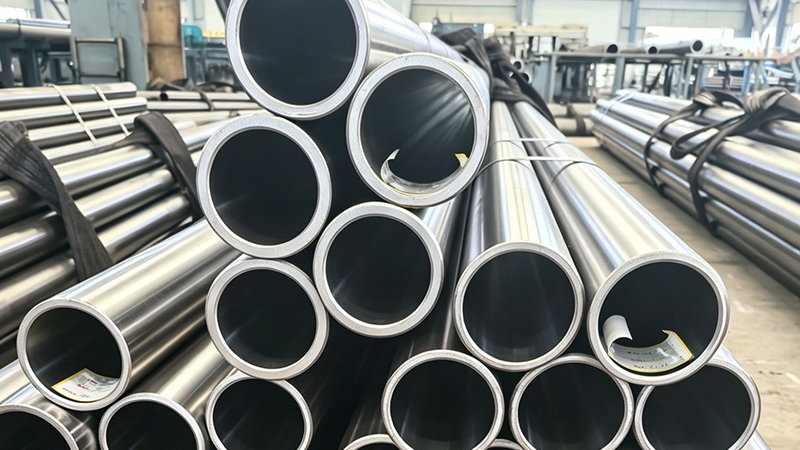
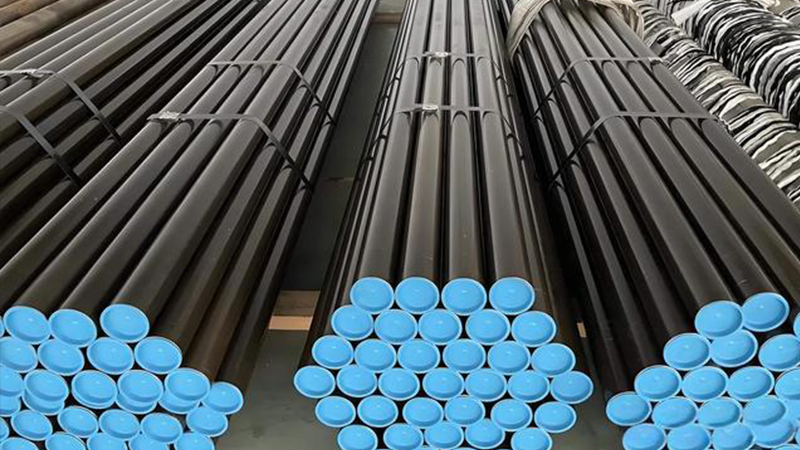
An OEM with an already-qualified second source for this honed tube specification has a fundamentally different negotiating position during a lead time crisis than one with a single source and no alternative. The threat of shifting volume, even partially, is credible rather than theoretical, and suppliers respond differently to a customer who has genuine options than to one who doesn’t. This is one of the clearest practical arguments for maintaining a qualified backup even when the primary relationship has been reliable for years.
Communicating the Delay to Your Own Customers Honestly
If the supplier’s delay flows through to your own delivery commitment, communicate it to your affected customer as early and specifically as possible, rather than waiting until the original promised date to explain why it’s being missed. Early, honest communication about a schedule change is almost always received better than a missed date with no advance warning — even when the news itself is identical either way.
Documenting the Full Episode for the Next Negotiation
Once resolved, record the full episode — the original promise, what happened, how it was handled, and the final outcome — as part of your ongoing supplier performance record. This becomes genuinely useful leverage during the next pricing or terms negotiation with this supplier, and it’s also the foundation for the pattern-recognition discussed earlier if a similar slip happens again down the line.
How a Lead Time Slip Interacts With a Volume Commitment You Already Have in Place
An OEM with a standing volume commitment to this supplier faces a slightly different calculus than one ordering on a spot basis — the commitment relationship may carry contractual performance obligations on the supplier’s side that a spot order doesn’t, giving you more formal leverage to invoke if the delay is severe or recurring. Review what your existing agreement actually says about delivery performance before the conversation, since a commitment agreement with no delivery performance language at all leaves you in largely the same negotiating position as a spot buyer despite the deeper relationship, which is itself worth noting as a gap to address the next time that agreement comes up for renewal.
Why the Supplier’s Explanation Should Be Checked Against What You Already Know About Them
A supplier’s stated reason for a delay is easier to evaluate honestly if you have some baseline knowledge of their operation — their typical capacity utilization, whether they’ve mentioned expansion or equipment issues recently, whether other customers in your network have reported anything similar. A delay explanation that doesn’t quite match what you already know about the supplier’s situation is worth probing further, not because the supplier is necessarily being dishonest, but because a genuine misunderstanding about root cause leads to the wrong corrective expectations going forward.
Setting Internal Expectations So the Delay Doesn’t Become a Bigger Crisis Than It Is
A lead time slip that reaches your own production team as a vague, alarming “the supplier is late” message tends to generate more internal disruption than the same information delivered with actual context — how severe the impact is, what the mitigation plan looks like, what the realistic new date is. Communicate the delay internally with the same structured clarity you’re seeking from the supplier, since an internal team working from incomplete or alarmist information makes worse downstream decisions than one working from an accurate picture of the actual situation.
Why a Post-Mortem Conversation Benefits Both Sides, Not Just the OEM
Once a delayed order finally arrives and the immediate pressure has passed, a brief, structured post-mortem conversation with the supplier — what actually happened, what’s changing to prevent recurrence, whether the new timeline held as promised — captures lessons while they’re still fresh rather than letting the episode fade into vague institutional memory. This conversation benefits the supplier too, since a customer willing to discuss what went wrong constructively, rather than simply moving on silently or escalating immediately to threats, is more likely to get an honest, detailed account of root cause than one who treats every delay purely as a grievance to be endured.
Why the First Delay From a Brand-New Supplier Carries Different Weight Than the Fifth From a Trusted One
A lead time slip from a supplier you’ve worked with successfully for years, with an otherwise clean track record, reasonably gets more benefit of the doubt than the same slip from a supplier still early in the relationship with limited history to draw confidence from. Calibrate your reaction to the actual accumulated track record with this specific supplier, rather than treating every delay with identical severity regardless of how much trust the relationship has actually earned over time — a long, reliable history is worth something concrete in exactly this kind of moment, not just in the abstract — it’s the practical dividend of years of consistent performance, cashed in precisely when it matters most.
Why Writing Down the Lesson Matters More Than Remembering It
An episode handled well in the moment still provides limited lasting value if the specific lessons — what the actual warning signs were, what question finally got a useful answer — exist only in one person’s memory rather than in a shared, written record the broader team can draw on the next time a similar situation arises with any supplier, not just this one, since the person who handled it well this time may not be the one handling the next supplier’s delay a year from now, when the specific details of this episode have already faded from memory.

Related Reading
- Honed Tube Wall Thickness and Pressure Rating: A Selection Guide
- Stop Tube in Long-Stroke Hydraulic Cylinders: Why It Extends Life
- Honed Tube for Truck-Mounted Crane Outrigger Cylinders: Short-Stroke, High-Load Duty
Discuss a Lead Time Concern With Our Team
Dealing with a supplier lead time slip and need a reliable backup source for honed tube? Talk with our team about qualification timelines and current capacity.
What We Offer
- Transparent, realistic lead time communication with early notice of any schedule changes
- Qualification support to help you stand up a reliable backup source quickly
- Priority scheduling options for genuinely time-critical orders
- A track record of lead time consistency you can verify through reference accounts
Contact EAST AI (eaihydraulic.com) Email: market@east-ai.com Phone: +86 13771568763 Address: Wuxi, Jiangsu, China.
Written by Alex, Production Engineer at EAST AI