
A dealer supplying excavator attachments noticed a strange pattern in his warranty claims: rods on auxiliary hydraulic cylinders, the small ones driving grapples, thumbs, and tilt buckets through a quick-coupler auxiliary circuit, wore out faster than the main boom and arm cylinder rods on the same machines, even though they carried far less load. The main cylinders were built for the excavator’s rated digging force. The attachment cylinders were smaller, cycled constantly whenever the attachment was active, and were swapped between machines and jobs more often than anyone tracked. They were being treated as an afterthought in a spec sheet that focused on the excavator itself, and it was costing the dealer repeat comebacks.
This article is for excavator attachment manufacturers, dealers, and rental fleet operators who supply or maintain the auxiliary cylinders on grapples, thumbs, tilt rotators, and other quick-coupler attachments. It covers what makes rod selection for these cylinders different from the main boom and arm circuit, and how to reduce the repeat failures that come from treating attachment rod as a smaller version of the main rod.
Why Attachment Cylinders Are a Different Duty
The main boom, arm, and bucket cylinders on an excavator are engineered together with the machine, sized for its rated forces, and generally stay on one machine for its service life. Attachment cylinders live a different life. A grapple or tilt rotator may be moved between several machines, its auxiliary circuit fed by whatever flow and pressure that machine’s aux circuit happens to deliver, and it cycles every time the operator actuates the attachment, which on grapple and sorting work can mean extremely high cycle counts relative to its size.
This combination, high cycle count, variable pressure from different host machines, and rod sizes chosen more by packaging constraints than by a clean load calculation, means attachment rod is frequently under-specified relative to its real duty. A rod sized adequately for occasional light clamping wears quickly under constant, all-day cycling on a demolition or sorting job.
The Cycle-Count Problem
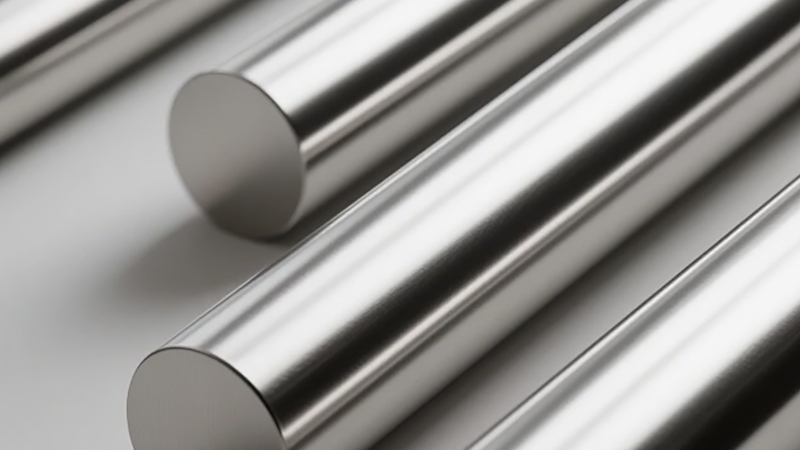
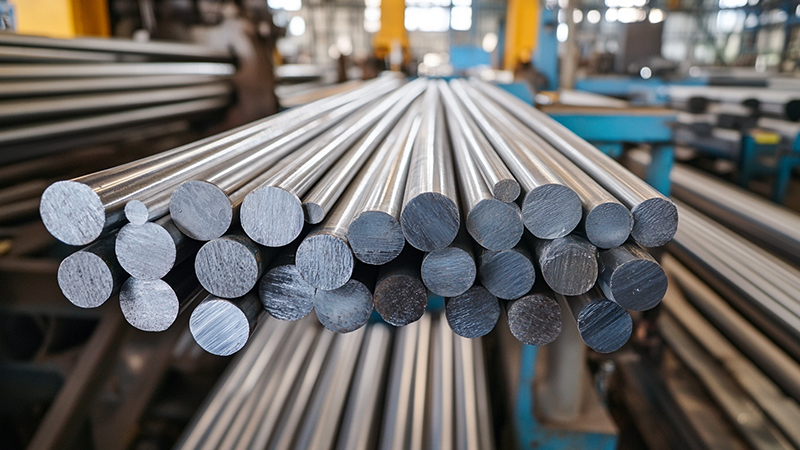
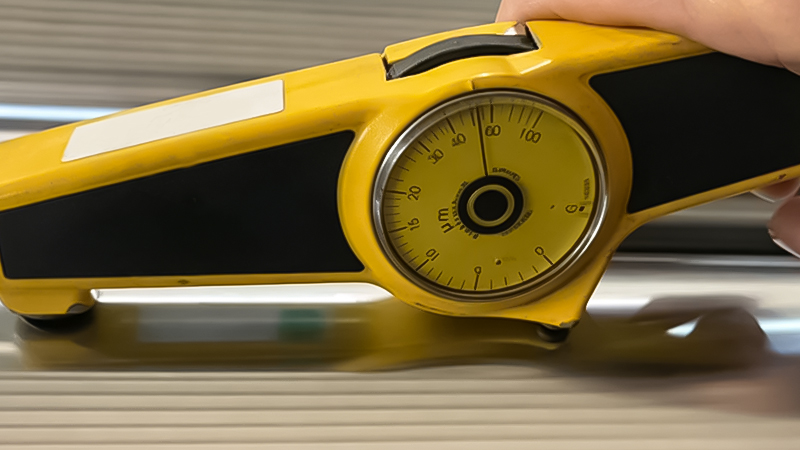
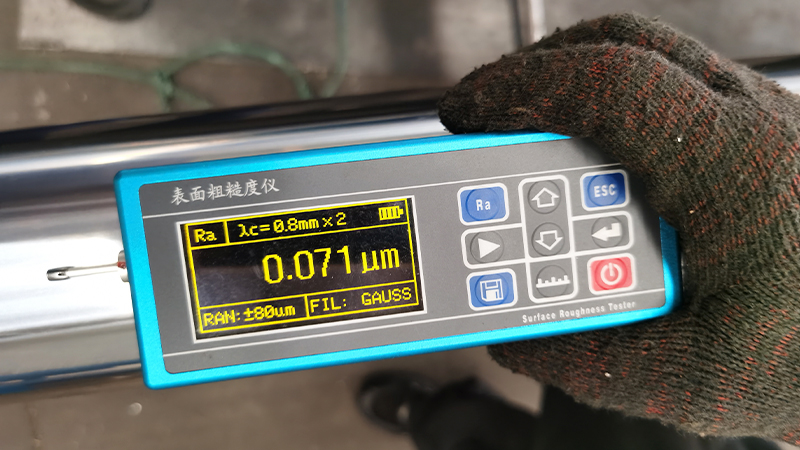
Because attachment cylinders often cycle far more frequently than the main circuit, wear resistance of the chrome surface and the seal interface matters more than it would for a lower-cycle component of similar size. A rod with a thin, marginal chrome layer, or a rough or poorly finished surface, that would give acceptable life on an occasional-use cylinder wears through far sooner under near-continuous actuation. The chrome hardness and surface finish quality discussed for high-cycle material handling duty applies directly here: hard chrome in the HV 800–1000 range with a smooth, well-finished surface gives the wear life that constant cycling demands.
Side load is a related concern. Grapple and thumb cylinders are often mounted in linkages where geometry changes through the stroke, and misalignment or an off-axis grip load can impose side loads the rod and its bushing were not generously sized to handle. A rod and bushing combination with adequate bearing length and a base steel suited to the actual side load, rather than the minimum that fits the packaging, resists the bending and bushing wear that shortens life on demanding attachment duty.
Contamination in Demolition and Sorting Work
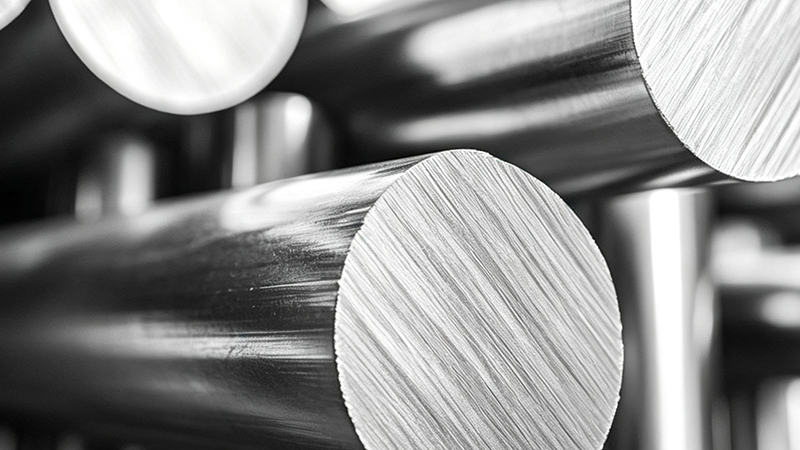
Attachments used for demolition, scrap sorting, and waste handling work in some of the dirtiest conditions any hydraulic cylinder faces: concrete dust, metal fines, and abrasive debris are constantly present. Wiper seal robustness matters as much here as chrome quality, because even a hard, well-finished rod wears quickly if abrasive grit is riding past the wiper on every cycle. A metal-cased or reinforced wiper suited to heavy debris, matched to a rod surface finish that resists scoring, gives the best combined defense.
Specifying Rod Across Multiple Host Machines
Because attachment cylinders move between machines, it helps to specify the rod for the highest pressure and duty the attachment is likely to see, rather than the average. An attachment rated for machines up to a certain size class should have its rod and chrome specification set by the most demanding compatible host, since underspecifying for the largest common pairing is exactly how premature wear reaches the dealer’s bench. Manufacturers who build attachments for a range of excavator sizes benefit from treating the rod specification as tied to the attachment’s full compatibility range, not just its typical use case.
Advising Fleet Operators and Dealers
For dealers and rental operators, the practical takeaway is to stop treating attachment cylinder rod as an incidental spare and start treating it as a component whose duty, high cycles, variable pressure, and heavy contamination, is arguably more demanding than the main circuit it is bolted to. When a customer’s grapple or tilt rotator keeps coming back for rod repair, the fix is usually not a like-for-like replacement but a step up in chrome quality, bearing length, or wiper protection matched to how hard that specific attachment actually works.
Related Reading
- Chrome Plated Rod for Material Handling and Forklift Cylinders
- Chrome Plated Rod for Mining and Heavy-Duty Cylinders: Choosing Your Stock
- Reseal or Rebuild? A Service Provider’s Guide to Cylinder Repair
The Small Cylinder Works Harder Than It Looks
Attachment rod sees more cycles and dirtier conditions than the main circuit it rides alongside. Specify chrome quality, bearing length, and wiper protection for the real duty, not the packaging.
What We Offer
- Chrome plated rod with hard, consistently finished chrome for high-cycle attachment duty
- Base steel and bearing options matched to side load from linkage geometry
- Guidance on specifying rod across a range of compatible host machines
- Full material traceability for attachment manufacturers and rental fleet supply
Contact EAST AI (eaihydraulic.com) Email: market@east-ai.com Phone: +86 13771568763 Address: Wuxi, Jiangsu, China.
Written by Alex, Production Engineer at EAST AI